


A simple question that gets complicated quickly
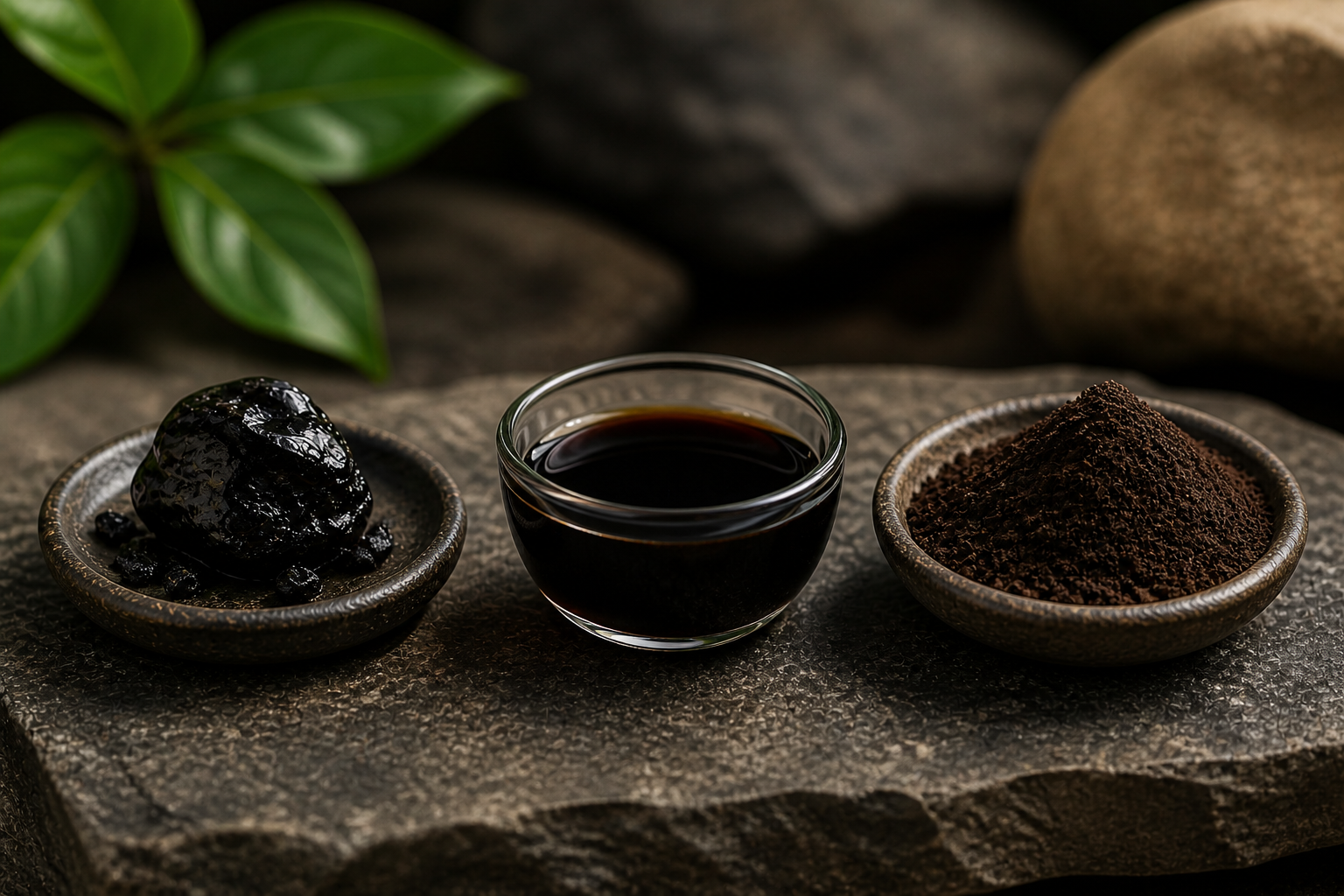
Shilajit is usually sold in three main forms:
- Resin
- Liquid
- Powder
At first glance, this looks like a straightforward choice.
In practice, it is where a lot of confusion begins.
Each form is often presented as the “best” option depending on how it is being sold. But it's not that simple.
Start with the obvious
All forms begin with the same raw material.
Shilajit is:
- collected
- purified
- then processed into different formats
The form you see is the result of what happens after purification.
That is where the differences start to matter.
Resin: closest to the original material
Resin is the form most closely associated with Shilajit in its natural state.
It is:
- thick
- dense
- concentrated
What this means in practice
- Minimal to no processing after purification
- Direct control over how much you take
- No need for carriers or additional ingredients
Resin is not the most convenient format.
It can be:
- slower to prepare
- less uniform in texture
- slightly more involved to use
But it remains the closest representation of the original material.
Liquid Shilajit: convenience with trade-offs
Liquid Shilajit is typically produced by dissolving resin into a liquid base.
This makes it:
- easier to use
- quicker to dose
What to consider
The key variable here is concentration.
Liquid products can vary significantly depending on:
- how much Shilajit is actually present
- what it has been diluted with
- how it has been stabilised
Two liquids can look identical while delivering very different amounts.
The part that’s often overlooked
Dilution changes the equation.
Once Shilajit is in liquid form, you are no longer dealing with a raw material.
You are dealing with a formulation.
That introduces variables:
- water content
- shelf stability
- potential preservatives
- and, in some cases, flavouring or carriers
These are not always clearly disclosed.
Why this matters
Without clear information, it becomes difficult to know:
- how much you are actually taking
- how it compares to resin
- how consistent it is between batches
Convenience increases.
Control and transparency often decrease.
Powder: the most processed and most variable form
Powdered Shilajit is typically produced by drying and further processing the material.
It is commonly used in:
- capsules
- blends
- flavoured products
What this changes
Powder is:
- easier to standardise
- easier to formulate
- easier to combine with other ingredients
But it also involves:
- more processing steps
- greater distance from the original resin
- more reliance on how the raw material was sourced
The part that is often overlooked
Not all Shilajit powders are derived from genuine resin.
In many cases, what is labelled as “Shilajit extract” may originate from:
- soil humus
- leonardite
- or other humic-rich materials
These substances can contain fulvic and humic compounds, but they are not the same as Shilajit formed naturally in mountainous environments.
This creates a situation where products can appear similar on paper, while being very different in origin and composition.
Why this happens
There are a few practical reasons:
- Genuine Shilajit resin is difficult to source
- It requires purification
- It is relatively expensive
Lower-cost powdered formats often reflect different sourcing decisions.
That does not make every powder ineffective.
It does mean that:
- origin matters more than format
- labels do not always tell the full story
A more useful way to evaluate powder
If you are considering a powdered product, it is worth asking:
- What is the starting material
- Is it derived from purified resin
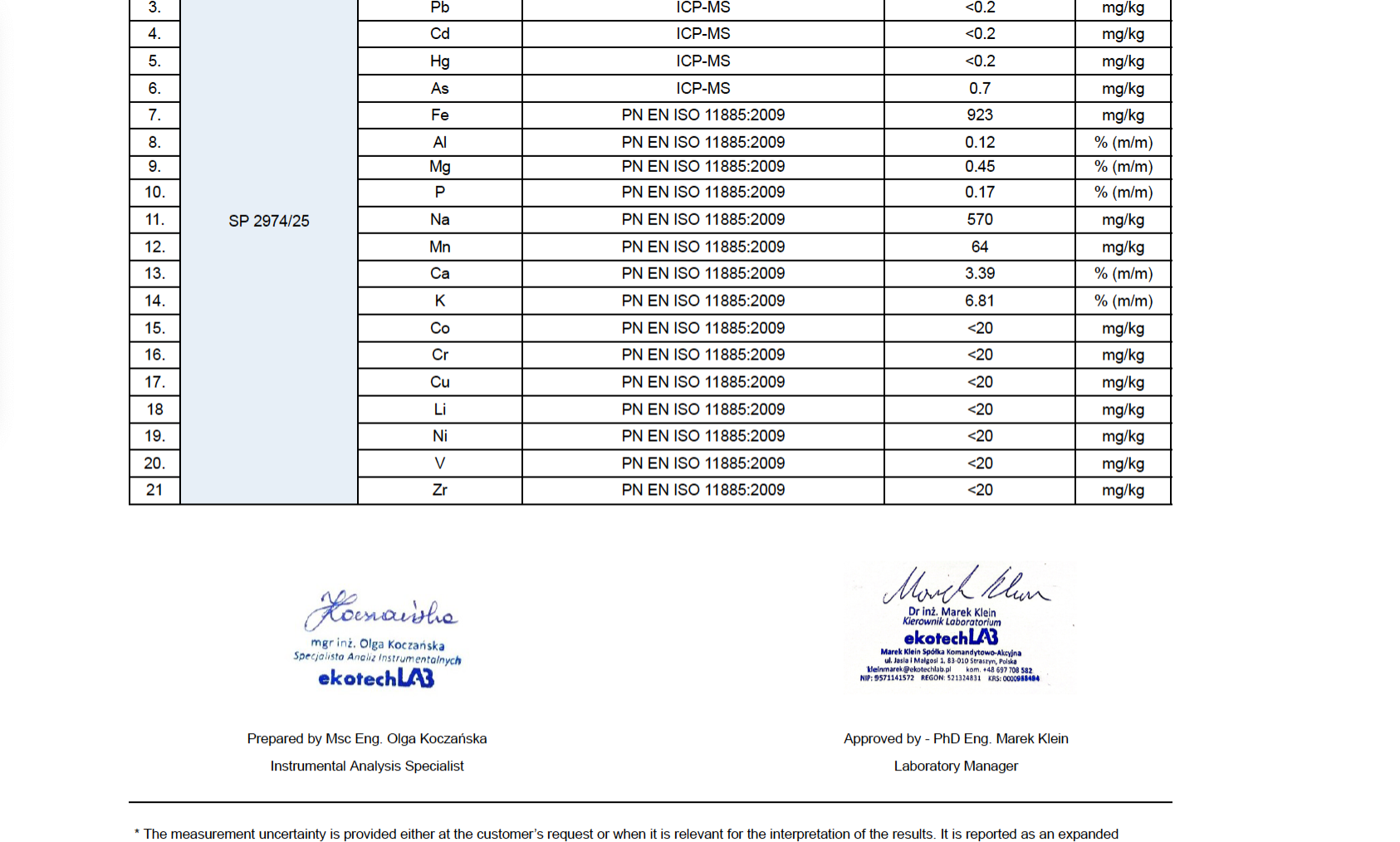
- Is there testing to support this
- Is the formulation transparent
Without that context, “Shilajit powder” can refer to several very different materials.
Where powder does make sense
Powder is not inherently a poor choice.
It becomes useful when:
- it is derived from genuine, purified resin
- it is part of a structured formulation
- consistency and dosing are priorities
This is typically where powders are used most effectively.
The part most people miss
The question is usually framed as:
“Which form is best?”
A more useful question is:
“What matters most in this context?”
Because the answer depends on what you are prioritising.
If you prioritise purity and control
Resin is the more direct option.
You are working with:
- a concentrated material
- minimal additional processing
- clear control over intake
If you prioritise convenience
Liquid can be useful.
It is:
- simple
- quick
- easy to integrate into a routine
But you rely more on the formulation behind it.
If you are using blends or stacks
Powder becomes more common.
This is not because it is equivalent to resin.
It is because it is easier to work with at scale.
It allows:
- combination with other ingredients
- standardised mixing
- simplified manufacturing
What this actually means
From a formulation perspective, powder is practical.
From a material perspective, it raises questions.
In many cases, powdered “Shilajit” is not derived from purified resin in its original form.
It may come from:
- processed extracts
- humic substances sourced from soil or leonardite
- or heavily altered material designed to fit a blend
Why this matters
This changes:
- composition
- concentration
- and overall character of the material
Two products labelled as “Shilajit” can be fundamentally different depending on how they are produced.
The practical trade-off
Powder makes formulation easier.
It does not necessarily preserve what makes Shilajit unique.
In many cases, powder reflects manufacturing convenience rather than material integrity.
Where quality actually comes from
The form is only one part of the equation.
More important factors include:
- Sourcing
- Purification
- Testing
- Overall composition
A high-quality powder can be better than a poorly sourced resin.
A well-formulated liquid can be more useful than an inconsistent raw material.
Form does not override quality.
A quick note on common claims
You will often see:
- “Resin is always superior”
- “Liquid is more bioavailable”
- “Powder is more refined”
These are simplifications.
In most cases:
- resin is closest to the original material
- liquid is diluted for convenience
- powder is processed for formulation
Beyond that, the details matter more than the label.
The bottom line
Shilajit does not change fundamentally between forms.
What changes is:
- how it is processed
- how it is delivered
- how much control you have over it
Resin is closest to the source.
Liquid prioritises ease of use.
Powder enables formulation.
None of these are inherently better.
They are just different.
Explore our resin-based Shilajit range

Share:
Shilajit Explained: What It Is, How It Works, and What Actually Matters
How to Take Shilajit Properly (Dosage, Timing, and Best Practices)