


There’s something oddly satisfying about testing things yourself.
Light it. Drop it in water. Stretch it. Shine a torch on it.
You get a reaction, and it feels like proof.
That’s exactly why these Shilajit “authenticity tests” have taken off.
They’re simple. They’re visual. They feel just scientific enough to trust.
The problem is not that these tests show nothing.
they rely on general physical or chemical reactions that are not unique to Shilajit, which makes more sense once you understand what Shilajit actually is.
And if a reaction isn’t unique, it can be replicated.
And that’s where things start to fall apart.
The Big Five Everyone Uses
These are the tests you’ll see all over social media and product pages.
They look convincing. They’re also deeply limited.
1. Flame Test
The idea
“If it catches fire, it’s fake. Real Shilajit should not burn.”
What’s actually happening
This idea comes from the fact that Shilajit is mineral-rich and does not ignite like a fuel.
That part is true.
What gets missed is that Shilajit still contains organic material. When exposed to heat, that organic fraction reacts through oxidation, breaking down and releasing heat and light. As temperature increases, these organic components thermally decompose, leaving behind carbon-rich residues that glow rather than ignite.
What you typically see in genuine Shilajit is not a strong flame, but a slow reaction. It may soften, bubble slightly, or glow with a dull red or orange ember, similar to charcoal.
So no, it shouldn’t flare up like petrol.
But it also shouldn’t do absolutely nothing.
How it can be faked
You can recreate that same slow-burning or glowing behaviour using:
- charcoal or carbon-rich powders
- plant resins
- bitumen or pitch
- partially processed organic material
All of these can produce a similar low glow or charring effect.
On the flip side, heavily processed or diluted Shilajit might not react much at all.
What this means
A strong flame might be a red flag.
But the absence of a flame doesn’t prove anything.
You can fake the “correct” behaviour just as easily as the wrong one.
2. Dissolve Test
The idea
Pure Shilajit dissolves cleanly in water.
What’s actually happening
Shilajit is not uniformly water-soluble.
It contains a mixture of compounds with very different behaviours in solution:
- Fulvic compounds are low molecular weight and remain soluble across a wide pH range
- Humic substances are larger, more complex macromolecules that are only partially soluble and can precipitate depending on pH and ionic conditions
This is a fundamental property of humic chemistry, not a flaw in the material.
As a result, real Shilajit often produces a dark solution with some sediment or fine particulate remaining.
That residue is not contamination.
It’s part of the natural composition.
How it can be faked
This is where the test becomes misleading.
Products that have been:
- heavily filtered
- fractionated
- or reduced to fulvic acid isolates
will dissolve much more cleanly.
In fact, the more “perfect” the dissolution, the more likely it is that larger humic fractions have been removed.
A stripped-down product can pass this test more convincingly than a full-spectrum one.
What this means
Clear dissolution doesn’t prove quality.
It often reflects simplification.
3. Stretch Test
The idea
It should stretch like tar.
What’s actually happening
This is just viscosity. It changes depending on temperature and moisture.
How it can be faked
Molasses, gum resins, sugar blends and similar materials can all stretch in the same way.
Texture is easy to copy.
4. Smell Test
The idea
It should smell earthy and strong.
What’s actually happening
Shilajit does have a natural smell, but it varies depending on origin, storage and processing.
How it can be faked
Adding plant extracts or using peat-derived material can recreate that earthy profile.
Smell is one of the easiest things to manipulate.
5. Appearance Test
The idea
You can tell by how it looks.
What’s actually happening
Real Shilajit varies. Colour and texture are not fixed.
How it can be faked
Bitumen, caramelised sugars and resin blends can all look convincing.
Visual similarity is not the same as authenticity.
The Ones That Sound Slightly More Scientific
These are the newer versions.
Same idea, just dressed up a bit.
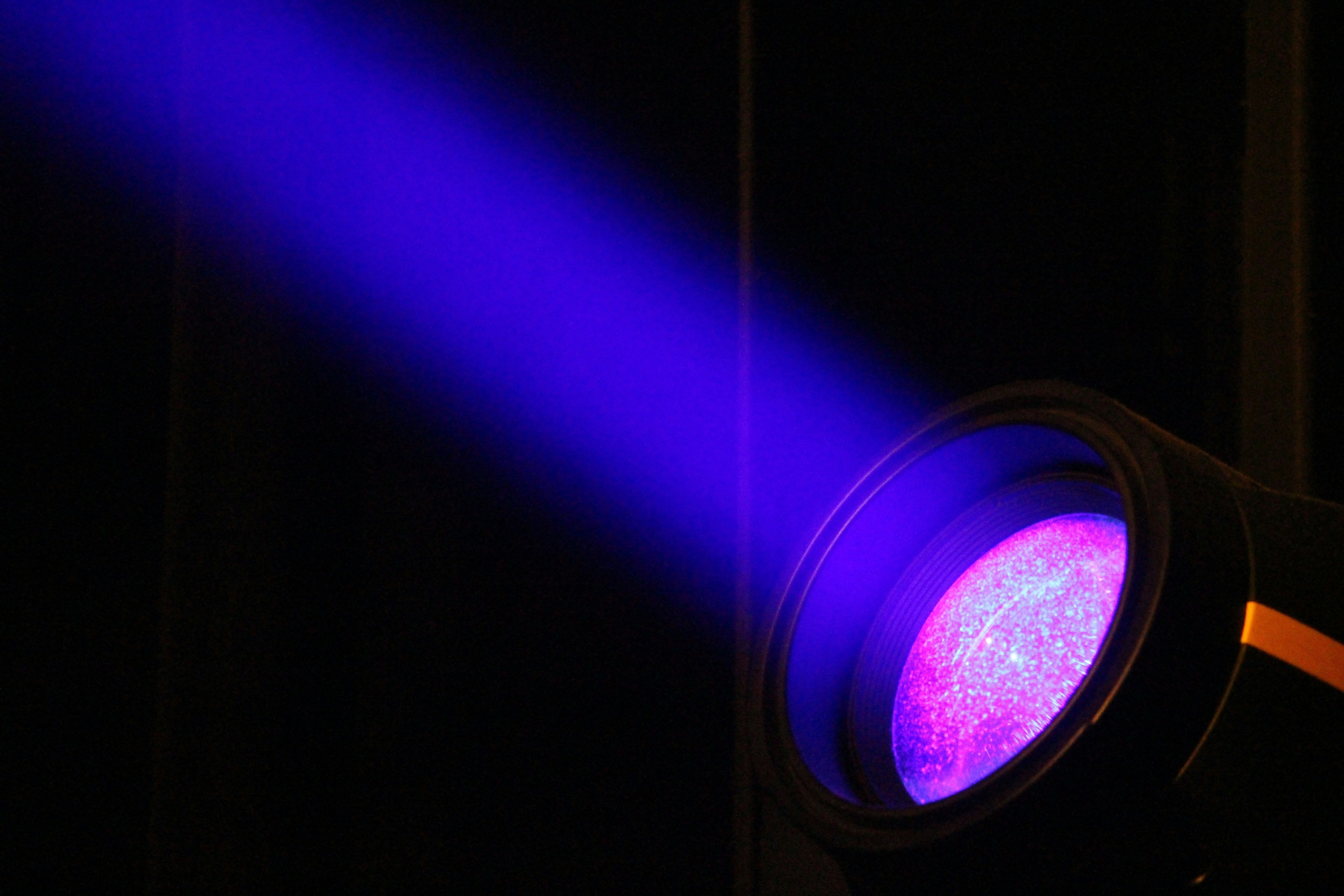
6. UV Light Test
The idea
Shine a UV light on it. If it fluoresces, it’s real.
What’s actually happening
Under ultraviolet light, certain organic compounds absorb energy and re-emit it as visible light. This is called fluorescence.
Some components found in Shilajit, particularly fulvic compounds and other aromatic organic molecules, can show mild fluorescence under UV.
But here’s the key point:
this behaviour is not unique to Shilajit.
A wide range of natural substances fluoresce, including:
- humic extracts
- plant polyphenols
- degraded organic matter
- even some sugars and resins
So what you’re seeing is not “proof of Shilajit”
It’s simply proof that something in the sample reacts to UV light.
How it can be faked
This is where the test really falls apart.
You can recreate similar fluorescence using:
- fulvic acid isolates
- peat or lignite extracts
- plant-derived compounds rich in polyphenols
- even added colouring agents designed to react under UV
In other words, a product can pass the UV test without being full-spectrum Shilajit at all.
What this means
Fluorescence might look convincing, but it’s a non-specific reaction.
It tells you nothing about:
- composition
- purity
- authenticity
- or quality
At best, it shows the presence of certain organic compounds.
At worst, it gives false confidence in a completely manipulated product.
7. pH Test
The idea
Real Shilajit has a specific pH.
What’s actually happening
pH measures acidity or alkalinity, which depends on the concentration of hydrogen ions in solution.
Shilajit’s pH can vary depending on:
- mineral composition
- organic content
- dilution
There is no fixed “correct” value.
How it can be faked
pH can be adjusted easily by adding small amounts of acids or alkalis.
This makes it one of the least reliable indicators of authenticity.
8. Conductivity or TDS Test
The idea
Higher readings mean more minerals, and therefore better Shilajit.
What’s actually happening
Conductivity measures how well a solution carries an electrical current.
That depends on the presence of ions, which are charged particles released when compounds dissolve in water.
In the context of Shilajit, this could include ions from minerals such as:
- magnesium
- calcium
- potassium
- iron
So in theory, a higher reading suggests more dissolved material.
But here’s the problem.
Conductivity does not identify what those ions actually are.
It does not distinguish between:
- beneficial trace minerals
- added salts
- degraded organic material
- or contaminants
It simply measures the total electrical activity in the solution.
How it can be faked
This is one of the easiest tests to manipulate.
A product can produce a high reading by:
- adding simple salts
- including low-quality mineral fillers
- using extracts with high ionic content but poor overall composition
Even a small amount of sodium chloride can significantly increase conductivity.
So a higher number doesn’t necessarily reflect better quality. It just reflects more charged particles in the water.
What this means
A conductivity reading tells you something is present.
It does not tell you what it is, whether it is useful, or whether it should be there at all.
9. Ash Test
The idea
Burn it and measure what’s left. More ash means more minerals.
What’s actually happening
Ash is simply the inorganic residue left after combustion.
It does not identify which minerals are present or whether they are useful or safe.
How it can be faked
Adding mineral fillers or contaminated material increases ash content.
More ash does not mean better Shilajit.
10. Heat or Softening Test
The idea
If it softens in your hand, it’s real.
What’s actually happening
Most organic materials soften with heat due to changes in molecular mobility.
How it can be faked
Sugars, waxes and resins behave in exactly the same way.
This is basic physics, not a quality test.
The Pattern Behind All of This
Every one of these tests measures a general property.
Burning
Dissolving
Stretching
Reacting to light
Conducting electricity
None of these are unique to Shilajit.
That’s why they can all be mimicked.
The problem isn’t that these tests are fake. It’s that they’re built on the same kind of assumptions you see repeated across common Shilajit myths.
Where Things Start to Look More Convincing
At some point, most people realise these tests aren’t telling them much.
So the next step is usually lab reports.
That sounds like a safer option.
And it can be.
But only if you understand what you're actually looking at.
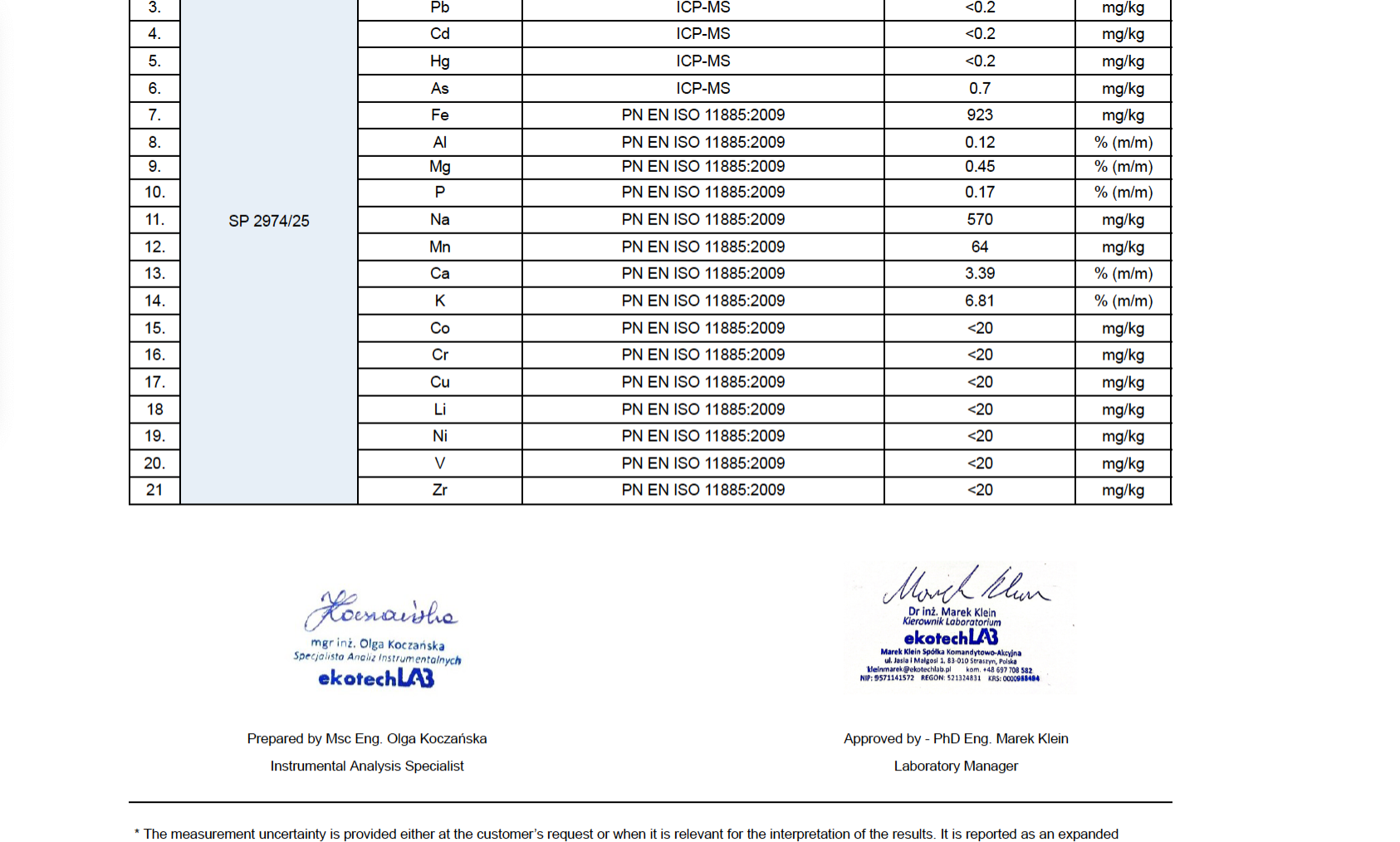
Many people see a certificate full of numbers without knowing how to interpret it, which is why understanding how to read a Shilajit lab report matters.
Because not all testing is equal.
Some methods are broad. Some inflate results. Some measure indirect signals rather than specific compounds.
So you can end up with the same problem as before.
Just with better branding.
A lab report shows you what is present in a sample at the time it was analysed, but that only makes sense if you understand how Shilajit is actually tested.
That distinction matters.
Because in Shilajit, the testing method can influence the result just as much as the material itself.
Can Lab Results Be Manipulated?
At this point, it’s easy to assume that lab testing solves the problem.
In reality, it depends on how the testing is done, and what is being tested.
A lab report shows you what is present in a sample at the time it was analysed, but that only makes sense if you understand how fulvic acid is actually measured.
That distinction matters.
In some cases, products can be:
- spiked with isolated fulvic acid to increase headline percentages
- blended with mineral salts to enhance elemental profiles
- filtered or fractionated to simplify the composition before testing
The lab will measure those compounds accurately.
It will not tell you whether they occur naturally as part of a full-spectrum material.
There are also practical limitations.
A supplier can:
- submit a carefully selected sample rather than a representative batch
- use different material in production
- or choose to report only part of the data
Even when testing is legitimate, the results can still be incomplete or selectively presented.
This is why “lab tested” is not a conclusion.
It is a starting point.
What matters is not just that testing exists, but:
- which methods are used
- how complete the analysis is
- whether results are consistent across batches
- and whether the data actually reflects the final product
Without that context, a lab report can look authoritative while still leaving important questions unanswered.
A result can be accurate, and still not be representative.
Why Science Looks Different
There’s a reason proper analysis doesn’t involve fire, water, or torches.
Complex natural materials can’t be identified through simple reactions.
They require methods that isolate, separate and quantify specific compounds.
Real testing looks at:
- composition
- contaminants
- specific fractions
- consistency across batches
One approach is based on observation.
The other is based on controlled measurement of specific compounds.
What These Tests Don’t Tell You
None of the tests above, whether informal or “semi-scientific”, tell you:
What is actually in the material
What has been removed
What has been added
Whether it contains contaminants
Whether it is consistent between batches
They give you a reaction.
They don’t give you a full picture.
Experience vs Single Tests
At this point, it’s worth being clear about something.
None of these tests exist in isolation.
Not the flame test.
Not the dissolve test.
Not even a single lab result.
On their own, they don’t confirm authenticity.
What actually matters is how everything fits together.
Over time, patterns start to become obvious.
For example:
- Extremely high fulvic acid claims (60–80%+) are often a sign of testing method bias, concentration, or outright manipulation
- Very “clean” behaviour in water can indicate that larger humic fractions have been removed
- Simplified mineral profiles can suggest that a material has been stripped down or reconstructed rather than naturally formed
These aren’t guesses.
They come from understanding how Shilajit behaves chemically, and how it varies across different sources and processing methods.
This is where experience becomes relevant.
Not as a replacement for testing, but as context for interpreting it.
A single number can be misleading.
A single test can be gamed.
But it is much harder to fake:
- a balanced composition
- realistic ranges across multiple markers
- and consistency over time
That combination is what separates a full-spectrum material from something that has been engineered to look like one.
The Bottom Line
Every one of these tests can be passed by something that isn’t Shilajit.
And every one of them can be failed by something that is.
That’s the problem.
They don’t confirm quality.
They confirm expectations.
If you’re trying to judge a complex natural material using a lighter, a glass of water, or a UV torch, you’re not really testing it.
You’re just looking for something that behaves the way you expect it to.
And that’s exactly what low-quality products are designed to do.
So What Actually Matters?
If you want to understand Shilajit properly, you have to move past surface-level reactions and look at what’s actually being measured.
That means:
how it’s tested
which methods are used
what data is shown
what isn’t
and how consistent it is over time
If you want a practical way to apply this, it helps to understand what to look for when buying Shilajit.
Simple reactions were never designed to answer a complex question.
And if it really were that easy to test, there wouldn’t be so much bad Shilajit on the market.
The fact that these tests are everywhere is exactly why they don’t work.
Explore our full Shilajit Collection here

Share:
Does Shilajit Contain 84 Minerals? A Closer Look at the Claim
How to Read a Shilajit Lab Report: Fulvic Acid, Heavy Metals, ISO 19822 & What Brands Don't Tell You