



The claim you will see everywhere
Shilajit is often described as containing “84 minerals”, sometimes “85”.
It is usually presented as a defining feature.
A fixed number that suggests precision and completeness.
It sounds specific.
It sounds scientific.
That is exactly why it works.
Where does the “84 minerals” idea come from?
The short answer is that there is no clear, verifiable source for it.
The number appears to come from a mix of:
- traditional references
- early attempts to categorise mineral content
- repeated marketing claims
Over time, it has been repeated often enough that it now feels established.
That is not the same as being defined or verified.
The problem with the number
There is no recognised standard that defines Shilajit as containing exactly 84 or 85 minerals.
There is no agreed list of what those minerals are.
And there is no consistent analytical data that supports a fixed number across different samples.
This matters, because Shilajit is not a fixed substance.
It forms over time from decomposed plant material and minerals. Its composition varies depending on:
- geographic origin
- environmental conditions
- processing methods
That variability does not support a fixed count.
What Shilajit actually contains
Shilajit is better understood as a complex matrix, not a checklist.
It typically includes:
- fulvic compounds
- humic substances
- a variable range of trace elements
Trace minerals are present in small amounts, and their profile depends on the specific material.
The number detected in any analysis depends on:
- the sample itself
- the sensitivity of the testing method
- how the results are reported
Two analyses of similar material can produce different mineral profiles.
What Minerals Are Commonly Found in Shilajit?
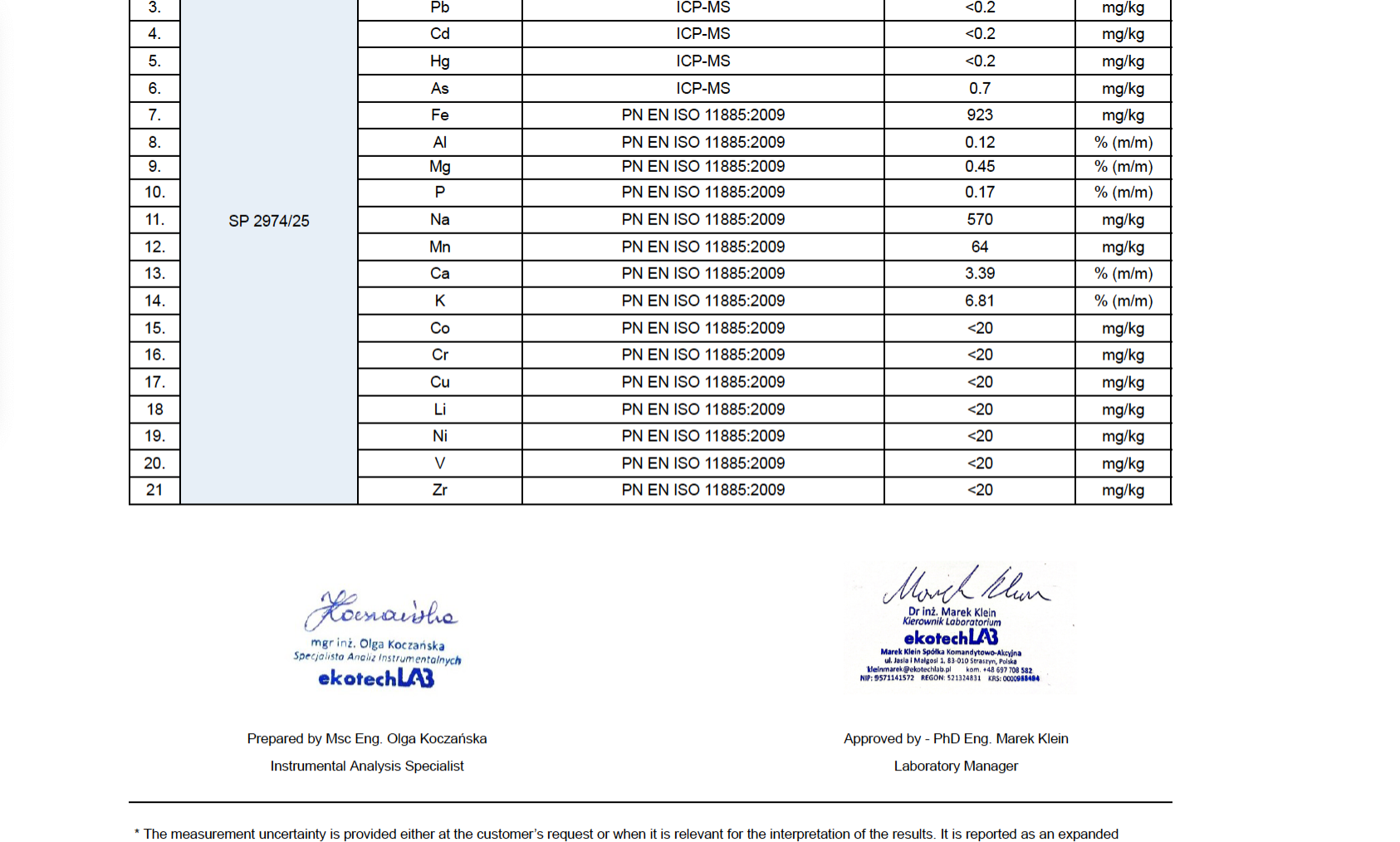
While there is no defined list of exactly 84 minerals, properly analysed Shilajit can contain a range of naturally occurring trace elements.
Depending on origin, composition, and testing methods, these may include:
- Iron
- Magnesium
- Potassium
- Calcium
- Manganese
- Zinc
- Copper
- Selenium
The important point is that the profile varies.
Different Shilajit sources can contain different concentrations and, in some cases, different detectable elements altogether.
This is one reason why fixed mineral claims are difficult to support. Shilajit is not a standardised mineral blend. It is a naturally occurring material whose composition reflects its environment.
Does Shilajit Contain Vitamins?
This is another area where confusion often arises.
Shilajit is generally valued for its humic substances and trace mineral content rather than as a significant source of vitamins.
Some analyses have identified small amounts of vitamin-like compounds and other naturally occurring organic molecules, but Shilajit is not typically considered a meaningful dietary source of vitamins in the way that fruits, vegetables, or fortified foods are.
In practice, Shilajit is better understood as a complex mineral and humic substance matrix rather than a vitamin supplement.
Why the claim is misleading
Saying Shilajit contains “84 minerals” suggests:
- a consistent composition
- a defined standard
- a measurable benchmark
None of these apply in practice.
There is:
- no universal mineral count
- no defined list of 84 elements
- no guarantee that two products using this claim share the same composition
At best, it is a simplification.
At worst, it is a number presented without context.
The more relevant question: What has actually been tested?
The mineral count is not the useful part.
A more relevant question is:
What has actually been tested?
A product can claim a number of minerals without showing:
- which elements were measured
- in what quantities
- what else is present
- whether unwanted elements were screened
Without that context, the number itself tells you very little. In some cases, brands will reference a mineral count without publishing a complete elemental profile at all.
What proper testing shows instead
A meaningful analysis looks beyond a fixed count.
It typically includes:
- a broad elemental profile using methods such as ICP-MS
- measurement of both essential elements and heavy metals
- additional testing for contaminants and consistency
This provides a more accurate picture of the material.
It also highlights something that is rarely discussed:
Not just what is present, but what is absent.
For a full breakdown, see:
How Shilajit Testing Actually Works (And What Most Brands Don’t Show)
Why the claim persists
It is simple.
It sounds precise.
It sounds scientific.
It is easy to repeat.
And it does not require explanation.
That combination is usually enough.
A more accurate way to think about it
Rather than focusing on a fixed number, it is more useful to think of Shilajit as:
- a source of humic substances
- containing a variable range of trace elements
- with composition that depends on origin and processing
Less tidy. More accurate.
The bottom line
There is no defined or verifiable basis for Shilajit containing exactly 84 or 85 minerals.
The number sounds precise, but it does not reflect how the material actually behaves.
What matters more is:
- how it has been tested
- what has been measured
- and what has been left out
A number without a defined method or list is not a measurement. It’s a claim.
The mineral count is only one part of the picture, and understanding how testing and composition work together makes the difference much clearer.
Related reading
If you want to explore this in more detail:

Share:
“Gold Grade” Shilajit: What It Means (And Why It’s Not a Standard)
Informal Tests vs Lab Reports: Why Most Shilajit “Authenticity Checks” Don’t Mean Much