



“Himalayan Shilajit” gets talked about as if it’s the gold standard.
High altitude. Remote cliffs. Rare deposits.
It sounds impressive. And to be fair, the Himalayas do have a long history with Shilajit.
But the reality is a bit more complicated than the label suggests.
Shilajit Doesn’t Come From Just One Place
Shilajit forms when plant matter slowly breaks down and interacts with minerals over time. That process isn’t unique to one mountain range.
You’ll find it in:
- the Himalayas
- the Altai Mountains
- parts of Central Asia
- and other high-altitude regions
So when you see “Himalayan Shilajit”, it may be accurate. It may also be a simplified description of a more complex supply chain.
If you’re trying to understand how these different sources actually compare in practice, and which type might suit your routine, we’ve broken that down in our guide to choosing between different Shilajit profiles.
How “Himalayan” Became the Default
A lot of it comes down to history.
Shilajit has deep roots in Ayurvedic medicine, which naturally points back to the Himalayas. As demand grew, that association stuck.
Over time, “Himalayan” became less of a precise description and more of a shorthand for:
“this is the real thing”
The problem is, shorthand can drift.
Supply Isn’t as Simple as the Label
Shilajit isn’t mass-produced. It’s collected by hand, often in difficult terrain, and it forms slowly over long periods.
At the same time, demand has grown significantly.
When that happens in any market, supply chains expand.
There is now documented trade activity showing Shilajit moving through regions you might not expect, including parts of Africa such as Somalia, as well as Central Asia. That doesn’t automatically mean anything is wrong with the material itself, but it does show that sourcing is more global than most labels suggest.
In other words:
what’s written on the jar doesn’t always tell the full story of how it got there.
The Problem With “Proving” Origin
It’s reasonable to ask where a product comes from.
But in practice, that’s not always straightforward.
There’s no universal system for verifying origin in this space. And most reputable brands won’t publicly disclose exact sourcing locations anyway.
Not because they’re hiding something, but because:
- supplier relationships are hard-won
- supply chains are small and competitive
- publishing details invites copying and undercutting
So you end up with a strange situation:
- good brands stay quiet to protect supply
- weaker brands can hide behind the same lack of transparency
Which makes origin alone a difficult thing to rely on.
Scarcity, Access and Price
There’s another practical way to look at origin claims, and it often gets overlooked.
If a material is genuinely:
- difficult to access
- restricted in supply
- and collected in small quantities
then it should behave like a scarce commodity.
In simple terms:
it shouldn’t be cheap, and it shouldn’t be everywhere.
Some regions of the Himalayas now have restrictions on raw Shilajit collection and export, and access to deposits is limited by both geography and regulation.
That doesn’t mean genuine material doesn’t exist. It does.
But it does raise a reasonable question.
If a product is widely available, consistently stocked, and relatively low in price, it’s worth asking how that aligns with the idea of extreme rarity. This kind of positioning often overlaps with how altitude is used as a quality signal, even though it rarely tells the full story.
This isn’t about assuming anything is fake.
It’s about understanding that:
supply, access and price usually move together.
And if they don’t, it’s worth looking a little closer.
This is also one of the reasons Shilajit prices can vary so dramatically between products. Understanding how much Shilajit should cost can often tell you more than an origin claim on its own.
A Note on Altai Shilajit
The Altai range stretches across Russia, Mongolia, Kazakhstan and into parts of China. It’s a vast, high-altitude region with the same kind of geological conditions that allow Shilajit to form over time.
Shilajit from this belt has been used for years in more performance-focused settings, particularly in Eastern Europe and Russia. When it’s sourced properly, it’s known for being clean, consistent and well-balanced.
That’s one of the reasons we focus on Altai.
Not because it’s the only good source, but because it’s one we trust, and one that allows for reliable, repeatable quality. If you want to see what that looks like in practice, you can view our Altai Shilajit here.
Putting “Himalayan” Into Perspective
The Himalayas still produce Shilajit, particularly in regions like the Karakoram and parts of Northern India.
But supply is not as simple as it’s often presented.
Restrictions on raw export, difficult access, and growing demand have all made genuine, large-scale sourcing more complex. At the same time, global supply chains have expanded.
There is now documented trade showing Shilajit moving through regions such as Somalia and parts of Central Asia before being processed and sold into the wider market. That doesn’t make the material inherently better or worse, but it does highlight how far removed the final product can be from the label on the jar.
So when you see “Himalayan Shilajit”, it may be accurate. It may also be a simplified description of a more complex supply chain.
So What Should You Look At Instead?
If origin isn’t the full picture, what is? If you want a practical breakdown of how to assess this when choosing a product, see our Shilajit Buying Guide.
In practice, these matter more:
- how the Shilajit has been purified
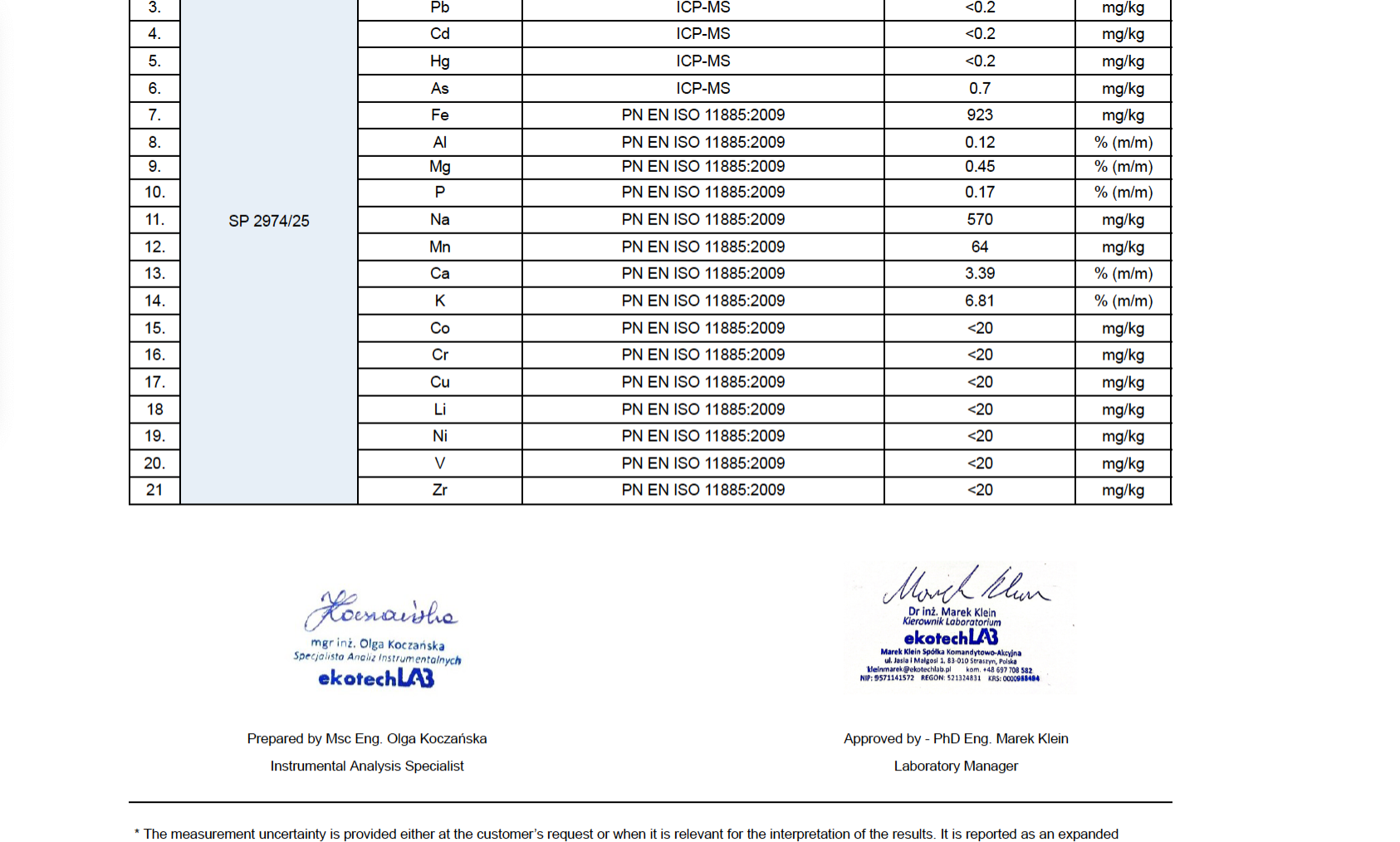
- whether it has been independently tested
- contaminant screening (heavy metals, microbial, PAHs)
- mineral and fulvic balance
- consistency between batches
These are the things that actually affect:
- safety
- quality
- and how the product performs
A Quick Word on Regional Bias
There’s a lot of noise around certain regions being “better” or “worse”.
In reality, quality isn’t defined by geography alone.
A well-sourced, properly purified resin from one region can easily outperform a poorly handled product from another.
What matters is how it’s treated, not just where it started.
The Bottom Line
Himalayan Shilajit isn’t automatically better.
It’s one of several legitimate sources, and an important one historically. But it’s not the only place quality comes from.
The bigger picture is this:
Shilajit is only as good as:
- its sourcing
- its processing
- and the transparency behind it
In a category built on stories and labels, those things matter far more than the name of a mountain range.

Share:
Which Shilajit Is Best? Altai vs Mongolian vs Kashmiri vs Hunza Explained
Shilajit Explained: What It Is, How It Works, and What Actually Matters