


What is raw honey?
Raw honey is quite simply, honey that does not undergo any processing. It is collected and only strained before being bottled. This means it retains most of its nutritional value, and is extremely rich in naturally occurring phytonutrients and antioxidants. This is very different from regular honey which goes through various processes such as pasteurisation, filtration and even ultrafiltration, before it is bottled. These additional processes mean the resulting honey loses many of its beneficial properties such as pollen, enzymes and antioxidants. Some honey producers will also add sugar or sweeteners to their products. This adulterated honey allows them to achieve a much lower unit price, whilst also yielding large profit margins.
Why is raw honey more nutritious?
The high heat used in pasteurisation helps to give honey the look a supermarket shelf demands. It improves the colour and texture, extends the shelf life, kills off yeast, and removes any crystallisation. However, through this process, literally all of the health benefits are also destroyed. Conversely, raw honey is rich in nutrients, including amino acids, minerals, vitamins, enzymes and bioactive plant compounds which act as antioxidants. Studies have found links with these antioxidants to a range of health benefits, including lowering the risk of heart disease and reducing inflammation. These benefits are significantly diminished in regular honey. And in some cases, the honey is completely devoid of any nutritional value, as processing turns it into nothing more than a ‘sugar syrup’.
Propolis, which is found in raw honey has antifungal and antibacterial properties, meaning it can be used topically or ingested. Raw honey also contains valuable prebiotics which helps to support the good bacteria living in the digestive system. This not only aids digestion but overall health too.
The vast majority of regular honey does not contain bee pollen. Bees travel between flowers collecting nectar and pollen. When they return to the beehive it is packed into the honeycomb where it becomes a food source for the bees. Bee pollen is particularly nutritious and contains hundreds of substances including a complete amino acid profile, essential fatty acids, vitamins and other micronutrients. Traditional honey processing methods remove this bee pollen. Meaning the many health benefits which include improving liver function and fighting heart disease are lost.
What is the difference between raw honey and organic honey?
To be classed as raw honey there must be no processing or pasteurisation of the honey. Whereas to be certified organic, the honey must come from a farm which uses only organic pesticides and herbicides (rather than synthetic). Organic certification also requires any residue from these organic pesticides/herbicides to be below a certain level. There are no restrictions on pasteurisation and processing when it comes to organic honey.
How do you store raw honey?
To keep your raw honey at its best you should store it away from light and extreme temperatures in a tightly sealed container. Be sure that your honey does not become contaminated. You may notice that your honey becomes crystalised after a while. It’s still safe to consume but you may wish to heat it slightly to melt the crystals.
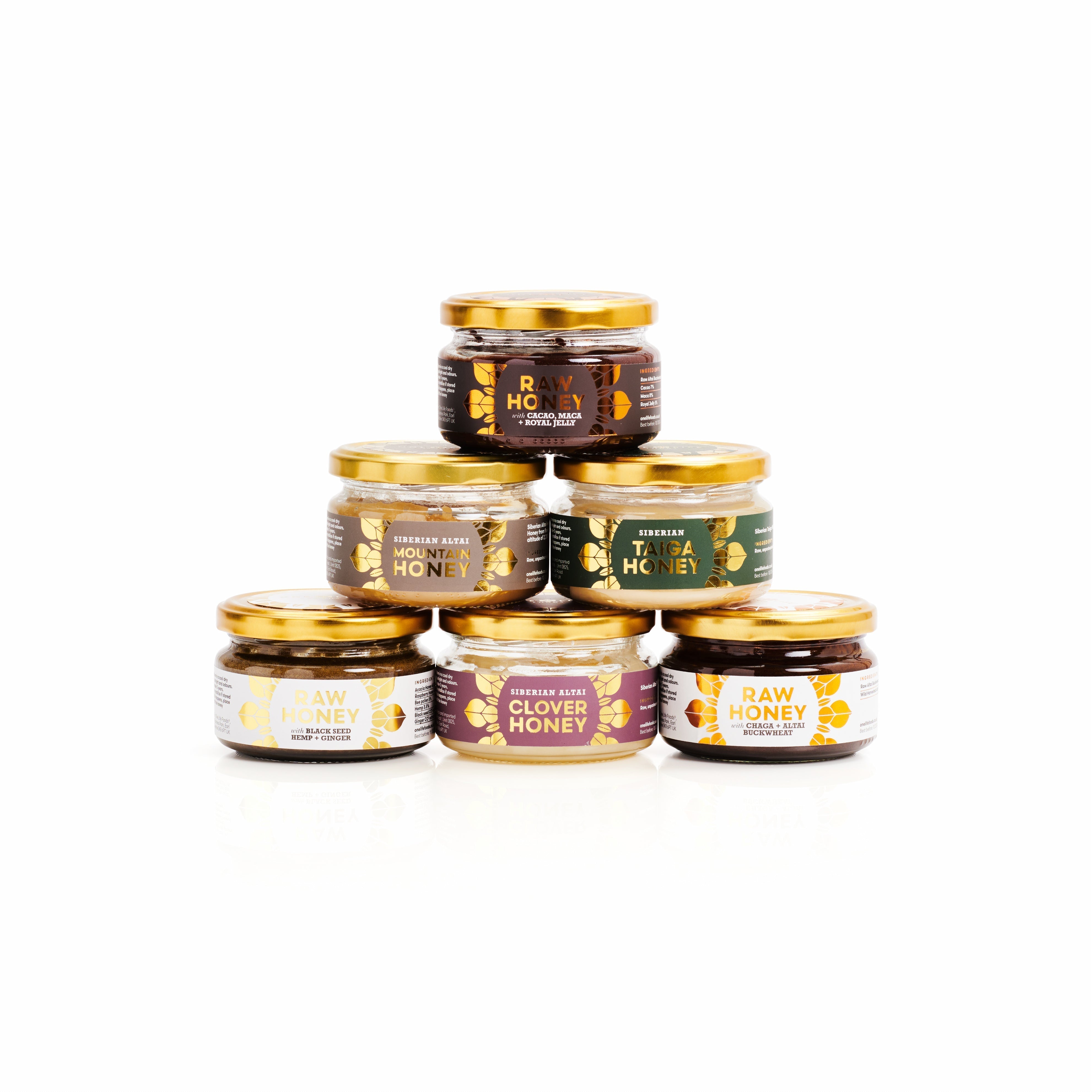
We have curated a range of raw honey from the Altai mountains of Siberia, which is one of the most ecologically clean areas in the world. Our Altai Mountain honey is derived from flowers blooming at a high altitude of 2,200m above sea level.
One Life Foods’ honey is raw, unpasteurised imported directly to the U.K. Why not try our wild forest clover honey which has a sweet finish, or our Altai Mountain honey with its multi-floral honey notes?
Whatever your nutritional needs are we have the perfect solution for you at One Life Foods. If you have any questions, please do not hesitate to contact us: info@onelifefoods.co.uk

Share:
Why are cold process soaps better than conventional soaps?
What is Ashwagandha?