


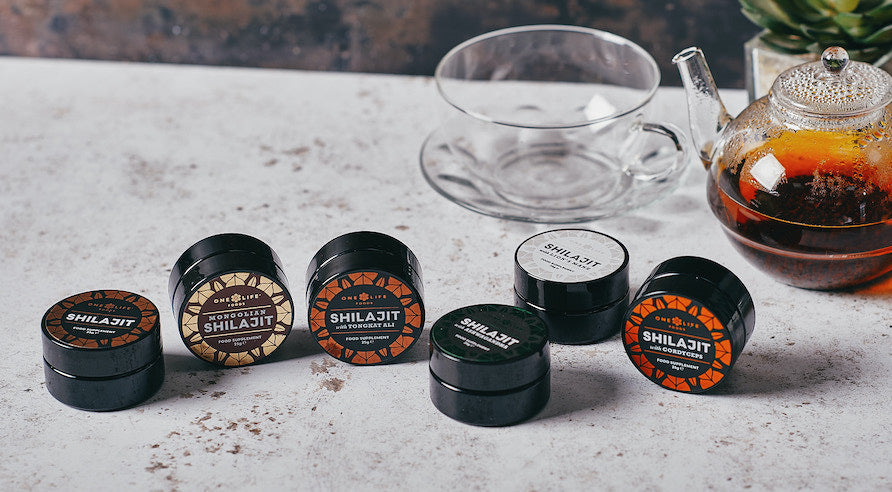
Shilajit is not magic.
It is also not nonsense.
It is a complex phyto-mineral resin with traditional use behind it, a distinctive composition, and a small but meaningful body of human research.
The grown-up conversation is not:
“Does Shilajit cure everything?”
It is:
“Which Shilajit benefits have actual evidence, which are still speculative, and what does quality control have to do with whether it is worth taking?”
That is where things get useful.
What Actually Is Shilajit?
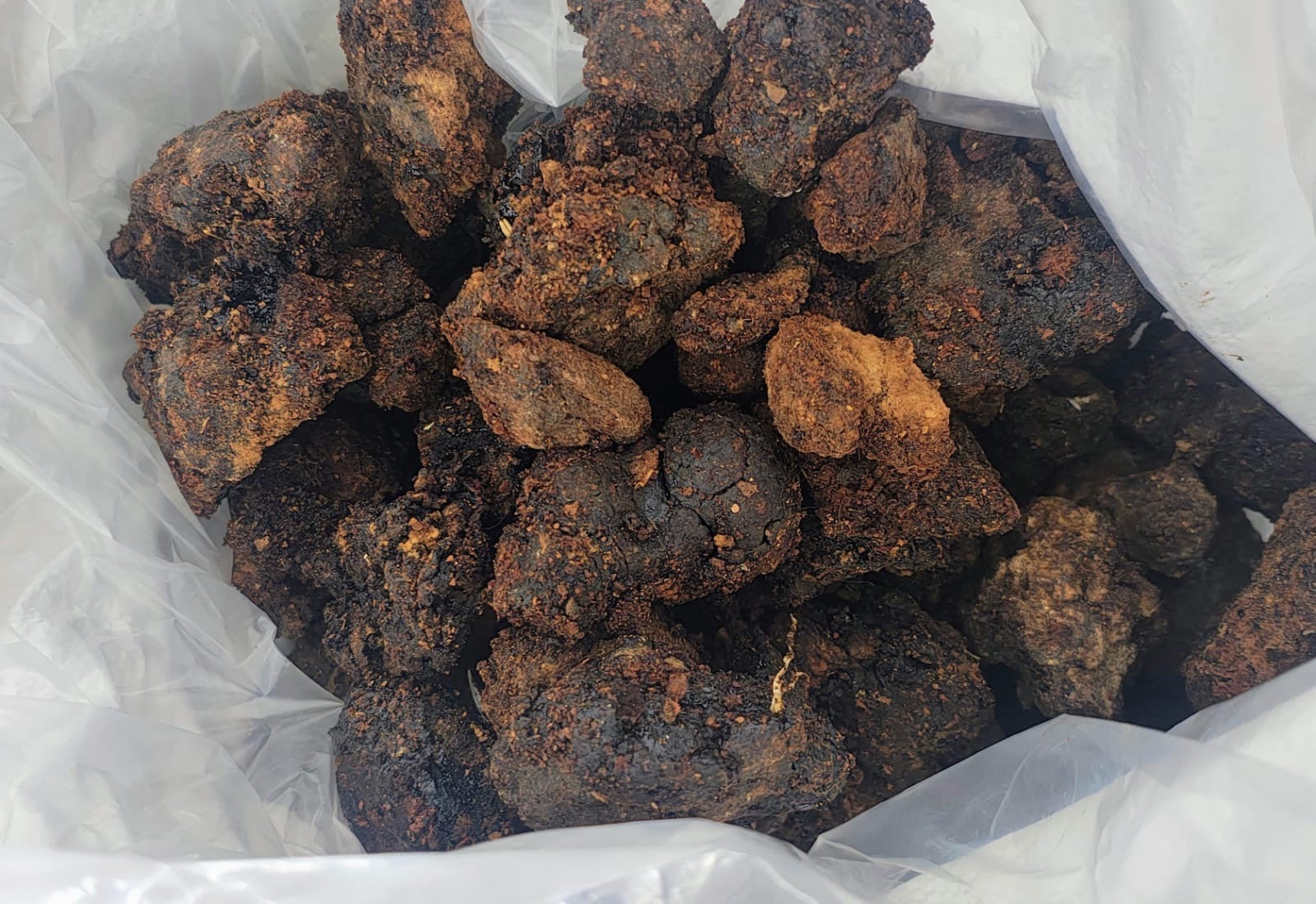
Shilajit is a dark, resin-like substance found in mountainous regions, especially the Himalayas, Altai and other high-altitude areas. It forms over long periods from decomposed plant and microbial material, compressed and transformed through geological and environmental processes.
In simple terms, it is not a herb. It is not a mushroom. It is not a mineral tablet.
It is a natural matrix containing humic substances, fulvic compounds, organic acids, minerals and other bioactive constituents.
If you are new to the subject, it is worth starting with what Shilajit actually is before getting too excited about the benefits.
This matters because Shilajit does not work like a single-ingredient supplement.
It is not like taking magnesium, caffeine or creatine, where the active mechanism is fairly specific. Shilajit is better understood as a complex natural matrix. That is also why quality varies so much.
Two products can both say “Shilajit” on the label and be wildly different in composition, purity and safety.
That difference matters more than most people realise.
Where the Folklore Comes From
In Ayurveda and Siddha traditions, Shilajit has long been described as a rasayana. That word is often translated as a rejuvenative or restorative tonic.
Traditionally, it was used for vitality, strength, resilience, weakness, ageing and recovery.
That does not prove those effects in the modern clinical sense.
Traditional use is not the same thing as scientific evidence.
But it does tell us something.
Folklore often begins as pattern recognition. People use a substance repeatedly, across generations, and certain effects become associated with it. Sometimes that pattern is wrong. Sometimes it is exaggerated. Sometimes it is surprisingly aligned with what later research begins to explore.
With Shilajit, some of the old themes are at least biologically plausible.
Energy, resilience, male vitality and recovery are not random claims pulled from thin air. They connect to areas where modern studies have started to look: mitochondrial function, fatigue, testosterone markers, sperm parameters and oxidative stress.
The problem is that “plausible” is not the same as proven.
A Quick Word on “Proof” in Science
People often ask whether something is “scientifically proven”.
It is a fair question.
But science rarely works in absolute proof.
A study can show a statistically significant result, meaning the observed effect is unlikely to be due to chance under the conditions of that study. That is useful.
But it does not automatically mean the result applies to everyone, at every dose, using every version of the ingredient.
Good evidence depends on:
the design of the study
the number of people involved
the dose used
the form of the ingredient
the duration
the outcome measured
whether similar findings can be repeated
So with Shilajit, the honest position is this:
Some benefits have early human evidence. Some are supported mainly by traditional use, animal studies or lab research. Some are marketing dressed up as certainty.
Let’s separate them.
Benefit 1: Cellular Energy Support
This is probably the most sensible place to start.
Shilajit is often marketed as an “energy” supplement, but that word can be misleading.
It is not caffeine.
It does not hit you like a pre-workout.
It should not make you feel like you have licked a battery.
The more credible angle is cellular energy support.
Shilajit contains fulvic compounds and humic substances, which are thought to interact with mineral transport, redox balance and mitochondrial function. Mitochondria are the parts of the cell involved in producing usable energy.
That does not mean Shilajit “gives you energy” in the simplistic sense.
But it does make it interesting as a long-term support ingredient.
This fits the traditional reputation for vitality better than the modern idea of stimulation. Shilajit is less about a quick buzz and more about supporting the systems that help the body maintain output.
That distinction matters.
If you want to understand the matrix behind this, our guide to fulvic acid and humic substances in Shilajit explains why the full composition matters more than a single headline number.
Benefit 2: Strength Retention Under Fatigue
One of the more interesting human studies looked at purified Shilajit and fatigue-induced decreases in muscular strength.
After 8 weeks of supplementation at 500 mg per day, the study found that Shilajit helped retain maximal muscular strength following a fatiguing protocol.
That is a very different claim from:
“Builds muscle.”
Or:
“Boosts performance overnight.”
It is more specific.
And more useful.
The finding suggests Shilajit may support physical resilience under fatigue. For athletes, gym users or physically active people, that is a better positioning than generic energy.
Training is not just about peak output.
It is about how well the body holds up when fatigue starts to accumulate.
This is where Shilajit becomes interesting as a consistency ingredient.
Benefit 3: Male Hormonal Support
Shilajit is often pushed hard in the testosterone space.
Some brands talk about it as if it will turn every man into a marble statue with a jawline and a podcast.
The evidence is more measured, but still worth paying attention to.
A randomised, double-blind, placebo-controlled human study used purified Shilajit at 250 mg twice daily for 90 days in healthy men aged 45 to 55.
The study reported significant increases in total testosterone, free testosterone and DHEA-S compared with placebo.
That is one of the stronger human data points for Shilajit.
However, it still needs context.
The study was specific to healthy middle-aged men. It used purified Shilajit. It ran for 90 days. It does not prove that every Shilajit product will produce the same result in every person.
Still, compared with many testosterone-support ingredients, which often survive on vibes, rodent data and aggressive label design, Shilajit has something more concrete to discuss.
Benefit 4: Male Fertility Markers
Another area with human evidence is male fertility markers.
In a study involving men with oligospermia, which means low sperm count, processed Shilajit was taken over 90 days. The study reported improvements in sperm count, sperm motility, normal sperm count and semen oxidative stress markers. Testosterone and FSH also increased.
This is not the same as saying Shilajit is a fertility treatment.
That would be an overreach.
What it does suggest is that Shilajit may have a role in supporting male reproductive health markers, particularly where oxidative stress and hormonal status are relevant.
Again, the key words are “may support”.
Not “will fix”.
That careful language is not weakness.
It is accuracy.
Benefit 5: Antioxidant and Mineral Matrix Support
A lot of Shilajit content online still repeats claims like “85 minerals”, “84+ minerals”, or “over 80 trace minerals”.
The problem is that these numbers are rarely backed by evidence.
If a brand claims its Shilajit contains 80+ minerals, it should be able to show a full mineral analysis listing them. Without that, the claim is not science. It is borrowed marketing.
A proper Shilajit product should be supported by real testing, including fulvic acid, humic acid, heavy metals, microbiology, and any mineral claims being made.
If the claim is “85 minerals”, the obvious question is:
Where is the lab report?
The better point is not just the mineral count.
It is the matrix.
Shilajit naturally contains fulvic compounds, humic substances and minerals in a complex form. Fulvic substances are often discussed for their role in nutrient transport and antioxidant activity.
This may help explain why Shilajit has traditionally been associated with vitality and restoration.
But this is also where brands need to be careful.
Antioxidant potential in a lab does not automatically translate into dramatic outcomes in humans. It supports the rationale, but it does not give permission to claim everything from anti-ageing to disease prevention.
The serious position is this:
Shilajit offers a naturally occurring fulvic and mineral matrix that may support antioxidant balance and nutritional resilience.
Less dramatic.
More defensible.
For more context on why fixed mineral claims can be misleading, read Does Shilajit contain 84 minerals?
Benefit 6: Long-Term Vitality, Not Instant Stimulation
One of the best ways to understand Shilajit is by looking at the duration of the human studies.
Many of the more interesting outcomes are seen after 8 to 12 weeks.
That tells us something important.
Shilajit is not really a “take it once and feel it instantly” product.
Some people may notice subjective effects earlier, but the stronger evidence points towards consistent daily use over time.
That also fits the traditional idea of Shilajit as a tonic.
A tonic is not supposed to be a slap in the face.
It is supposed to build into the background, supporting resilience, vitality and function gradually.
Modern supplement culture loves immediate effects because they are easy to sell.
Shilajit is more subtle than that.
Which, ironically, is what makes it more interesting.
If you are wondering how to use it properly, our guide to how to take Shilajit covers dosage, timing and common mistakes.
What About the Folklore Benefits?
This is where it helps to be fair.
“Shilajit gives strength”
There may be something in this, but not in the superhero sense.
The fatigue study suggests Shilajit may help preserve strength under fatigue after consistent use. That gives the traditional strength claim a modern, narrower interpretation.
“Shilajit supports male vitality”
This is one of the more plausible traditional claims.
Human research has shown effects on testosterone markers and sperm parameters, although the evidence is still limited and product quality matters.
“Shilajit is anti-ageing”
This is too broad.
Traditional systems may frame Shilajit as rejuvenative, but “anti-ageing” is usually marketing BS.
A more honest version would be that Shilajit may support areas associated with healthy ageing, such as oxidative balance, energy metabolism and male hormonal markers.
That is not the same as reversing ageing.
“Shilajit boosts brain function”
This is still more speculative.
Some research discusses fulvic acid and cognitive health mechanisms, but the human evidence for Shilajit as a brain supplement is not as strong as the evidence for male hormone markers or fatigue-related strength retention.
“Shilajit detoxes the body”
This one needs caution.
“Detox” is one of the most abused words in wellness.
Shilajit contains fulvic substances that may bind or interact with minerals, but that does not mean it detoxes your body in the vague internet sense.
Your liver, kidneys, gut and lymphatic system are doing the real detox work.
They do not need a marketing department.
The Quality Issue Nobody Should Ignore
With Shilajit, quality is not a nice extra.
It is central to the product.
Raw or poorly processed Shilajit can contain heavy metals, environmental contaminants or inconsistent levels of active compounds. That is not a small detail.
It is the difference between a serious supplement and a gamble in a jar.
A high-quality Shilajit product should be purified, tested and transparent. Ideally, you want to know the origin, the fulvic and humic profile, and whether it has been screened for heavy metals and microbiological contamination.
This is where how Shilajit testing actually works becomes more important than the marketing language on the jar.
It is also why very cheap Shilajit should raise questions.
With an ingredient like this, the cost is not just the resin. It is the sourcing, purification, testing and rejection of poor-quality material.
The romance of Shilajit is ancient.
The standard should be modern.
If you are comparing products, our guide to what to look for when buying Shilajit is the practical place to start.
So, What Are the Real Benefits of Shilajit?
The most defensible Shilajit benefits are:
- Support for cellular energy systems
- Support for physical resilience under fatigue
- Support for male hormonal markers
- Support for male fertility markers
- Support from a natural fulvic and mineral matrix
- Long-term vitality support when used consistently
- Value as a traditional ingredient when held to modern testing standards
That last point is important.
Shilajit does not need to be sold as a miracle.
In fact, it becomes more credible when you stop pretending it is one.
The best case for Shilajit is not that it cures everything.
It is that purified, tested Shilajit has a rare combination of traditional relevance, complex natural chemistry and early human evidence in areas people actually care about:
energy
resilience
male vitality
performance over time
That's a better story than folklore alone.
That's a stronger argument than folklore alone, and far more credible than miracle marketing.
If you are comparing different regional resins, you can explore our Shilajit resin collection to see how origin, composition and testing vary between sources.
A Note on Evidence and Claims
The strongest evidence points discussed above include a 90-day human study using purified Shilajit at 250 mg twice daily, which reported increases in total testosterone, free testosterone and DHEA-S compared with placebo, and an 8-week study using 500 mg per day, which reported better retention of maximal muscular strength after a fatigue protocol.
The fertility section is based on a 90-day study in men with oligospermia, where processed Shilajit was associated with improvements in sperm count, motility, normal sperm count, semen oxidative stress markers, testosterone and FSH.
That evidence is interesting.
It is not a licence for miracle claims.
For UK-facing product marketing, supplement claims still need to be handled carefully. Educational content can discuss research, but product claims should remain responsible, measured and compliant.
The Bottom Line
Shilajit benefits are often exaggerated.
That does not mean Shilajit is useless.
It means the real discussion needs to be more precise.
The strongest case for Shilajit is not instant energy, detox drama or heroic testosterone marketing.
It is steady support for energy systems, resilience, male vitality markers and long-term use, provided the product is purified, tested and taken sensibly.
Shilajit sits in the gap between tradition and modern evidence.
Handled properly, that makes it interesting.
Handled badly, it becomes just another black jar with big promises and not enough proof.

Share:
Pre-Workout vs Hydration Intra: The Difference Between Energy and Endurance