


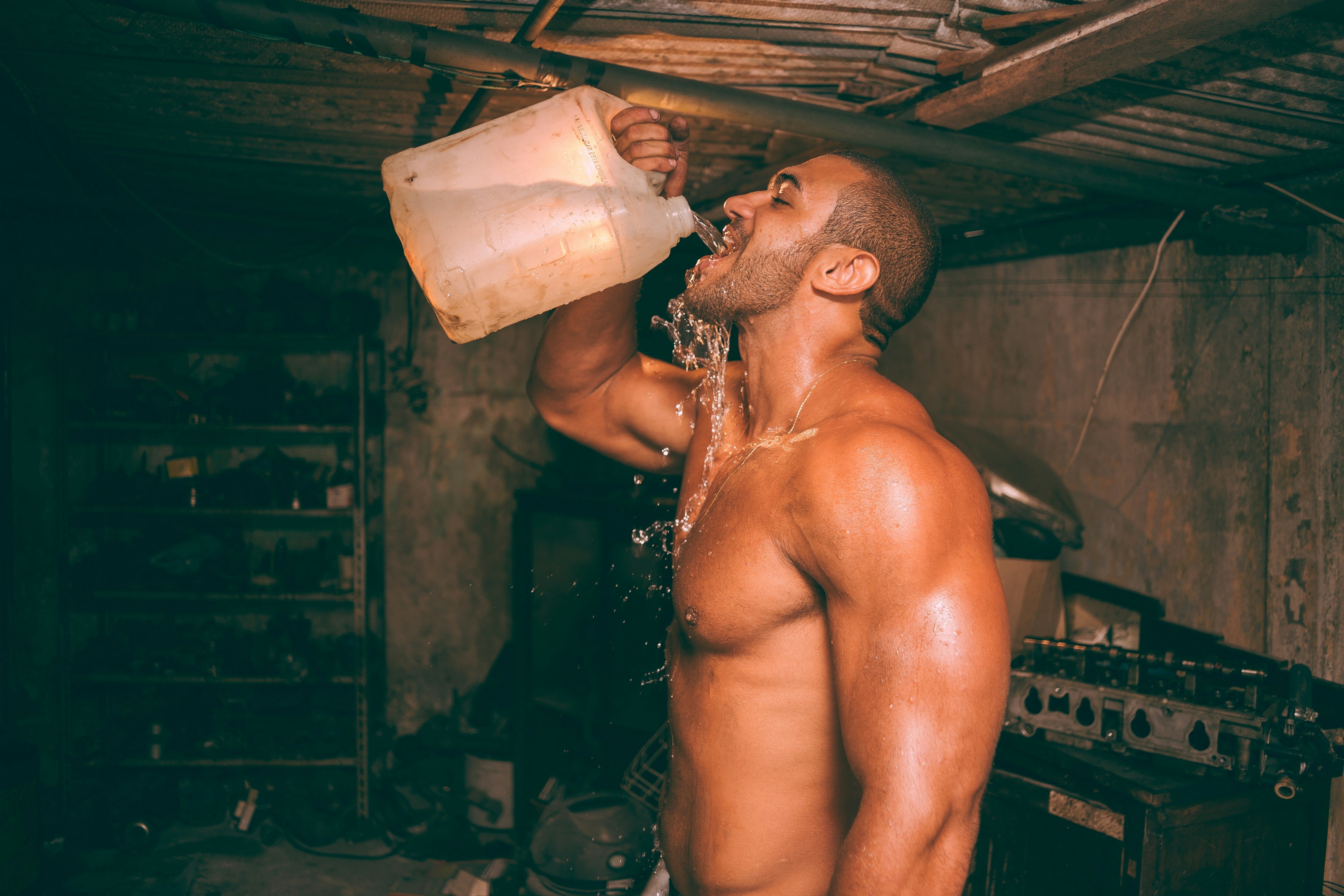
Energy is not the same as endurance
Most gym users understand pre-workout.
You take it before training. You wait for the caffeine to kick in. You feel more switched on, more alert, more willing to argue with a barbell.
Lovely.
Hydration intra is different.
It is less dramatic. Less noisy. It does not usually come with a warning label that makes your central nervous system sound like it is about to apply for planning permission.
But for the right type of training, it can be the more intelligent performance tool.
Because there is a difference between starting strong and staying strong.
Pre-workout is mainly about readiness: energy, focus, drive, stimulation and that useful sense of “right, let’s go”.
Hydration intra is about sustaining output once training starts taking something back.
Fluid.
Sodium.
Electrolytes.
Heat tolerance.
Blood volume.
The ability to keep producing when the session is no longer fresh and polite.
That is the real comparison.
Not “which one is better?” in a lazy internet-debate way.
The better question is this:
Do you need help getting switched on before training, or do you need support staying switched on while the work is happening?
For serious athletes, hybrid athletes, high-volume lifters, endurance athletes, combat sport athletes, footballers, CrossFit-style trainees, HYROX-style trainees and anyone training hard in heat or for longer durations, that question matters.
Let’s get into the physiology.
What does pre-workout actually do?
A good pre-workout is designed to improve the start of the session.
That usually means some combination of:
-
Caffeine for alertness, drive and perceived energy
-
Pump ingredients to support blood flow
-
Focus compounds for mental sharpness
-
Beta-alanine, often included for longer-term muscular endurance support
-
Creatine, although creatine works best through daily saturation rather than as a one-off pre-training hit
The most obvious part is caffeine.
Caffeine works largely through the central nervous system. One of its key mechanisms is blocking adenosine receptors. Adenosine is involved in feelings of tiredness and sleep pressure, so by blocking that signal, caffeine can make you feel more awake, more focused and more ready to work.
That is useful.
Very useful.
Caffeine can also reduce perceived exertion, which means a given workload may feel slightly more manageable. For some people, that is the difference between dragging themselves through a session and attacking it properly.
This is why pre-workout has become so popular.
You feel it.
You do not need a degree in sports science to notice when 250 mg of caffeine has entered the chat.
But feeling ready and being physiologically supported are not the same thing.
A pre-workout can help you start with intent. It does not necessarily replace the fluid you lose through sweat. It does not automatically replace sodium. It does not maintain plasma volume. It does not cool the body. It does not prevent the slow slide in output that can happen when heat, sweat loss and fatigue start collecting rent.
In other words:
Pre-workout can turn the volume down on fatigue.
It does not refill the tank, replace the wiring or cool the engine.
The problem with chasing the pre-workout feeling
Pre-workout is useful, but it can also teach people to judge performance by sensation.
That is where things get messy.
A strong stimulant hit feels productive. A skin-tingling dose of beta-alanine feels like something is happening. A big pump feels impressive.
But sensation is not the same as performance.
The body is annoyingly more complicated than that.
Beta-alanine is a good example. The tingles, known as paraesthesia, are a side effect. They are not proof that your workout has been upgraded by science. Beta-alanine’s actual performance role comes from increasing muscle carnosine over time, which may help buffer hydrogen ions during high-intensity exercise.
That is a chronic effect, not a magic fifteen-minute face-prickle.
Likewise, caffeine can be extremely effective, but more is not always better. Heavy stimulant use can bring side effects, sleep disruption, tolerance, irritability and the charming experience of needing a scoop of pre-workout just to feel like a person.
None of this means pre-workout is bad.
It means pre-workout is a tool.
A useful one.
But it mainly supports the beginning of the session. It helps you arrive. It helps you feel ready. It helps you start aggressively.
Hydration intra is built for a different question:
What happens after the first thirty minutes, when sweat loss rises, core temperature climbs, heart rate drifts and performance starts depending less on motivation and more on physiology?
That is where things get interesting.
For a deeper look at this stimulant-specific problem, read Stimulants Don’t Hydrate You: Why Caffeine, Sweat Loss and Electrolytes Need Different Strategies.
What is hydration intra?
A hydration intra is designed to be used during training.
Not because drinking something with electrolytes makes you more hardcore. Not because plain water has suddenly become useless. Water is essential. The human body remains stubbornly dependent on it.
But during hard training, especially long, hot, sweaty or repeated-effort sessions, hydration becomes more than just “drink water”.
The body is losing fluid. It is losing sodium. It is producing heat. It is trying to maintain blood flow to working muscle while also sending blood to the skin to help manage temperature.
That is quite a lot to ask from a bottle of tap water and optimism.
A properly formulated hydration intra can support:
-
Fluid balance
-
Electrolyte replacement
-
Sodium intake
-
Water absorption
-
Muscle contraction
-
Nerve signalling
-
Sustained training output
-
Heat tolerance
-
Reduced performance drop-off during longer sessions
The key word is “support”.
Hydration intra does not create fitness out of thin air. It does not turn a casual Tuesday leg session into an Olympic qualifying event. It does not replace training, sleep, food or a properly functioning personality.
What it can do is help reduce avoidable physiological drag.
That matters.
Because performance does not always fall off because you are weak. Sometimes it falls off because the internal conditions required for output are slowly getting worse.
For the broader foundation, read Hydration for Performance: Electrolytes, Sweat Loss and Intra-Workout Consistency Explained.
Sweat is not just water
Sweat is often treated like proof of hard work.
Sometimes it is. Sometimes it is just a hot gym with poor ventilation and a playlist that should be investigated.
Either way, sweat is not just water leaving the body.
Sweat contains electrolytes, especially sodium and chloride, with smaller amounts of potassium, magnesium, calcium and other minerals. Sodium is particularly important because it is the major electrolyte in extracellular fluid, which is the fluid outside your cells.
Sodium helps regulate:
-
Fluid balance
-
Blood volume
-
Nerve transmission
-
Muscle contraction
-
Water retention
-
Thirst response
When you sweat heavily, you are not only losing fluid. You are losing part of the mineral system that helps that fluid behave properly.
This is why simply drinking more water is not always the complete answer.
For short, low-sweat sessions, water may be perfectly adequate. If you are doing a short strength session in a cool gym, taking long rests and not sweating much, you probably do not need to turn hydration into a military operation.
But if you are training for longer, sweating heavily, doing high-output conditioning, playing sport, training in heat or stacking multiple sessions in a day, the picture changes.
The more you sweat, the more relevant sodium becomes.
And if you are one of those people who leaves a sweat outline on the bench that looks like forensic evidence, this is not a minor detail.
For more detail, read What Electrolytes Do You Lose in Sweat? Sodium, Chloride, Potassium and Magnesium Explained.
Hydration, plasma volume and blood flow
Hydration is not just about thirst.
It is about maintaining the fluid environment that performance depends on.
A large part of your blood is plasma, the fluid component that carries red blood cells, nutrients, hormones, heat and waste products around the body. When fluid loss increases, plasma volume can be affected. That matters because blood has jobs to do during exercise.
It has to deliver oxygen to working muscle.
It has to help move fuel.
It has to help remove metabolic by-products.
It has to support skin blood flow so the body can release heat.
It has to maintain blood pressure and cardiac output.
No pressure, then.
As dehydration and heat stress build, the cardiovascular system can start working harder to maintain output. One common phenomenon during prolonged exercise is cardiovascular drift. Heart rate rises over time even when the workload stays the same, while stroke volume may fall.
That means the same pace, circuit or session can become more expensive.
You are not necessarily working harder externally. Your body is working harder internally to keep the show on the road.
This is one of the most overlooked parts of hydration. It is not just about avoiding a dry mouth. It is about protecting the transport system that performance relies on.
Hydration is not glamorous.
Neither is plumbing.
You still notice when it stops working.
Heat: the performance killer nobody respects enough
Training produces heat.
The harder you train, the more heat you produce. The body then has to manage that heat through sweating, skin blood flow and evaporation.
This becomes especially important in hot gyms, summer training, endurance work, repeated-effort sport, combat sports and high-volume conditioning.
When core temperature rises, performance can suffer. Fatigue rises. Perceived effort climbs. Pacing becomes harder. Decision-making can get worse. Technical quality can drop.
In sport, that matters.
In the gym, it still matters, unless your goal is simply to suffer with accessories.
Sweat helps cool the body, but only when it evaporates. In humid environments, sweat evaporation becomes less efficient. If you are wearing heavy clothing, training in a packed facility or working at high intensity, heat can become a serious performance limiter.
This is where hydration intra becomes more than a “nice to have”.
The body does not care how motivated you are if it is losing the battle against heat.
Pre-workout might get you fired up. Hydration intra helps support the conditions that let you keep working when the session gets hot, long and uncomfortable.
That difference matters.
Sodium, osmolality and why formulation matters
Hydration is chemistry, not just volume.
You can drink fluid, but the body still has to absorb it, retain it and use it effectively under stress.
This is where sodium and osmolality come in.
Osmolality refers to the concentration of dissolved particles in a fluid. In practical terms, it affects how a drink behaves in the gut and bloodstream. A drink that is too concentrated may sit heavily in the stomach or slow gastric emptying. A drink that is too weak may provide fluid but fail to replace enough sodium for heavy sweat conditions.
This is why “more ingredients” is not automatically better.
An intra-workout drink needs to be formulated with the training context in mind. You want something that supports hydration without sitting in your stomach like a badly planned Sunday roast.
Sodium helps the body retain fluid and supports extracellular fluid volume. It also helps maintain thirst drive and plays a role in water absorption.
So when someone says, “Why not just drink water?”, the answer is:
Sometimes you should.
But if the session is long, hot, sweaty, intense or repeated, water alone may not replace what training is taking from you.
Water replaces fluid.
A proper hydration intra helps replace the performance-relevant losses that come with that fluid.
For the deeper science, read Osmolality, Osmosis and Hydration: How Water Actually Moves Through the Body.
Glucose, sodium and water absorption
This is where hydration gets more interesting than most people expect.
In the small intestine, glucose and sodium can be absorbed together through a transporter known as SGLT1. When sodium and glucose move across the intestinal wall, water follows.
That is one of the reasons carbohydrate-electrolyte drinks can be useful in the right training context. Carbohydrate is not only fuel. In the right amount, it can also support fluid absorption.
That does not mean every session needs a high-carb drink.
It does not mean more sugar is always better.
It means the combination of sodium, carbohydrate, fluid and concentration can matter when the goal is to hydrate and sustain output during demanding exercise.
This is why properly formulated sports drinks exist in the first place. Not because athletes are incapable of drinking water. Not because plain water has been cancelled. Because hard training creates a moving target: fluid loss, sodium loss, fuel demand, heat production and fatigue all happening at once.
In the right formula, carbohydrate is not just energy.
It is part of the delivery system.
For drink concentration categories, read Isotonic, Hypotonic and Hypertonic Drinks: What’s the Difference for Athletes?
Carbohydrates and sustained training output
Carbohydrate is the body’s preferred fuel source for higher-intensity exercise.
During harder training, your muscles rely heavily on muscle glycogen and blood glucose. As duration increases, carbohydrate availability becomes more important, particularly for endurance work, high-volume sessions, team sport, repeated sprints, hybrid training and long conditioning blocks.
When carbohydrate availability drops, output can suffer.
This does not mean everyone needs carbs during every workout. A short upper-body session with generous rest periods is not the same as a ninety-minute conditioning session in summer heat.
Context matters.
But if the training is long enough, hard enough or repeated enough, carbohydrate can help sustain intensity. It can support blood glucose. It can help preserve output. It can make the back end of the session less of a slow negotiation with your soul.
That is the key distinction.
Pre-workout is usually about what you feel before you start.
Hydration intra is about what you can keep doing once the work begins.
Electrolytes and muscle contraction
Muscle contraction is electrical before it is mechanical.
Every rep, sprint, jump, throw, stride and change of direction depends on nerve signals and muscle fibres responding properly. Electrolytes are part of that signalling system.
Sodium and potassium help maintain electrical gradients across cell membranes. Calcium is involved in the contraction process inside muscle cells. Magnesium plays a role in ATP-related reactions and neuromuscular function.
This does not mean electrolytes are magic cramp insurance.
Cramping is more complicated than “you need salt”. Fatigue, neuromuscular control, training status, heat, hydration, sweat loss and individual susceptibility can all contribute.
Still, electrolytes matter.
They are involved in the basic operating system of movement.
So when sweat losses are high, replacing electrolytes is not just about avoiding thirst. It is about supporting the environment that muscle and nerve function depend on.
Or put more simply:
If muscles are the hardware, electrolytes are part of the wiring.
For the foundation, read Electrolytes Explained: The Chemistry of Sodium, Potassium, Magnesium and Chloride.
Water vs hydration intra: is water enough?
Sometimes, yes.
That answer is important because pretending otherwise makes you sound like you are trying to sell electrolytes to someone walking to the fridge.
Water may be enough when:
-
Training is short
-
Sweat rate is low
-
The environment is cool
-
Intensity is moderate
-
You are already well-fed and hydrated
-
The session is not endurance-based or high-volume
But water may not be enough when:
-
Sessions last longer
-
Sweat rate is high
-
You train in heat or humidity
-
You do conditioning, circuits, sport or endurance work
-
You need repeated high-intensity efforts
-
You are training twice in one day
-
You finish sessions with salt marks on your clothes
-
You regularly fade hard in the second half of training
The point is not that everyone needs a hydration intra all the time.
The point is that serious training creates serious demands.
And if the demands include sweat loss, sodium loss, heat stress and sustained output, then water alone may be incomplete.
Water is essential.
That does not mean it is always complete.
Pre-workout vs hydration intra: which is better?
The honest answer is that they do different jobs.
Pre-workout is better when the main issue is readiness.
If you are tired, flat, mentally switched off, training early or trying to get more drive before a short, intense session, pre-workout can be useful. Caffeine has good evidence behind it, and a well-built pre-workout can support focus, energy, pumps and perceived effort.
Hydration intra is better when the main issue is sustaining output.
If your sessions are long, sweaty, hot, high-volume, endurance-based, sport-based or built around repeated efforts, hydration intra becomes more relevant. It supports the internal conditions required to keep performing when fatigue and fluid losses start to build.
So the answer depends on the session.
For a short strength session, pre-workout may be more noticeable.
For a long conditioning session, hydration intra may be more useful.
For a hot, sweaty, high-output session, hydration intra may be the smarter choice.
For a serious athlete doing repeated sessions across a week, hydration strategy becomes part of performance planning, not an afterthought.
Here is the cleanest way to see it:
Pre-workout helps you start.
Hydration intra helps you continue.
And most performance is not decided in the first five minutes.
Training type: which product makes more sense?
Short strength session
For short sessions with lower sweat loss, pre-workout may be more noticeable. If the session is heavy lifting with long rest periods, a stimulant-based product may help with readiness and focus.
Hydration still matters, but water may be enough unless the gym is hot or you sweat heavily.
High-volume bodybuilding session
Hydration intra becomes more relevant as session length, density and sweat loss increase.
If you are training with higher reps, shorter rest periods, lots of volume and a long session duration, fluid and electrolyte support can help maintain output.
The pump is nice.
Still being useful in the final third of the session is nicer.
For more on this, read Hydration for Strength Training: Power, Pump, Performance and Recovery.
Conditioning and circuit training
This is where hydration intra starts making a lot of sense.
Repeated efforts, rising heart rate, high sweat loss, heat build-up and limited rest all increase the demand for fluid and electrolytes.
Pre-workout may get you started.
Hydration intra helps when the session starts behaving like a threat.
Endurance training
For endurance sessions, hydration intra is often more relevant than pre-workout.
Longer duration means greater fluid loss, higher thermal stress and a greater need to manage the body’s internal environment.
Caffeine may still be useful, but hydration and fuelling become central.
For more on this, read Hydration for Endurance Athletes: Sweat Rate, Sodium Loss and Carbohydrate Transport.
Team sports and combat sports
Football, rugby, boxing, MMA, jiu-jitsu, hockey and similar sports all involve repeated efforts, skill execution, decision-making and fatigue resistance.
Hydration matters because performance is not just about one big effort.
It is about repeatability.
Can you still move well later in the session?
Can you still think clearly?
Can you still produce when tired?
That is where intra-workout hydration becomes a serious tool.
Hot gym or summer training
Heat changes everything.
The same session can become more demanding when temperature and humidity rise. Sweat loss increases. Heart rate climbs. Perceived effort goes up. Performance can drop.
If you train hard in a hot environment, hydration intra becomes less of a luxury and more of a sensible decision.
Can you take pre-workout and hydration intra together?
Yes, and for many people that is the best approach.
They are not enemies.
Pre-workout and hydration intra are different tools used at different points.
Pre-workout before training can help with energy, focus, drive and readiness.
Hydration intra during training can support fluid balance, sodium replacement, electrolyte intake and sustained output.
The mistake is thinking one product has to do everything.
It does not.
Pre-workout is the ignition.
Hydration intra is the fluid line, cooling system and support crew.
You can start without thinking about the second part. Plenty of people do.
That does not mean it is the smartest way to train.
For timing strategy, read Electrolytes Before, During and After Training: Timing Your Hydration Properly.
Who should use hydration intra?
Hydration intra is especially useful for:
-
Heavy sweaters
-
Endurance athletes
-
Hybrid athletes
-
Combat sport athletes
-
Team sport athletes
-
CrossFit-style trainees
-
HYROX-style training
-
Long gym sessions
-
High-volume bodybuilding
-
Training in heat or humidity
-
Two-a-day training
-
Anyone who fades hard in the second half of sessions
It may also be useful for people who struggle to drink enough during training, especially if a flavoured hydration product helps them drink more consistently.
That practical point matters.
The best hydration strategy is not the one that looks good on paper.
It is the one you actually use.
Where RE-UP fits
RE-UP Hydration + Performance is built for the part of training where performance needs to be maintained, not just started.
It is for the session after the warm-up.
The rounds after the first round.
The later sets.
The second half.
The hot gym.
The long block.
The point where “motivation” has stopped being a strategy and physiology has taken over.
Pre-workout is about turning up ready.
RE-UP is about staying capable.
That distinction matters because serious training is not just about intensity. It is about repeatability. The ability to keep producing quality work across the session, across the week and across the plan.
Anyone can feel good at the start.
The useful question is what happens when the session starts taking something back.
The One Life Foods view
Pre-workout and hydration intra both have a place.
A good pre-workout can help with readiness, drive, focus and perceived effort. Used properly, caffeine can be a very useful performance tool.
But stimulation is not the same as structure.
If the session is long, sweaty, hot or built around repeated efforts, hydration becomes part of the performance equation. Not because water stopped mattering. Because water is only one part of the system.
Fluid loss matters.
Sodium loss matters.
Electrolytes matter.
Heat matters.
Drink concentration matters.
And the second half of the session is often where the better strategy starts to show.
Pre-workout drives the session.
Hydration intra helps maintain it.
Not quite as loud.
Usually more useful once the work starts biting back.
Final verdict: energy or endurance?
Pre-workout and hydration intra both have a place.
Pre-workout is useful when you need energy, focus, drive and a stronger start.
Hydration intra is useful when you need to maintain output through sweat loss, heat, electrolyte demand, fluid shifts and longer-duration fatigue.
So the choice comes down to the job.
If your problem is getting started, pre-workout makes sense.
If your problem is staying strong, sustaining output and avoiding the drop-off, hydration intra becomes the smarter tool.
That is the difference between energy and endurance.
And it is why RE-UP exists.
Not to shout louder than your pre-workout.
To support the work after the noise fades.
Continue learning
Explore more from the One Life Foods hydration hub:
Hydration for Performance: Electrolytes, Sweat Loss and Intra-Workout Consistency Explained
Stimulants Don’t Hydrate You: Why Caffeine, Sweat Loss and Electrolytes Need Different Strategies
Electrolytes Before, During and After Training: Timing Your Hydration Properly
What Electrolytes Do You Lose in Sweat? Sodium, Chloride, Potassium and Magnesium Explained
Why Sodium Helps Hydration: Fluid Balance, Nerve Signals and Performance
Osmolality, Osmosis and Hydration: How Water Actually Moves Through the Body
Isotonic, Hypotonic and Hypertonic Drinks: What’s the Difference for Athletes?
Hydration for Strength Training: Power, Pump, Performance and Recovery
Hydration for Endurance Athletes: Sweat Rate, Sodium Loss and Carbohydrate Transport
What Makes a Good Intra-Workout Hydration Formula? Electrolytes, Osmolytes and Label Transparency

Share:
Is Raw Shilajit Really Better? The Purification Paradox Explained