


Introduction: The Scoop Feels Official. That Does Not Make It Accurate.
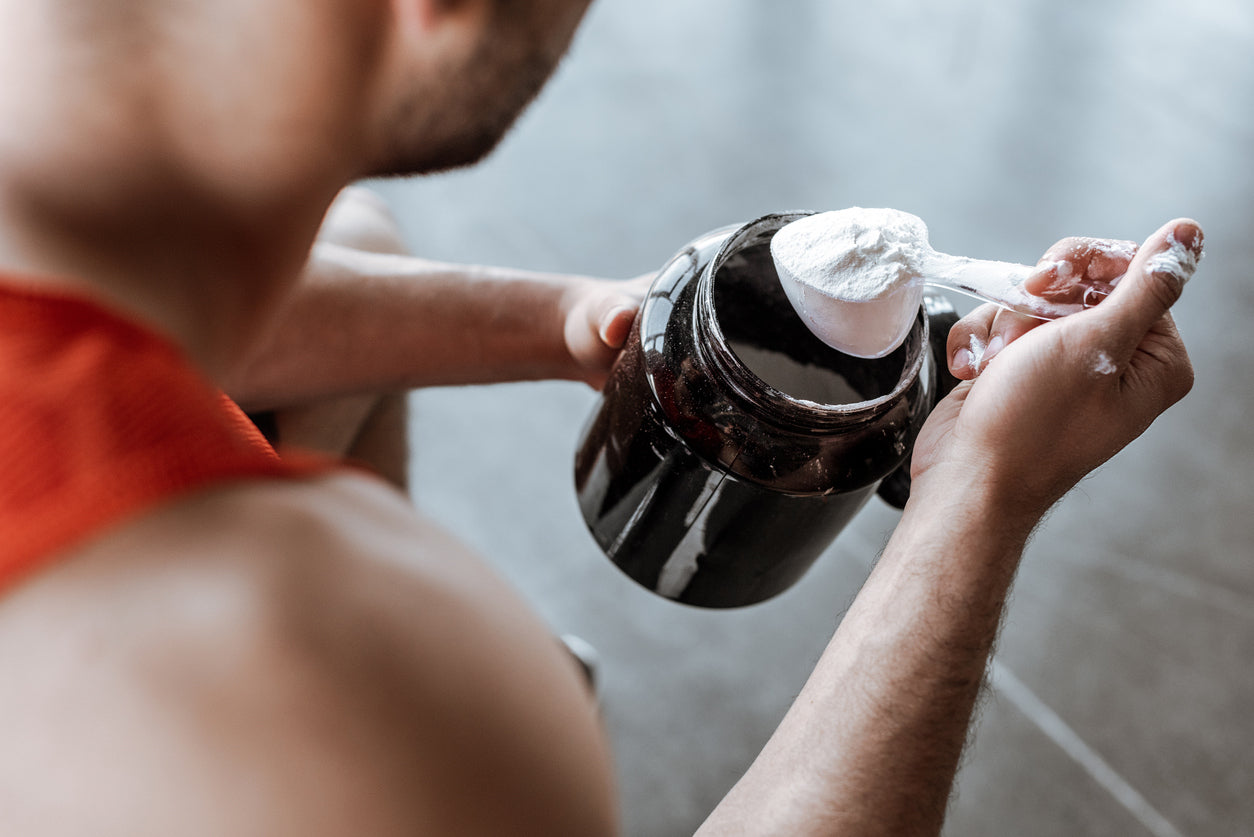
There is something oddly satisfying about scooping powdered supplements.
Crack the lid.
Get hit by a fruit flavour so intense it feels like it was designed by a cartoon chemist.
Level the scoop.
Shake the bottle.
Feel productive.
Almost virtuous.
And to be clear, powders absolutely have their place. Some ingredients work brilliantly in powder form. Protein, electrolytes, carbohydrates, greens, some amino acids and properly formulated pre-workouts can all make sense as powders.
We are not anti-powder.
We are anti-bad powder.
There is a difference.
Because while powders can be convenient, fast and practical for larger-dose formulas, they are not always the best format when precision, consistency, stability and repeatable dosing matter.
Capsules and tablets are not magical either. They have their own formulation challenges. But when the goal is controlled dosing, ingredient protection and less daily guesswork, they often have a major advantage.
This article explains why supplement format matters, why scoops are not as accurate as they look, why powders can separate, clump and degrade, and why the right delivery system should match the formula.
Because form is not just packaging.
Form is part of the plan.
Quick Answer: Are Powdered Supplements Less Accurate Than Capsules?
Powdered supplements can be less accurate than capsules or tablets because scoops measure volume, not weight.
Powders can also settle, separate, clump, absorb moisture and vary in density over time. This means one scoop may not always deliver the same amount of each active ingredient, especially in formulas containing ingredients with different particle sizes, densities or flow properties.
Capsules and tablets are usually better for precision because each unit is manufactured to contain a controlled dose.
That does not mean powders are bad.
Powders are often ideal for larger doses, fast mixing or ingredients that are impractical to deliver in capsules, such as protein, carbohydrates, electrolytes, creatine or high-dose pre-workout ingredients.
The real question is not “powder or capsule?”
The better question is:
Does the format suit the formula?
Powders Have Their Place
Let’s be fair.
Powders can be excellent.
They are often the best format when a formula requires larger serving sizes, rapid mixing or flexible dosing.
Powders make sense for:
-
Protein
-
Carbohydrates
-
Electrolytes
-
Creatine
-
Collagen
-
Greens powders
-
Amino acids
-
Hydration formulas
-
Some pre-workouts
-
Intra-workout formulas
Trying to deliver 25 g of protein in capsules would be absurd.
You would need a handful large enough to make the average person reconsider fitness entirely.
Powders also allow flexible dosing. You can use half a scoop, one scoop or more depending on training demands, hydration needs or diet structure.
That flexibility can be useful.
But flexibility is not the same as precision.
And that is where powders can become complicated.
The Great Ingredient Shuffle: Settling, Separation and Shaky Dosing
Powdered supplements are often blends of ingredients with very different physical properties.
They may include:
-
Dense minerals
-
Light amino acids
-
Fine extracts
-
Granular creatine
-
Hygroscopic powders
-
Sweeteners
-
Flavouring systems
-
Flow agents
-
Colours
-
Acids
-
Electrolytes
These ingredients do not always behave the same inside a tub.
Some are heavy.
Some are fluffy.
Some clump.
Some absorb moisture.
Some stick to everything like they have emotional attachment issues.
Over time, heavier particles may settle toward the bottom, while lighter ingredients may rise, float or gather unevenly.
This can happen during transport, storage and everyday use.
Even if the powder was well blended during manufacturing, the blend can shift over time.
You can shake the tub.
You can shake it with passion.
You can shake it like it owes you money.
That does not mean you have restored a perfectly uniform blend.
Density still wins.
Physics remains irritatingly undefeated.
Why Particle Size and Density Matter
Powder blending is more technical than most consumers realise.
A formula may contain ingredients with very different particle sizes and densities.
For example:
-
Creatine is relatively dense
-
Magnesium salts can be dense and heavy
-
Herbal extracts can be fine and light
-
Amino acids can vary in texture and flow
-
Sweeteners and flavours may distribute differently
-
Some ingredients absorb moisture and clump
-
Some powders compress easily while others do not
When particles differ too much, they can segregate.
This is called powder segregation.
In plain English, the blend can stop being evenly mixed.
This matters because a scoop taken from the top of the tub may not have the same ingredient profile as a scoop taken from the bottom.
In a simple protein powder, this may not be a huge issue.
In a pre-workout containing caffeine, beta-alanine, citrulline, tyrosine and stimulatory botanicals, it matters rather a lot.
Nobody wants a scoop that is mostly flavouring on Monday and a caffeine ambush on Friday.
That is not performance nutrition.
That is tub-based roulette.
Scoop Dreams: Why Eyeballing Is Not Accuracy
The scoop looks official.
It has a handle.
It came in the tub.
It must know what it is doing.
Sadly, no.
A scoop measures volume, not weight.
That means the actual dose depends on how the powder sits inside the scoop.
A scoop can vary depending on whether it is:
-
Loose
-
Packed
-
Heaped
-
Levelled
-
Settled
-
Clumped
-
Moisture-affected
-
Taken from the top or bottom of the tub
The same scoop can deliver different gram amounts depending on powder density and how the user handles it.
One person may gently level a scoop.
Another may compress it like they are laying foundations.
Another may heap it like a medieval grain merchant.
Same scoop.
Different dose.
Unless you are weighing each serving on a scale, your daily scoop is often an estimate.
A reasonably good estimate, sometimes.
A scientific measurement, not really.
Why This Matters More With Strong Actives
Scoop variability matters most when the formula contains potent ingredients that need controlled dosing.
Examples include:
-
Caffeine
-
Yohimbine-like stimulants where legally used
-
Beta-alanine
-
Citrulline
-
Nitrates
-
Tyrosine
-
Certain botanical extracts
-
Electrolytes
-
Fatigue-support ingredients
-
High-dose minerals
-
Performance actives
Some ingredients have a wide margin of practical use.
Others do not.
A little too much caffeine can turn “focused and energised” into “can hear colours.”
A little too little citrulline may make the formula underwhelming.
Too much of certain minerals may upset digestion.
Too little of key actives may mean the product looks strong on the label but does very little in practice.
This is why clinically relevant dosing is not just about what goes into the batch.
It is also about what reaches the serving.
For more on realistic dosing and timing, see why supplements take time to work.
Capsules and Tablets: Why They Often Win on Precision
Capsules and tablets are not automatically superior in every case.
But they have a clear advantage when it comes to dose control.
A properly manufactured capsule or tablet is designed to deliver a specific amount per unit.
That means:
-
Controlled fill weight
-
Repeatable serving size
-
Less user error
-
Better dose consistency
-
No scoop variation
-
Less exposure to air and moisture per serving
-
Easier compliance
-
More predictable intake
One capsule is one capsule.
One tablet is one tablet.
Simple.
Obviously, capsule and tablet manufacturing still requires quality raw materials, proper blending, suitable excipients, accurate filling and quality checks.
A bad capsule is still bad.
But when done properly, capsules and tablets remove much of the user variability that comes with scooping powders.
No heaped scoop.
No compacted scoop.
No mystery clump.
No archaeological dig through a tub to find the silica packet.
Just a measured dose.
How terribly practical.
The Moisture Menace: Clumping, Caking and Chaos
Powders often absorb moisture from the air.
This is especially true for hygroscopic ingredients, which attract and hold water.
In the UK, where the air often feels like it has been lightly steamed, this can be a real issue.
Moisture exposure can lead to:
-
Clumping
-
Caking
-
Uneven ingredient distribution
-
Reduced powder flow
-
Degradation of sensitive compounds
-
Changes in scoop weight
-
Poor mixing
-
Shorter shelf life
-
Unpleasant texture
Every time you open a tub, the powder is exposed to air and humidity.
Every scoop introduces another opportunity for moisture.
Every damp kitchen, sweaty gym bag or steamy post-shower bathroom shelf makes things worse.
Powders can still be managed well with good packaging, desiccants and sensible storage.
But once opened, they are more exposed than capsules and tablets.
Those little silica gel packets help.
They are not sorcery.
Stability: Why Format Can Affect Potency
Some nutrients and compounds are sensitive to oxygen, moisture, light or heat.
Powders have a larger exposed surface area and are repeatedly exposed each time the tub is opened.
That can matter for sensitive ingredients.
Stability concerns may apply to:
-
Certain vitamins
-
Some botanical extracts
-
Omega-containing powders
-
Probiotics
-
Enzymes
-
Polyphenols
-
Amino acid blends with hygroscopic ingredients
-
Flavoured electrolyte blends
-
Ingredients prone to oxidation
Capsules and tablets can offer more protection, especially when packaged properly.
Blister packs, sealed containers, desiccants and appropriate excipients can all help protect ingredients.
Again, this does not make powders bad.
It means stability should be part of the formulation decision.
If an ingredient is delicate, the delivery format matters.
For more on why form matters in general, see why fish oil form matters.
The Palatability Problem: Making Powders Taste Less Like Regret
Powders have one major challenge that capsules mostly avoid.
They have to taste acceptable.
That usually means flavour systems.
To make powders palatable, brands may use:
-
Sweeteners
-
Acids
-
Flavourings
-
Colours
-
Thickeners
-
Anti-caking agents
-
Masking agents
-
Creamers
-
Texture modifiers
Some are perfectly reasonable.
Others are there because the active ingredients taste like bitter disappointment dissolved in sink water.
Pre-workouts, greens powders, amino acids and mineral formulas can be especially difficult to flavour.
This is why so many powders end up as:
-
Electric Blue Raspberry
-
Tropical Shockwave
-
Nuclear Watermelon
-
Cherry Ice Blast
-
Lemonade Thunder
-
Mango Something That Has Never Met a Mango
A good flavour system can make a product enjoyable.
A bad one can turn supplementation into a daily act of punishment.
Capsules and tablets avoid most of this.
No flavour circus.
No sweetener aftertaste.
No neon tongue.
No beverage that looks like it should require a safety briefing.
Artificial Colours: Cosmetic, Not Functional
Some powdered supplements use artificial colours to create a more exciting appearance.
This is especially common in pre-workouts and sports powders.
Bright colour helps reinforce flavour.
Blue raspberry should be blue, apparently.
Because nothing says nature like a drink that looks like melted nightclub lighting.
The issue is that artificial colours do nothing for performance.
They do not improve strength.
They do not improve recovery.
They do not improve hydration.
They just make the drink look dramatic.
Some colourants are permitted in certain markets, restricted in others, and increasingly questioned by consumers who want cleaner formulas.
This is why a clean-label powder should avoid unnecessary colourants wherever possible.
If a formula can be coloured naturally, or not coloured at all, that is often the better choice.
At One Life Foods, the aim should be simple:
No clown-coloured chaos.
No unnecessary cosmetic theatre.
Just functional formulas with a clear purpose.
“Natural Flavour” Is Not Always as Simple as It Sounds
The word “natural” sounds reassuring.
In flavouring, it is not always as straightforward as people think.
Natural flavours can still be processed, isolated, concentrated and combined into complex flavour systems.
That does not automatically make them bad.
But “natural” is not the same as “straight from a fruit.”
A natural flavour in a supplement powder may still be a highly technical ingredient designed for stability, taste masking and consistency.
Again, context matters.
The issue is not that flavour systems exist.
The issue is when brands use natural language to make something sound simpler, cleaner or more wholesome than it really is.
Consumers deserve honesty.
If a product needs flavouring, fine.
Just do not pretend a tropical punch powder is basically a fruit bowl with ambition.
Proprietary Blends: Not Always Bad, But Often Abused
Proprietary blends are especially relevant in powders because many powdered formulas contain long ingredient lists and big flavour systems.
A proprietary blend is not automatically bad.
It can protect a specific formulation strategy, flavour system, extract combination or synergistic blend.
The issue is when a proprietary blend hides too much information for the customer to make an informed decision.
A responsible blend should still make clear:
-
The total blend amount
-
The ingredients included
-
The purpose of the blend
-
Any key standardisation details
-
Caffeine content where relevant
-
Extract ratios where relevant
-
Whether the formula is sensibly dosed
The problem starts when a brand uses a proprietary blend to hide fairy-dust dosing.
A 9,000 mg blend with 23 ingredients may look impressive.
But if the first ingredient is cheap filler, the caffeine is undisclosed, the botanicals are token amounts and the active compounds are not standardised, that is not formulation.
That is label decoration.
Proprietary blends are not always bad.
Blind-faith blends are.
For more on this topic, see fillers, binders and anti-caking agents.
The Problem With Label Decoration
Powders are particularly vulnerable to label decoration because large scoop sizes allow brands to include a lot of ingredients.
That can look impressive.
A label with 18 actives gives the impression of power.
But more ingredients do not automatically mean a better formula.
A product can contain:
-
Too many underdosed actives
-
Conflicting ingredients
-
Poorly standardised botanicals
-
Unnecessary sweeteners
-
Cosmetic colourants
-
Weak extract forms
-
Flavour systems taking up too much space
-
Proprietary blends hiding the reality
A good formula is not a shopping list.
It is a structured design.
Each ingredient should have a reason to be there.
Each dose should make sense.
Each form should fit the goal.
Each serving should be repeatable.
This is why how to stack supplements properly starts with purpose, not ingredient collecting.
The body is not impressed by long labels.
It responds to what is usable.
Manufacturing Quality: Not All Powders Are Created Equal
Powder manufacturing quality varies.
A well-made powder should have:
-
Proper raw material sourcing
-
Verified ingredient identity
-
Controlled blending
-
Good powder flow
-
Suitable particle size management
-
Appropriate excipients where needed
-
Testing for contaminants
-
Batch consistency
-
Stability considerations
-
Accurate flavouring
-
Clear serving instructions
-
Sensible packaging
Poorly made powders may suffer from uneven blending, clumping, inaccurate serving weights, contamination risk, weak raw materials or misleading labels.
The issue is not the powder format itself.
The issue is whether the product has been formulated and manufactured properly.
A premium powder requires the same seriousness as a capsule or tablet.
Sometimes more.
Because powders ask the customer to do the final dosing step themselves.
That means the brand has even more responsibility to make the product stable, uniform and easy to use correctly.
For more on raw material quality and testing, see trustworthy supplement suppliers.
The Study Problem: Why Sports Supplements Need Extra Scrutiny
Sports supplements are a high-risk category.
Not because all sports supplements are bad.
Because the category often includes stimulants, performance actives, botanical extracts, aggressive claims and products aimed at people who want fast results.
That creates temptation.
Some sports supplements have been found to contain inaccurate label claims, undisclosed ingredients or substances that should not be there.
This is why serious quality control matters.
Especially for athletes.
If you are drug-tested, supplement quality is not a minor detail.
It is career protection.
That means tested raw materials, responsible suppliers, transparent formulas and relevant screening where appropriate.
A scoop should not come with a legal plot twist.
Capsules, Tablets and Excipients: Functional, Not Cosmetic
Capsules and tablets often contain excipients.
That is not automatically a problem.
Excipients may help with:
-
Powder flow
-
Compression
-
Tablet structure
-
Capsule filling
-
Stability
-
Dose uniformity
-
Moisture control
-
Manufacturing consistency
The key is whether they serve a defined purpose.
At One Life Foods, the clean-label position is not “never use excipients.”
That would be simplistic.
The better position is:
Use only what serves the formula.
Avoid unnecessary additives.
Avoid controversial colourants.
Avoid cosmetic nonsense.
Be honest about what is included and why.
This is much more practical than pretending serious manufacturing can always happen with nothing but hope and a capsule shell.
Can Tablets Handle Heavy-Hitting Ingredients?
Yes, in the right context.
There is a common assumption that ingredients such as creatine, beta-alanine or citrulline must always be powders because serving sizes are larger.
Often, powders are the most practical format for high-dose ingredients.
But that does not mean tablets cannot deliver meaningful performance formulas.
With proper formulation strategy, suitable excipients and realistic serving sizes, tablets can deliver serious doses.
They may be larger.
They may require multiple tablets.
They may not have the theatre of a neon shaker.
But they can provide precision.
That is the trade-off.
A powder may be easier for very large servings.
A tablet may be more controlled.
The right choice depends on the formula.
Not on format loyalty.
When Powders Are the Better Choice
Powders are often the better choice when the serving size is too large for capsules or tablets.
Examples include:
-
Protein powders
-
Electrolyte drinks
-
Carbohydrate formulas
-
Collagen powders
-
High-dose creatine formulas
-
Intra-workout drinks
-
Hydration formulas
-
Some pre-workouts
Powders are also useful when the user benefits from drinking the product, such as during training, in hot weather, after heavy sweating or alongside carbohydrate and electrolyte needs.
For hydration products especially, powder format can make sense because the formula is intended to be dissolved into fluid.
You do not just want the electrolytes.
You want the water too.
A hydration formula in capsule form may provide minerals, but it does not provide the fluid.
Tiny detail.
Quite important.
For more on this, see hydration and electrolyte balance.
When Capsules or Tablets Are the Better Choice
Capsules or tablets often make more sense when the formula requires:
-
Precise dosing
-
Smaller active doses
-
Better portability
-
Less taste masking
-
Reduced moisture exposure
-
No sweeteners or flavourings
-
Better convenience
-
More consistent intake
-
Fewer serving errors
-
Long-term daily use
They are especially useful for:
-
Vitamins
-
Minerals
-
Botanical extracts
-
Mushroom extracts
-
Nootropics
-
Adaptogens
-
Hormone-support nutrients
-
Sleep-support ingredients
-
Targeted performance stacks
-
Ingredients with unpleasant taste
Capsules and tablets are not always glamorous.
They do not fizz.
They do not glow.
They do not require a shaker bottle.
But they are often practical, stable and precise.
Astonishingly, that still matters.
How to Judge a Good Powder Formula
A good powder should not rely on flavour and vibes.
Look for:
-
Clear serving size
-
Transparent active doses
-
Sensible ingredient count
-
Clinically relevant amounts where appropriate
-
Caffeine clearly declared
-
No unnecessary artificial colours
-
No excessive sweetener load
-
Clear extract ratios or standardisation
-
Suitable packaging
-
Desiccant where needed
-
Batch testing where relevant
-
Good mixability
-
Purposeful formula design
Be cautious with:
-
Massive proprietary blends
-
Undisclosed caffeine levels
-
Neon colour theatre
-
Long ingredient lists with no doses
-
Claims that sound pharmaceutical
-
Tiny amounts of trendy actives
-
No explanation of extract quality
-
No sourcing or testing detail
-
“Natural” claims with no substance
A good powder should earn its scoop.
One Life Foods: Our Position on Powders
At One Life Foods, we are not anti-powder.
We are pro-precision.
That means powders are welcome when the format makes sense.
A clean-label, properly dosed, performance-focused powder can be excellent. A high-quality pre-workout, hydration formula or electrolyte blend can absolutely belong in a serious supplement range.
But powders should be held to the same standard as capsules and tablets.
That means:
-
No label games
-
No fairy-dust actives
-
No unnecessary colour chaos
-
No vague stimulant blends
-
No hiding behind proprietary mystery
-
No pretending flavour equals function
-
No weak dosing dressed up as innovation
When we use capsules or tablets, we use them because they offer precision, convenience and repeatable dosing.
When we use powders, we use them because the formula genuinely suits the format.
That is the point.
The delivery system should serve the product.
Not the other way round.
Final Scoop: Form Is Part of the Formula
Powders can be brilliant.
They can also be inconsistent, clumpy, over-flavoured, poorly dosed and far too dependent on the accuracy of a plastic scoop that has no idea how serious your goals are.
Capsules and tablets can offer better precision, stability, portability and consistency.
Powders can offer convenience, flexibility and practical delivery for larger-dose formulas.
Neither format wins every time.
But the format should match the job.
If you need protein, carbohydrates, electrolytes or a well-designed pre-workout, powder may be ideal.
If you need precise daily dosing, unpleasant-tasting actives, botanical extracts, vitamins, minerals or complex performance stacks, capsules or tablets may be the smarter choice.
The real problem is not powder.
The problem is poor formulation.
Bad sourcing.
Weak dosing.
Vague blends.
Artificial theatre.
And expecting a scoop to do the job of a quality-control department.
Your supplement routine should not be a daily powder lottery.
It should be built with intent.
Because when performance, recovery and results actually matter, form is not just packaging.
It is part of the formula.
References:
Cohen PA, Avula B, Katragunta K, et al. Presence and quantity of botanical ingredients with purported performance-enhancing properties in sports supplements. JAMA Network Open. 2023;6(7):e2323879.
Kreider RB, Kalman DS, Antonio J, et al. International Society of Sports Nutrition position stand: safety and efficacy of creatine supplementation in exercise, sport, and medicine. Journal of the International Society of Sports Nutrition. 2017;14:18.
U.S. Food and Drug Administration. 21 CFR Part 111: Current Good Manufacturing Practice in Manufacturing, Packaging, Labeling, or Holding Operations for Dietary Supplements.
AOAC International. Guidelines for Single-Laboratory Validation of Chemical Methods for Dietary Supplements and Botanicals.
Food Standards Agency. Food Additives Guidance.
EFSA Panel on Food Additives and Nutrient Sources Added to Food. Re-evaluation of silicon dioxide, E551, as a food additive. EFSA Journal. 2018.
EFSA. Titanium dioxide, E171, no longer considered safe when used as a food additive. 2021.
USP. Dietary Supplements and Herbal Medicines: Quality Standards and Verification.
Written By
Written by Chris Simon, Founder of One Life Foods.
Chris has worked in the supplement industry since 2009 and is known for seeking out exceptional ingredients, products, and formulations. Read more about Chris and the story behind One Life Foods.
Disclaimer
This article is for informational purposes only and is intended for general education around supplement formats, formulation, dosing and quality control. It is not medical advice and is not intended to diagnose, treat, cure or prevent any disease. Food supplements should not be used as a substitute for a varied diet and healthy lifestyle.


Share:
Herbs, Hype, and Horny Lies
The Most Researched Natural Supplements: Herbs, Mushrooms and Nutrients With Real Evidence