



In the ever-evolving world of wellness, where aesthetics, performance and self-optimisation reign supreme, the supplement industry thrives on buzzwords and bold claims.
It is a realm where exotic-sounding compounds are hailed as miracle cures, and influencers with the combined qualifications of a ring light and a discount code pitch the latest “must-have” ingredient.
But behind the glossy packaging and self-proclaimed biohacker gurus lies a less glamorous truth: many trending supplements are more hype than help.
The short answer is this: some supplements have evidence, some have potential, and some are mostly marketing with a scoop inside. The problem is not innovation. The problem is when weak data, under-dosed formulas and influencer enthusiasm are dressed up as science.
So let’s peel back the foil seal, scrape off the influencer glitter, and examine some of the worst offenders currently flooding your feed, and probably your kitchen cupboard.
1. The Anti-Bloating Craze: Digestive Placebo or Real Fix?
From “bloat-reducing gummies” to “flat tummy teas,” the anti-bloating industry promises a smoother silhouette by brunch.
The problem?
Most of these products are filled with under-dosed herbs, vague enzyme blends, and enough marketing nonsense to stuff a yoga mat.
Yes, peppermint oil and ginger do have legitimate studies supporting digestive benefits.
But the typical “bloat blend” does not contain them in meaningful doses.
What you usually get is a fairy dusting of herbs backed by the science equivalent of a horoscope.
A study in Nutrition and Dietary Supplements did show that a specific herbal-enzyme blend reduced post-meal bloating in healthy subjects.
Great.
Except that blend is not what is in your favourite influencer’s sugar-laden chewable.
Study link
Verdict: Most “bloat blends” are under-dosed, unproven and overpriced.
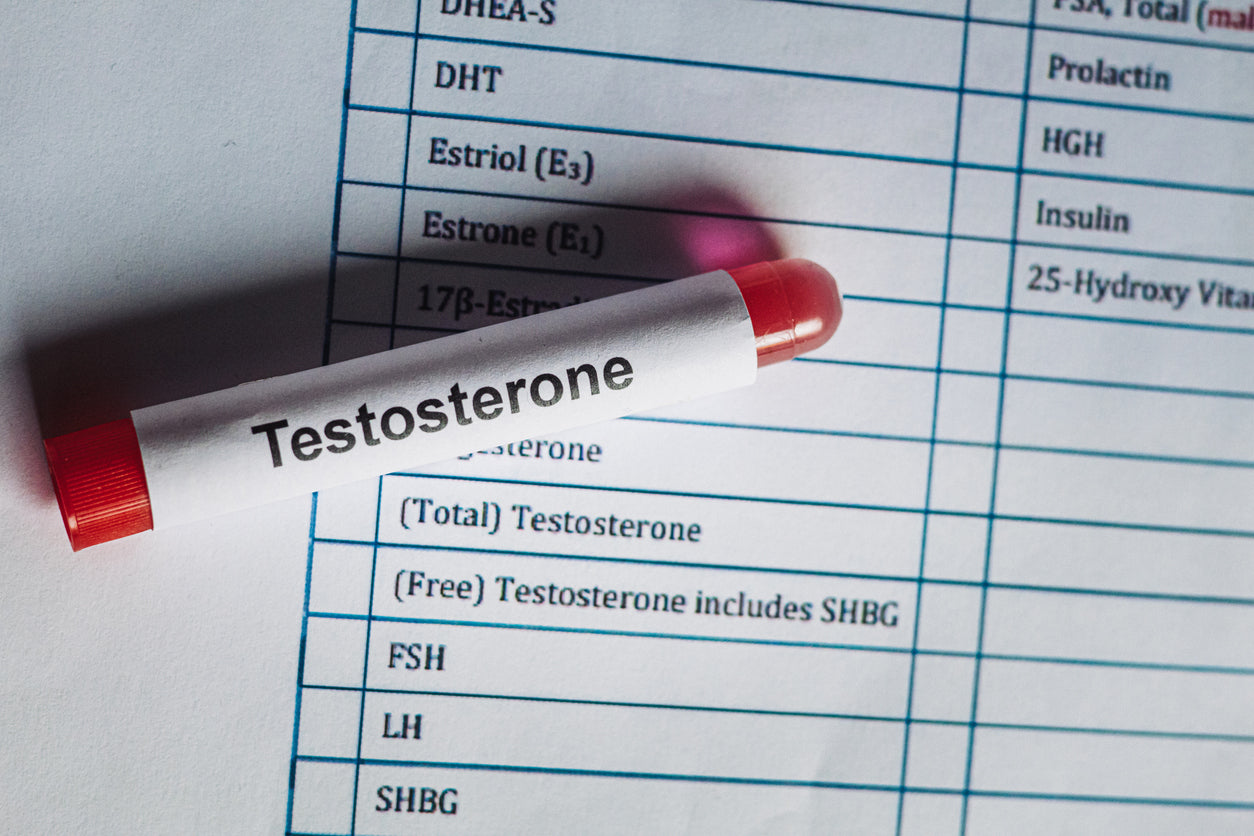
2. Testosterone Hype: Stacks Without Substance
Testosterone boosters are the supplement world’s version of get-rich-quick schemes, except instead of wealth, they promise alpha status, muscle mass and virility by Monday.
These “stacks” often throw together a random selection such as Cordyceps, Lion’s Mane, Shilajit, Tongkat Ali and Fadogia agrestis in what can only be described as a pick ’n’ mix.
Let’s be clear:
Lion’s Mane = Brain support. Great for focus. Useless for testosterone.
Cordyceps = May support endurance. Not testosterone.
Shilajit + Tongkat Ali = Some promise in specific, high-quality resin and extracts. Not miracle workers.
Fadogia agrestis = Based largely on rat studies and Reddit threads.
If you want a more detailed breakdown of this category, we cover testosterone-boosting herbal extracts in a separate deep dive.
And here’s where you can spot the influencer from the formulation specialist from across the room, with the lights off.
Most of these formulas ignore actual cofactors that support normal hormonal function, like magnesium, zinc, boron and vitamin D.
A 2019 review in the Journal of the International Society of Sports Nutrition found only 24.8% of “T-boosters” had any scientific backing at all.
The rest?
Snake oil with a pump cover.
This is also why how supplement stacking actually works matters. A serious formula is not just a pile of trending ingredients wearing matching capsules.
Verdict: Most T-boosters are overpriced herb blends ignoring the actual science of hormone support.
3. NMN and Longevity: The Hope and the Hype
Nicotinamide Mononucleotide, or NMN, has become the anti-ageing molecule du jour, thanks to its role in supporting NAD+, a coenzyme involved in cellular energy, DNA repair and metabolic function.
It sounds like a miracle on paper.
But here is the less glamorous breakdown:
Most promising studies are in animals, not humans.
Human trials are small, inconsistent and often unimpressive.
And yes, the FDA previously ruled NMN could not be marketed as a dietary supplement in the US, but that does not mean it works.
It means a pharmaceutical company filed an Investigational New Drug application to study it as a prescription therapy.
That is a strategic move.
Not an endorsement of effectiveness.
Over 90% of INDs never lead to an approved drug.
Even if NMN does eventually prove to have longevity benefits, that assumes you are actually getting real, high-quality NMN, which is a gamble.
Many over-the-counter NMN products:
contain far less than advertised amounts
are chemically unstable, degrading during shipping or storage
vary in purity due to cheap manufacturing shortcuts and weak regulation
So while NMN is intriguing, many supplements on the market are serving you expensive optimism, not longevity in a bottle.
Verdict: NMN is still early. The science is developing, the regulation is messy, and the quality can be questionable.
4. Collagen for Muscle Building?
Collagen has been branded the “miracle protein” for everything from skin to joints to, somehow, muscle growth.
Let’s not mistake marketing momentum for scientific merit.
Yes, collagen peptides can support skin elasticity and joint health, especially in certain hydrolysed forms.
But for muscle growth?
Collagen lacks key anabolic amino acids like leucine, which is essential for triggering muscle protein synthesis.
Compared to egg or whey, collagen is about as effective for muscle as tofu is for a steak craving.
A 2022 study published in Frontiers in Physiology found that collagen peptide supplementation combined with resistance training can improve muscle strength and fat-free mass, but not because it stimulates muscle protein synthesis particularly well.
In fact, the anabolic response is less pronounced compared with proteins like whey, precisely because of collagen’s low leucine content.
Study link
Verdict: Collagen may help with joint support and strength, but for muscle growth, it is the scenic route, not the express lane.
5. Apple Cider Vinegar Gummies: A Sweet Nothing
ACV gummies are marketed as metabolism-boosting, fat-burning, detoxifying miracle bites.
Spoiler: they are not.
The acetic acid content is negligible, especially compared with raw vinegar.
Most studies showing apple cider vinegar benefits involve actual liquid vinegar, not glorified candy.
Oh, and they are often loaded with sugar.
Because nothing says “metabolic health” like jellybean macros.
It is diet culture disguised as wellness.
Clean-eating cosplay with a sour twist.
Verdict: Glorified candy with a health halo. Use real vinegar or skip it.
6. The Bro Stack Hallucination: Turkesterone, Fadogia and Fantasy Gains
In the gym-bro corners of the internet, there is a recurring fantasy: that nature is hiding a legal steroid in some obscure root or insect goo.
All you need to do is combine the right herbs, chant “anabolic” three times, and shake it in your shaker bottle.
Apparently.
Turkesterone: The Natty Steroid That Wasn’t
Data?
Mostly insect and rodent models.
Human trials?
Practically nonexistent.
Quality control?
Laughable.
Many products do not contain what they claim, or contain way more of things they do not list.
Without real, replicated human studies, Turkesterone belongs in the “looks good in a petri dish” category.
Not your supplement stack.
Fadogia Agrestis: From Rats to Ripped?
There are no strong human clinical trials validating testosterone increases.
Some animal studies raise toxicity concerns at higher doses.
It is often paired with Tongkat Ali and Shilajit in fantasy stacks, based more on Reddit hype than real biochemistry.
This is the exact kind of area where understanding powdered herbs vs herbal extracts matters, because a trendy plant name on a label tells you very little about dose, extract quality, standardisation or evidence.
Bottom line: if your stack reads like a Dungeons & Dragons potion recipe, you might want to double-check the science.
Verdict: Rodent data, Reddit dreams and rogue dosing. Fantasy gains, not facts.
7. You Cannot Supplement Your Way to a Third Leg
Despite what the shady ads say, there is no supplement on Earth that will make your penis grow.
None.
Zero.
Zilch.
Shilajit?
It may support energy and testosterone markers in specific contexts, particularly when purified and properly tested.
Tongkat Ali?
Potentially useful for stress-related hormone changes and male vitality.
Maca?
Often used for libido and mood.
None of them increase penile tissue.
You are not growing a new limb.
You are just being taken for a ride, usually to the checkout page of a site with “.vip” in the URL.
If you want a more evidence-led look at Shilajit specifically, our guide to Shilajit benefits separates realistic claims from black-jar mythology.
Verdict: No supplement grows your penis. If it did, it would not be £29.99 on a sketchy site.
8. “Vaginal Health” Supplements: Reinventing the Wheel
Many products aimed at “vaginal balance” prey on outdated and toxic ideas about how women’s bodies should smell, function and behave.
Cranberry extract?
Helpful in the right form and dose for urinary tract support.
Probiotics?
Only select vaginal strains, such as L. reuteri and L. rhamnosus, have potential benefits, and many products do not contain them.
Chlorophyll?
Said to “deodorise” you from the inside out.
No studies.
Just vibes.
The vagina is self-cleaning.
It does not need chlorophyll.
It needs you to stop buying overpriced chlorophyll.
These products are not just ineffective. They often reinforce shame-based narratives about natural bodily functions.
Verdict: Most products exploit insecurity, not biology. The vagina does not need reinventing.
9. Monatomic Gold: The Woo Is Strong With This One
Ah, monatomic gold.
Perhaps the most esoteric nonsense ever to be encapsulated.
The claim?
That this “high-frequency” substance enhances spiritual energy, DNA activation, and even grants access to other dimensions.
Yes, really.
The reality?
There is no convincing scientific evidence that “monatomic” gold exists in a stable, useful form in supplements.
And even if it did, your body would not know what to do with it.
Your mitochondria are not looking for enlightenment.
They are looking for ATP and magnesium.
This is not quantum biology.
It is alchemy fan-fiction sold at premium prices to people who think lab coats and crystal grids are interchangeable.
Verdict: Fake science, real price tag. You are not ascending. You are just getting scammed.
Final Thoughts: Big Mouths, Small Data
We are living in the age of the influencer-expert hybrid.
People with no scientific training, no regulatory oversight, and no understanding of basic biochemistry are telling millions what to take for hormones, focus, libido and spiritual alignment.
The problem is not enthusiasm.
It is misinformation disguised as innovation, and marketing masquerading as medicine.
If You Are a Brand
Ask:
Is this ingredient here because it works, or because it trends on TikTok?
Is the dose backed by research, or just rodent whispering?
Are we solving real problems, or creating them for sales?
Can we explain the formula without hiding behind vague blends?
If the answer is uncomfortable, good.
That is where better formulation starts.
If You Are a Consumer
Ask for studies, not slogans.
Do not buy from people who think ashwagandha cures taxes.
If a product promises miracles, it is usually because it is not offering results.
Supplement labels can be surprisingly slippery. Actives, extract ratios, standardisation and vague claims can completely change what you are actually buying.
Let’s Build Better
The supplement industry does not need more glitter, gimmicks or gut-feeling formulations.
It needs transparency, accountability and a return to evidence-based thinking.
So whether you are formulating, buying or just browsing, lead with curiosity, demand real data, and always choose honesty over hype.
Further Reading and References
Tongkat Ali, Eurycoma longifolia
Systematic review on testosterone improvement, 2022, PMC
RCT on testosterone and erectile function, 2020, ScienceDirect
Effects in middle-aged men with LOH, 2022, MDPI
Shilajit
Improved testosterone and DHEA-S in middle-aged men, 2015, PubMed
Muscle recovery and strength, 2019, PMC
Probiotics, L. rhamnosus and L. reuteri
Improved vaginal flora, 2008, ScienceDirect
Adhesion and antimicrobial action, 2021, Nature
Role in vaginal health, 2022, PMC
Written By
Written by Chris Simon, Founder of One Life Foods.
Chris has worked in the supplement industry since 2009 and is known for seeking out exceptional ingredients, products, and formulations. Read more about Chris and the story behind One Life Foods.


Share:
Sun-Dried and Overhyped: The Dirty Laundry of Shilajit Marketing
Scoop Dreams vs. Capsule Reality: Why Powdered Supplements Aren’t Always Precise, Potent, or Practical