


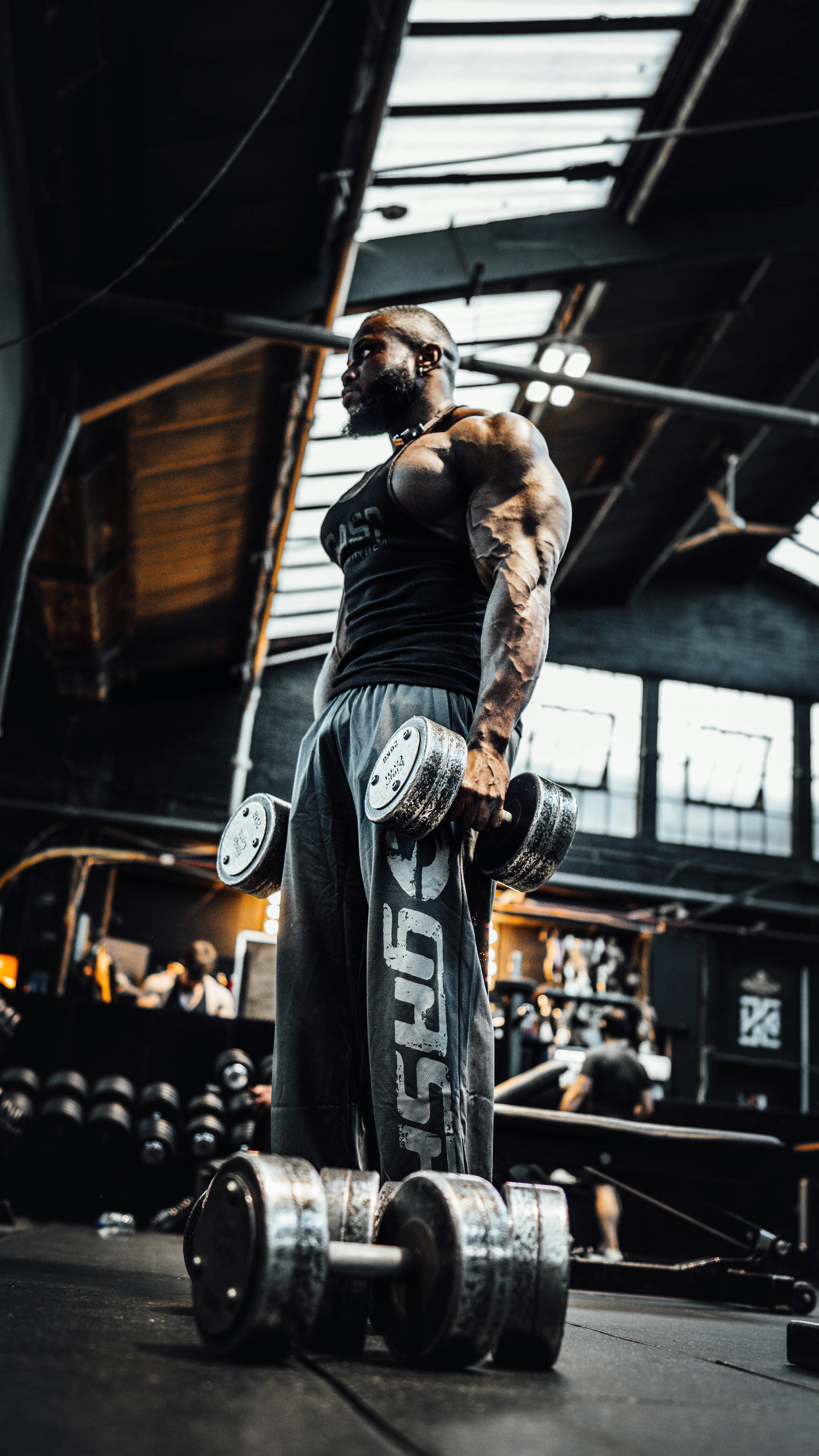
Quick answer: can Shilajit support exercise performance?
Shilajit may support certain aspects of exercise performance, particularly fatigue resistance and the ability to maintain muscular force once demanding work begins to accumulate.
The strongest controlled human study found that 500 mg per day of a purified and standardised Shilajit preparation helped stronger young men retain more isometric force after an intensive leg-extension protocol.
Across the full study population, the higher dose also performed better than the lower dose, although the clearer difference from placebo appeared after the researchers looked specifically at the stronger half of the participants.
Separate human research has reported increased expression of skeletal-muscle genes associated with extracellular-matrix organisation and remodelling. Animal research has also identified changes in post-exercise ATP and cellular energy status that offer a possible explanation for the fatigue-related findings.
None of this proves that Shilajit directly builds muscle, increases one-repetition maximum strength or improves every form of endurance.
But it creates a credible and reasonably coherent hypothesis:
Shilajit may be more useful for helping the body maintain capacity under physical strain than for creating a dramatic increase in fresh, rested performance.
That interpretation also fits a recurring pattern in user experience.
People rarely describe Shilajit as producing an immediate pre-workout hit.
They are more likely to report steadier background energy, better willingness to train, less general depletion and an improved sense of resilience over time.
Anecdotal reports cannot establish cause and effect.
They can still tell us where formal research may not yet be looking.
The science is preliminary.
It's also considerably more interesting than either “ancient miracle resin” or “complete nonsense”.
Shilajit has acquired quite a sporting résumé
Shilajit is promoted for:
- strength
- endurance
- ATP production
- muscle recovery
- fatigue resistance
- connective-tissue health
- testosterone
- and performance in areas where gym membership is not strictly required
That's a considerable workload for one dark substance in a small jar.
Some of those claims have a genuine scientific starting point.
The problem is what happens between the paper and the advert.
A change in gene expression becomes repaired tendons.
An animal ATP result becomes improved human endurance.
A hormone measurement becomes guaranteed muscle growth.
A fatigue test becomes proof that Shilajit unlocks unlimited athletic performance.
The underlying studies may be legitimate.
The marketing translation often arrives wearing considerably tighter clothing.
This article looks at the positive evidence, the limitations and the questions the existing research has not yet properly asked.
For its composition and formation, read what Shilajit is and how it forms.
For the broader practical overview, see Shilajit Explained: what actually matters.
What does exercise performance actually mean?
Exercise performance is not one outcome.
It can refer to:
- maximum strength
- muscular power
- repeated-effort capacity
- fatigue resistance
- aerobic endurance
- sprint performance
- training consistency
- recovery between sessions
- long-term adaptation
These are connected.
They're not interchangeable.
A supplement might help someone preserve force after repeated contractions without increasing their maximum strength.
It might improve training consistency without changing performance in one isolated test.
It might reduce the sense of accumulated fatigue without doing anything dramatic during the first ten minutes of a workout.
This is particularly relevant to Shilajit.
Traditional use was not built around the idea of an acute pre-workout stimulant.
Shilajit was used more as a tonic, something intended to support vitality and resilience over time.
A tonic is not supposed to slap the nervous system awake because the afternoon has become inconvenient.
What the evidence currently looks like
The performance research is small.
It's not uniformly negative.
In fact, there is very little high-quality human exercise research showing that Shilajit has been properly tested and failed.
What exists is:
- one controlled human fatigue study with a positive result in a defined subgroup
- one uncontrolled human muscle-transcriptome study
- one hydroxyproline signal potentially relevant to collagen turnover
- animal research involving post-exercise cellular energy status
- and a large amount of real-world interest and user experience
That's not enough to declare Shilajit a proven sports supplement.
It's also not enough to declare that it does nothing.
There's an important difference between:
the evidence has not yet established an effect
and:
the evidence has established that there is no effect
Shilajit currently sits much closer to the first statement.
Where the science looks most promising
Fatigue resistance
The clearest controlled human finding involves retaining more isometric force after an intensive muscular-fatigue protocol.
Cellular energy handling
Animal research has reported improved post-exercise ATP-related measurements, providing a plausible mechanism for an effect on fatigue.
Muscle and connective-tissue signalling
Human research has reported changes in extracellular-matrix-related gene expression and a separate hydroxyproline finding.
Longer-term physical resilience
Traditional use and anecdotal experience tend to describe gradual changes in capacity and vitality rather than acute stimulation.
Hormonal and reproductive vitality
Separate human studies exist in these areas, but they don't directly prove improved exercise performance. We examine the hormone evidence properly in Shilajit and testosterone rather than duplicating it here.
The main controlled human performance study
The most relevant trial was the 2019 controlled study on Shilajit and fatigue-related strength [1], published in the Journal of the International Society of Sports Nutrition.
Researchers recruited 63 recreationally active men with an average age of 21.
Participants were randomly allocated to receive:
- 250 mg of a standardised Shilajit preparation per day
- 500 mg per day
- or placebo
Supplementation continued for eight weeks.
The study was double-blind and placebo-controlled.
Each group began with 21 participants, and adherence was approximately 95 to 96%. No supplement-related adverse events were reported during the trial.
This gives the study considerably more weight than an open-label experiment in which everyone knows they are taking Shilajit and then pays close attention to every productive Tuesday.
What did the participants actually do?
The fatigue protocol involved:
- two sets of 50 maximal bilateral leg extensions
- 100 repetitions in total
- performed on an isokinetic dynamometer
- with two minutes of rest between sets
Before and after the protocol, researchers measured maximal voluntary isometric contraction.
In simpler terms, the participants performed a large volume of maximal machine-based leg extensions and were then tested to see how much force they could still produce against an immovable resistance.
The researchers also examined:
- concentric peak torque
- serum hydroxyproline
- dietary intake
- and adherence
This was a legitimate laboratory fatigue test.
It wasn't a squat programme.
It wasn't a football match.
It wasn't a 10-kilometre run.
That limits how widely the findings can be applied.
It does not make them irrelevant.
What did the study find across all 63 participants?
Across the full study group, the adjusted decline in isometric force was:
9.1% in the 500 mg group
15.7% in the 250 mg group
The higher dose showed a significantly smaller decline than the lower dose.
However, in the whole-group analysis, the 500 mg group did not show a statistically significant advantage over placebo.
The clearer placebo-controlled finding emerged when the researchers examined the upper half of participants according to their initial isometric strength.
What happened in the stronger participants?
The researchers divided the participants at the median according to their pre-supplementation isometric strength.
Among the stronger half, the adjusted decline in maximal isometric force was:
8.9% in the 500 mg group
17.0% in the 250 mg group
16.0% in the placebo group
The 500 mg group retained significantly more force than both the lower-dose and placebo groups.
There were ten men in each treatment arm of this subgroup.
The effect sizes reported for the higher dose versus the lower dose and placebo were large.
This result needs replication because it came from a relatively small subgroup.
But it shouldn't be dismissed as though nothing happened.
The difference between an adjusted decline of 8.9% and 16.0% is 7.1 percentage points.
Under the specific conditions tested, the higher-dose group retained meaningfully more force after fatigue.
A fatigue result is not the same as a strength result
The participants didn't show a clear improvement in fresh, pre-fatigue maximum strength.
The positive result concerned how much strength they retained after demanding work.
That distinction matters.
But in sport and training, preserving output after fatigue can be highly relevant.
The practical question is not always:
How much force can you produce while completely fresh?
It may be:
How much of that force can you still produce once the work begins to accumulate?
A combat athlete competes while becoming fatigued.
A rugby player rarely needs strength only once.
A high-volume gym session is often limited by the decline in output across later sets rather than the first repetition.
So the study didn't show that Shilajit made people stronger in the traditional sense.
It may have shown something more specific:
a possible ability to preserve muscular capacity under fatigue.
That's narrower than “builds strength”.
It's also potentially useful.
Why might the stronger participants have responded?
The subgroup finding could have occurred by chance.
The study involved several analyses, and the stronger subgroup contained only ten participants per treatment arm.
That's why independent replication matters.
But the result also creates several reasonable hypotheses.
Stronger individuals produce more absolute force.
This may create:
- greater local energy demand
- more rapid accumulation of fatigue
- more load through the muscle-tendon system
- more opportunity for a force-preserving effect to become visible
Stronger or more experienced individuals may also be better at producing a genuine maximal effort.
A less trained participant can be limited by:
- technique
- familiarity
- discomfort
- motivation
rather than by the physiological process a supplement might influence.
Under that model, Shilajit would not necessarily work only for strong people.
Its effect might simply be easier to detect when the participant is genuinely reaching a muscular limit.
This is a hypothesis.
A future study would need to stratify participants by strength before randomisation to test it properly.
The result may suggest a threshold effect
The 250 mg group did not perform differently from placebo in the stronger subgroup.
The 500 mg group did.
That does not establish a perfect dose-response relationship.
It may suggest that a certain level of exposure was needed before the effect became measurable.
That could explain why some people report clear benefits while others notice very little, especially when:
- the dose is small
- the product is diluted
- the resin has high water content
- the period of use is brief
- or the material differs substantially from the product used in research
This remains speculative.
But the possibility of a threshold is more consistent with the findings than assuming every dose should produce the same response.
What about the measurements that did not improve?
The study didn't find a significant improvement in the decline in concentric peak torque.
The positive outcome was therefore not consistent across every performance measure.
There are several possible explanations.
The isometric test may have been more sensitive.
The effect may be specific to maintaining maximal voluntary force rather than repeated dynamic torque.
The study may have been too small to detect a broader effect.
Or the positive subgroup result may not repeat in a larger trial.
We don't yet know.
The important point is that different tests measure different aspects of muscular function.
A null result in one measurement does not automatically erase a positive result in another.
It tells us that the effect, if real, is probably more specific than the phrase “improves performance” suggests.
Our first hypothesis: Shilajit may be a fatigue buffer
The most coherent interpretation is not that Shilajit directly creates more maximum strength.
It's that a sufficiently dosed, well-characterised Shilajit preparation may help preserve force once fatigue has begun to reduce it.
Possible mechanisms could involve:
- cellular energy handling
- redox signalling
- neuromuscular fatigue
- muscle-cell resilience
- force transmission through the extracellular matrix
The human study did not measure these mechanisms directly.
It also didn't measure circulating Shilajit-derived compounds, so it can't tell us which constituents were absorbed or responsible for the result.
Still, the fatigue-buffer hypothesis fits the observed pattern better than the broader claim that Shilajit simply “makes you stronger”.
It also fits how many users describe it.
The language tends to be:
I feel less depleted.
rather than:
I have suddenly acquired a new deadlift.
The ATP and cellular-energy question
Shilajit is frequently said to increase ATP.
That's too definite.
The scientific starting point is a 2009 animal study on processed Shilajit and post-exercise energy status in mice [2], in which the animals underwent a forced-swimming protocol.
The supplemented animals showed higher post-exercise muscle ATP concentrations and a higher adenylate energy charge than the swimming-only group.
Adenylate energy charge reflects the balance between ATP, ADP and AMP and is used as an indicator of cellular energy status. The findings were later discussed as a possible explanation for the human fatigue results.
This is relevant because ATP is fundamental to muscular contraction and the restoration of force.
It's therefore reasonable to propose that better cellular energy handling could contribute to improved force retention.
But the research does not show that:
- human muscle ATP increases after taking Shilajit
- ordinary resin necessarily produces the same result
- the effect improves human endurance
- or the animal dose transfers directly to people
The fair conclusion is:
Animal research provides an ATP-related and potentially mitochondrial hypothesis that is compatible with the human fatigue finding, but it has not yet been demonstrated directly in exercising humans.
That is a promising line of evidence.
It's not a finished claim.
For more on the compounds usually connected with this theory, read dibenzo-alpha-pyrones in Shilajit.
The human muscle-transcriptome study
A separate human study on skeletal-muscle gene expression [3] examined changes during supplementation with a purified, standardised Shilajit extract.
Sixteen overweight or class I obese adults, consisting of six men and ten women, took 250 mg twice daily for eight weeks.
They then continued supplementation for four more weeks while adding treadmill exercise three times per week.
Researchers collected muscle biopsies and blood samples.
After eight weeks, they identified 17 extracellular-matrix-related probe sets that were significantly upregulated compared with baseline.
These included genes associated with:
- collagen
- elastin
- fibronectin
- fibrillin
- decorin
- myoferlin
The findings were also checked using a second gene-expression method.
Why the extracellular matrix matters
Muscle is not simply a collection of contractile fibres.
The extracellular matrix provides part of the structural environment around those fibres.
It contributes to:
- force transmission
- tissue organisation
- mechanical signalling
- repair and remodelling
- the relationship between muscle and connective tissue
This creates an interesting possibility.
Shilajit may not act only through short-term cellular energy.
It may also influence signals involved in how muscle and its supporting structures adapt to repeated loading.
That could eventually prove relevant to:
- training tolerance
- force transmission
- structural adaptation
- connective-tissue resilience
The study didn't prove those outcomes.
It measured gene expression.
Genes are instructions.
They aren't completed tendons, larger muscles or uninterrupted training blocks.
But changes in gene expression are not meaningless either.
They are part of the biological process through which adaptation begins.
The important limitation of the transcriptome study
There was no placebo group.
Every participant received Shilajit.
Exercise was then added during the final four weeks without a separate exercise-only comparison.
The study therefore shows that extracellular-matrix-related gene expression changed during the intervention.
It can't establish exactly how much of the later change resulted from:
- Shilajit
- exercise
- the additional time
- or the combination of all three
It also didn't demonstrate increased collagen production, stronger tendons or improved exercise performance.
That limits certainty.
It doesn't remove the biological interest.
The value of the study is that it points towards an area that deserves a better controlled trial.
A small collection of aligned signals
Individually, none of the current findings proves that Shilajit improves recovery or tissue adaptation.
Collectively, they are more interesting than one isolated result.
We have:
- better retention of isometric force after fatigue in stronger participants
- a separate hydroxyproline finding
- changes in extracellular-matrix-related gene expression
- animal evidence involving post-exercise cellular energy status
These lines of research are not independent proof of the same effect.
They use different populations, methods and outcomes.
But they point broadly towards a theme involving:
- fatigue
- energy status
- muscular capacity
- and structural adaptation
That coherence gives the performance hypothesis more weight than it would have if the entire argument rested on one statistically significant number.
It still needs much better human research.
The hydroxyproline result
Hydroxyproline is an amino acid strongly associated with collagen.
It's sometimes used as an indirect marker when studying collagen turnover.
The researchers divided participants separately according to their starting hydroxyproline levels.
Among those who began in the upper half for baseline hydroxyproline, the adjusted post-supplementation level was:
1.5 μg/mL in the 500 mg group
2.4 μg/mL in the 250 mg group
2.4 μg/mL in the placebo group
The high-dose result was significantly lower than both the lower dose and placebo.
This was a separate subgroup from the strength analysis. The paper doesn't establish whether the same participants appeared in both subgroups.
The supplement didn't significantly alter the acute change in hydroxyproline measured 48 hours after exercise.
So we shouldn't conclude that Shilajit prevented exercise-induced collagen breakdown.
The result is better interpreted as a possible longer-term signal involving baseline collagen turnover.
It's interesting.
It's not proof of stronger tendons or faster repair.
Does Shilajit improve recovery?
Recovery can mean several different things:
- less soreness
- faster restoration of force
- better readiness to train
- improved sleep
- better connective-tissue repair
- reduced injury risk
- less accumulated fatigue
The current studies do not directly establish most of these.
They didn't properly measure:
- delayed-onset muscle soreness
- force recovery across several days
- weekly readiness
- injury rates
- return to sport
- sleep quality
But the combination of fatigue-related force retention, extracellular-matrix signalling and the hydroxyproline result gives a reasonable basis for further recovery research.
The science doesn't yet justify saying:
Shilajit speeds recovery.
It does justify asking:
Could Shilajit support some of the energy and structural processes that influence recovery over time?
That's a more modest claim.
It's also a worthwhile hypothesis.
Our second hypothesis: the studies may end before the interesting part happens
The human studies lasted eight to twelve weeks.
That may be enough to detect early changes in:
- force retention
- cellular signalling
- gene expression
- baseline biomarkers
It may not be enough for those changes to become visible as:
- greater muscle growth
- stronger connective tissue
- better training tolerance
- fewer missed sessions
- season-long improvements
Structural adaptation takes time.
If part of Shilajit’s value involves gradual changes in resilience rather than acute performance, a short trial may detect the beginning of the process without measuring its practical conclusion.
This doesn't prove that a longer study would succeed.
It explains why a longer study is needed.
Does Shilajit increase strength?
Shilajit has not yet been shown to increase fresh maximum strength.
The main controlled study measured force before and after a fatiguing task.
Its positive finding concerned strength retention after fatigue.
That may have practical relevance, particularly in sports or training sessions involving repeated efforts.
But it's not the same as demonstrating an increase in:
- one-repetition maximum
- absolute maximal force
- power
- or long-term strength adaptation
The most favourable defensible conclusion is:
Shilajit may help preserve existing strength during fatigue, but has not yet been shown to build maximum strength directly.
Does Shilajit build muscle?
There's no direct controlled evidence showing that Shilajit reliably increases muscle mass.
No robust training trial has demonstrated an improvement in:
- muscle thickness
- lean body mass
- cross-sectional area
- hypertrophy compared with placebo
The extracellular-matrix research provides a possible adaptation mechanism.
The separate hormone research offers another area of interest.
Neither proves muscle growth.
A proper hypertrophy trial would need:
- a controlled resistance programme
- dietary oversight
- placebo
- blinding
- validated muscle measurements
- and a sufficiently long duration
Until then, Shilajit is better positioned as something that may support the conditions around training rather than as a direct muscle-building agent.
Does Shilajit improve endurance?
There's currently insufficient controlled human evidence showing that Shilajit improves:
- VO2 max
- running performance
- cycling time trials
- lactate threshold
- race performance
This isn't the same as evidence that it cannot support endurance athletes.
Endurance performance depends on:
- oxygen delivery
- fuel availability
- pacing
- hydration
- economy
- motivation
- local muscular fatigue
- recovery between sessions
Shilajit could influence one part of that system without creating a dramatic change in race-day performance.
It may also prove more relevant to tolerating an endurance training block than to improving one isolated time trial.
At present, this has not been tested properly.
The endurance question remains open.
Why healthy young men may be a difficult population
The controlled fatigue study used healthy, uninjured, recreationally active young men.
That makes the research easier to control.
It may also reduce the room for improvement.
Young active men are more likely to have:
- reasonable mitochondrial function
- good recovery capacity
- normal energy metabolism
- few age-related deficits
- substantial physiological reserve
A tonic-like substance might produce a larger or more noticeable effect in:
- older active adults
- people under high training loads
- individuals experiencing accumulated fatigue
- those with lower recovery capacity
- people beginning from a less optimal baseline
This is sometimes called a ceiling effect.
Someone already functioning near their normal physiological ceiling may have less room to improve than someone whose capacity has been reduced by age, stress or accumulated load.
The study authors themselves noted that their young male sample might not represent other populations.
This is not a convenient excuse for a weak result.
It is a legitimate reason to study Shilajit in populations that better match how tonic-like supplements are commonly used.
Our third hypothesis: the effect may depend on what is limiting performance
Exercise performance is always limited by something.
It may be:
- available carbohydrate
- hydration
- sleep
- cardiovascular capacity
- local muscular fatigue
- neuromuscular fatigue
- pain
- technique
- motivation
A supplement can only help when it influences the thing currently limiting performance.
If someone is under-slept, under-fed, dehydrated and training without structure, Shilajit is unlikely to rescue the situation.
That's not advanced supplementation.
It's an attempt to negotiate with the consequences.
Shilajit may be more likely to show a measurable benefit when:
- the foundations are already controlled
- the training stimulus is demanding enough
- and fatigue or recovery is a genuine limiting factor
That could help explain why the clearer effect appeared in stronger participants.
Again, it is a hypothesis.
But it is a useful one.
What about anecdotal evidence?
Anecdotal evidence is often discussed as though it has only two possible positions:
either it proves the product works
or it's completely worthless
Neither is sensible.
Anecdotes cannot establish causation.
They are vulnerable to:
- expectation
- placebo effects
- changes in lifestyle
- selective memory
- people taking several products at once
- ordinary fluctuations in energy and mood
But real-world reports can still help identify:
- recurring patterns
- possible responder groups
- relevant timelines
- effects formal studies have not measured
That is how many research questions begin.
They start with people repeatedly noticing something.
What users tend to describe
In our experience of Shilajit and the wider feedback surrounding it, recurring themes include:
- steadier background energy
- less sense of being drained
- better willingness to train
- improved general vitality
- more consistent recovery
- greater libido
These reports have not been collected through a large, blinded or representative survey.
We cannot say how common they are.
We also can't know how many people take Shilajit and notice nothing.
But the pattern is still relevant.
The reports tend to describe a gradual change in capacity rather than an immediate stimulant effect.
That fits the eight-week timeframe of the main human performance study and the traditional tonic model better than the idea of Shilajit as a pre-workout hit.
Subjective outcomes still matter
Modern research often treats subjective outcomes as softer or less important than laboratory measurements.
Sometimes that is justified.
People aren't particularly good at objectively measuring themselves.
But an improvement in:
- energy
- training motivation
- readiness
- general fatigue
- wellbeing
can still have practical value.
A person who completes more good training sessions because they feel more capable may benefit, even if their peak torque does not change dramatically during one laboratory visit.
Future Shilajit studies should measure both:
- objective performance
- and structured subjective outcomes
These could include:
- weekly training completion
- readiness to train
- session effort
- background fatigue
- recovery between sessions
- general vitality
Anecdotal evidence shouldn't replace controlled science.
It should help decide what controlled science measures next.
How to evaluate your own response more intelligently
Personal experience isn't a clinical trial.
It can still be recorded more usefully than:
I think I feel something.
Before beginning, choose two or three outcomes that matter.
For example:
- training sessions completed each week
- energy before training
- performance in later sets
- next-day readiness
- background fatigue
- general wellbeing
Keep other major variables as stable as reasonably possible.
Don't start four supplements at the same time.
Don't judge Shilajit after one serving.
The main human studies used daily supplementation for several weeks.
Record the same measures consistently.
This will not eliminate placebo effects or normal life variation.
It will at least prevent the entire assessment resting on whether Wednesday felt unusually competent.
Why the exact product matters
The main controlled performance study used PrimaVie, a purified and standardised Shilajit extract.
That matters because researchers need a material they can:
- dose consistently
- describe accurately
- place into identical capsules
- reproduce across the study
PrimaVie was described in the trial as containing at least 50% fulvic acid, together with specified free and conjugated dibenzo-alpha-pyrone-related fractions. Participants took the same measured dose daily for eight weeks.
A standardised extract makes controlled research easier.
It doesn't automatically make it inherently better than a properly purified and well-tested Shilajit resin.
The study tells us that this particular preparation, at this particular dose, produced a positive result under the conditions tested.
It doesn't tell us that:
- only PrimaVie can produce the effect
- traditional resin cannot produce a similar effect
- one specified fraction explains the whole result
- or a high fulvic acid percentage guarantees performance
The evidence belongs most directly to the material studied.
But it also provides a scientifically reasonable basis for investigating other high-quality Shilajit preparations.
Standardised extract and traditional resin are not opposites
A standardised extract is designed to keep selected analytical characteristics within a defined range.
A traditional resin aims to retain a broader, less selectively standardised Shilajit matrix while removing unwanted debris and contaminants.
Both approaches can produce a serious product.
Both can also produce a poor one.
A standardised extract can be reduced too heavily to one or two headline markers.
A resin can be:
- diluted
- inconsistent
- poorly purified
- or inadequately tested
The meaningful distinction is not:
Extract good. Resin bad.
It is:
How well has the material been sourced, purified, characterised and tested?
A purified resin may retain a wider mixture of:
- fulvic compounds
- humic substances
- trace elements
- smaller organic components
That wider matrix could matter biologically.
It could also create a broader but subtler effect than a preparation standardised around selected fractions.
This is a reasonable hypothesis.
It hasn't been tested in a head-to-head human performance trial.
What we cannot assume about resin
We shouldn't claim that resin will automatically reproduce the PrimaVie results.
Two materials called Shilajit may differ considerably in:
- water content
- fulvic and humic composition
- mineral profile
- smaller organic components
- purification method
- dose by dry weight
But it would be equally wrong to conclude that resin cannot work simply because researchers chose a capsule-friendly extract.
The choice of an extract largely solves practical study problems:
- blinding
- consistent dosing
- repeatability
- product description
It's not proof of superiority.
The study the category now needs is a direct comparison between:
- a well-characterised traditional resin
- a standardised extract
- and placebo
Until then, both blanket conclusions are premature.
For the practical differences, read Shilajit resin, liquid and powder and what the body actually absorbs from Shilajit.
Fulvic acid alone does not explain the result
A matching fulvic acid percentage does not make two products biologically identical.
Fulvic substances are a chemically diverse fraction rather than one molecule.
The reported result can depend on:
- extraction
- separation
- analytical method
- sample preparation
- the definition used by the laboratory
Products with similar fulvic figures may still differ in:
- humic substances
- minerals
- dibenzo-alpha-pyrone-related compounds
- other organic constituents
- processing
The performance study didn't identify which component produced the result.
Reducing the entire effect to fulvic acid would therefore be convenient, but unjustified.
Is Shilajit a pre-workout?
Not in the conventional sense.
Shilajit has not been shown to produce an immediate, reliable increase in:
- alertness
- power
- reaction time
- training aggression
- motivation
The most relevant human studies used daily supplementation for eight weeks or longer.
That points towards gradual adaptation rather than acute stimulation.
Taking Shilajit before training isn't necessarily wrong.
It's simply unlikely to matter as much as taking it consistently.
Anyone waiting for an immediate rush may spend the workout wondering whether they received a faulty mountain.
For a fuller explanation, read how long Shilajit takes to work.
Shilajit versus creatine
Shilajit and creatine are sometimes presented as alternatives.
They aren't.
Creatine is a defined compound with a large and consistent body of evidence for high-intensity performance, strength and training adaptation.
Shilajit is a variable natural matrix with a smaller and more exploratory research base.
That doesn't make Shilajit useless.
It gives the two ingredients different potential roles.
Creatine is an established performance supplement.
Shilajit is better viewed as an emerging support ingredient with possible relevance to:
- fatigue resistance
- background energy
- adaptation
- general resilience
They can coexist in the same routine.
Nutrition has room for more than one molecule.
Performance, with considerably less gym equipment
Shilajit’s performance reputation is not confined to sport.
Claims around:
- testosterone
- fertility
- libido
- erectile function
- sexual performance
are often grouped together as though they are one outcome.
They aren't.
Testosterone is a hormone.
Fertility concerns reproductive function.
Libido is sexual desire.
Erectile function involves vascular, neurological and psychological factors.
Bedroom performance is an unusually ambitious mixture of all of them, plus energy, confidence, relationship context and whether anyone has remembered to lock the door.
Human studies have examined testosterone and male reproductive parameters.
They haven't established that Shilajit directly improves erections, sexual satisfaction or bedroom performance.
We cover the hormone research separately in Shilajit and testosterone, so there's no need to smuggle the entire subject into a leg-extension article.
But the broader vitality question is relevant.
Someone who feels:
- less depleted
- more energetic
- more confident
- or more interested in sex
may reasonably describe that as improved performance.
Anecdotal associations with libido are persistent enough to be worth studying properly.
They are not yet a licence to call Shilajit herbal Viagra.
One is a complex natural tonic with an emerging evidence base.
The other has a considerably more direct job description.
Should athletes take Shilajit?
Shilajit is best viewed as an optional, emerging performance-support ingredient.
It's not currently a replacement for:
- proper training
- adequate food
- hydration
- sleep
- creatine
- or evidence-based sports nutrition
It makes the most sense for someone who:
- already has the basics in place
- understands that any effect may be gradual
- is interested in fatigue resistance and general resilience
- and uses a properly purified and tested product
The evidence isn't strong enough to promise increased strength, endurance or muscle growth.
It is encouraging enough to justify a reasonable interest in longer-term capacity, adaptation and vitality.
That's not a miracle claim.
It's still a positive reason to consider it.
Drug-tested athletes need extra caution
Drug-tested athletes face an additional issue.
The question isn't only whether Shilajit itself is prohibited.
It's whether the exact finished product and batch have been screened for prohibited contaminants.
UK Anti-Doping states that athletes are responsible under strict liability for substances found in their system, regardless of intention. UKAD advises athletes who choose to use supplements to select batch-tested products and verify the actual batch number. (UK Anti-Doping)
A standard Shilajit report covering:
- heavy metals
- microbiology
- fulvic substances
- environmental contaminants
is not the same as sports anti-doping certification.
A product can be well tested for ordinary supplement safety without being suitable for a drug-tested athlete.
Testing still comes before performance claims
Performance research is of limited value if the product itself is poorly characterised.
Shilajit is a natural material that can vary significantly by source and batch.
A meaningful testing programme should consider:
- fulvic and humic composition
- elemental profile
- heavy metals
- microbiology
- residual solvents
- environmental contaminants
- water or moisture where relevant
A single attractive fulvic acid number doesn't establish safety or performance potential.
For the full process, read how Shilajit testing works.
To understand methods, accreditation and small print, see how to read a Shilajit laboratory report.
You can also view our current Shilajit laboratory results and testing methods.
What about industry funding?
The 2019 performance trial was funded by Natreon, the manufacturer of PrimaVie.
The transcriptome study also received its test material and partial research funding from Natreon, alongside other research support.
Industry funding doesn't mean the results are false.
Manufacturers often fund ingredient research because universities don't normally keep spare patented Shilajit extracts in the laboratory cupboard.
Funding does affect how confidently we should interpret early findings.
Results become stronger when they are:
- independently replicated
- tested by unrelated research groups
- repeated in larger populations
- confirmed using different well-characterised products
That independent replication is still limited.
The correct response is not to dismiss the studies.
It's to treat them as encouraging early evidence rather than the final answer.
The study we would actually like to see
A useful future trial would recruit a larger group of trained men and women.
Participants would be stratified in advance according to:
- sex
- age
- training status
- baseline strength
- training load
They would then receive:
- a fully characterised Shilajit resin
- a standardised Shilajit extract
- or placebo
The trial would last at least twelve weeks and include a controlled training programme.
It would measure:
- maximum strength
- repetitions to failure
- force retention under fatigue
- repeated-sprint ability
- weekly training volume
- readiness to train
- perceived fatigue
- recovery at 24, 48 and 72 hours
- muscle and tendon markers
- body composition
- blood levels of relevant Shilajit-derived compounds
The exact batches would be independently analysed.
The statistical plan would be published before the results were known.
It would also measure structured subjective outcomes.
That would tell us far more than either:
Shilajit is ancient, therefore it works.
or:
The research is incomplete, therefore it does nothing.
Where the broscience gets ahead of the evidence
“Shilajit increases ATP”
More accurately:
Animal research has reported improved post-exercise ATP-related measurements, creating a plausible mechanism that has not yet been confirmed directly in exercising humans.
“Shilajit makes you stronger”
More accurately:
One controlled trial found that a higher dose helped stronger young men retain more isometric force after fatigue.
It didn't demonstrate an increase in fresh maximum strength.
“Shilajit improves endurance”
More accurately:
Running, cycling, VO2 max and race-performance outcomes have not yet been properly established in controlled human studies.
“Shilajit repairs muscle and tendons”
More accurately:
Human studies have reported extracellular-matrix gene-expression changes and a hydroxyproline signal.
Functional tissue repair and injury outcomes have not been demonstrated.
“Shilajit is a powerful pre-workout”
More accurately:
The available human research used daily supplementation over several weeks.
Shilajit is more plausibly a gradual support ingredient than an acute stimulant.
“A PrimaVie study proves resin does not work”
More accurately:
PrimaVie was easier to standardise and control within a clinical trial.
The study did not compare it with a properly purified, fully characterised resin.
“The studies are small, so Shilajit is useless”
More accurately:
Small studies limit certainty.
They do not erase positive findings or the need for better research.
Why we still use and sell Shilajit
It's worth being transparent about why we sell Shilajit at all.
I have personally used it for years.
I wouldn't honestly claim that I feel an enormous or dramatic difference every time I take it. It doesn't transform every workout, and I don't wake up each morning feeling as though I have absorbed the mountain itself (maybe occasionally ;) )
The effect, for me, is subtler than that.
I tend to notice Shilajit more when I stop taking it than when I am taking it.
That is personal experience.
It's not a clinical trial, and it doesn't mean everyone will respond in the same way.
But personal experience doesn't exist in complete isolation either.
When it sits alongside:
- a long history of traditional use
- encouraging early human research
- plausible biological mechanisms
- and recurring reports around energy, resilience and general vitality
it becomes part of the reason we believe Shilajit deserves to be taken seriously.
We don't sell it because every claim has been proven.
We sell it because we think the evidence is promising, the material is genuinely interesting, and years of experience have given us enough reason to keep using it ourselves.
The condition is quality.
Shilajit should be properly purified, carefully tested and described honestly.
Without that, the history and science do not mean very much.
The bottom line
Shilajit is not yet a proven sports-performance supplement in the same evidence category as creatine or caffeine.
But the current evidence is more encouraging than a simple “not proven” verdict suggests.
The strongest controlled human trial found that 500 mg per day of a particular standardised Shilajit preparation helped stronger young men retain more isometric force after an intensive fatigue protocol.
Separate human research has reported changes in skeletal-muscle genes associated with extracellular-matrix organisation and remodelling.
A distinct subgroup analysis found a potentially relevant change in baseline hydroxyproline.
Animal research provides a plausible link with post-exercise cellular energy status.
User experience repeatedly points towards gradual improvements in energy, training willingness, resilience and general vitality.
None of those lines proves the full performance case alone.
Together, they support a reasonable working hypothesis:
Shilajit may be more useful for maintaining capacity under accumulated physical strain than for increasing peak performance while fresh and rested.
That would fit:
- the force-retention finding
- the cellular-energy research
- the extracellular-matrix signals
- the traditional tonic model
- and the pattern of real-world reports
It still needs larger, independent human trials.
But it's neither fantasy nor settled fact.
It's a plausible and developing area of performance nutrition.
Shilajit should be viewed as a longer-term support for resilience, fatigue resistance and adaptation.
It shouldn't be expected to replace training, nutrition, hydration, sleep or established sports supplements.
That's less dramatic than claiming it unlocks unlimited mountain energy.
It is also more useful.
Continue learning
What is Shilajit and how does it form?
Shilajit Explained: what actually matters
The potential benefits of Shilajit
What does the body actually absorb from Shilajit?
Dibenzo-alpha-pyrones in Shilajit
Explore the complete evidence-based Shilajit Guide
References
[1] Keller, J.L. et al. (2019). The Effects of Shilajit Supplementation on Fatigue-Induced Decreases in Muscular Strength and Serum Hydroxyproline Levels. Journal of the International Society of Sports Nutrition, 16, 3.
[2] Das, A. et al. (2016). The Human Skeletal Muscle Transcriptome in Response to Oral Shilajit Supplementation. Journal of Medicinal Food, 19(7), 701–709.
[3] Bhattacharyya, S. et al. (2009). Beneficial Effect of Processed Shilajit on Swimming Exercise-Induced Impaired Energy Status of Mice. Pharmacologyonline, 1, 817–825.
Written By
Written by Chris Simon, Founder of One Life Foods.
Chris has worked in the supplement industry since 2009 and is known for seeking out exceptional ingredients, products, and formulations. Read more about Chris and the story behind One Life Foods.
Share:
How Long Does Shilajit Take to Work? What to Expect and When