


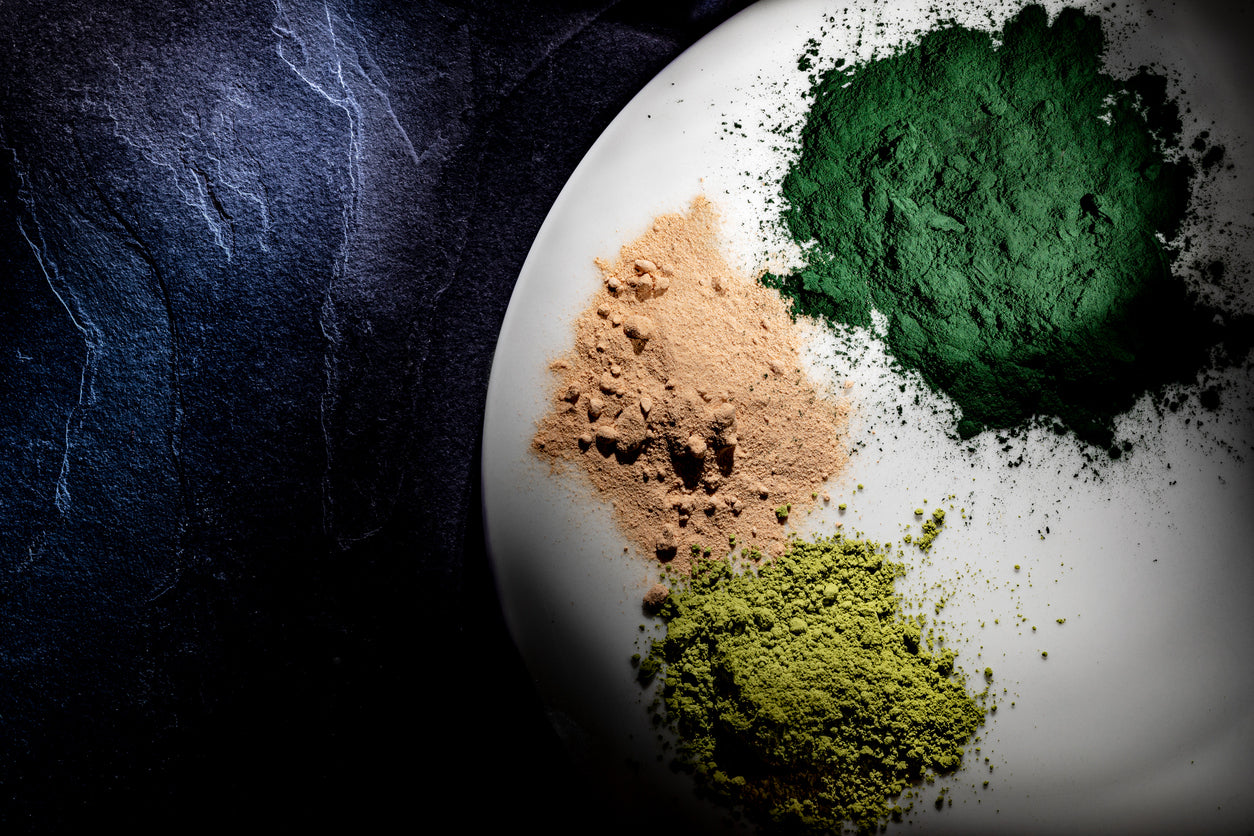
Here’s a mildly uncomfortable truth: that £9.99 “super supplement” you’ve been faithfully knocking back every morning?
It’s about as potent as snorting a line of flour at the afterparty.
You're not being misled by your mate who swears Lion’s Mane sharpened his memory, despite routinely forgetting his wallet, but by a supplement industry that’s perfected the art of selling well-branded dust with a barcode.
In the wild world of herbs, roots, and mushrooms, not all supplements are created equal. The difference between powdered herbs and proper herbal extracts isn’t just technical. It’s everything.
If you care about results, understanding this difference will transform your supplement shopping forever.
The short answer is this: powdered herbs can be useful when used honestly and at meaningful doses, but herbal extracts are usually more concentrated, more measurable, and more suitable when you want targeted effects. The problem starts when cheap powders are marketed like high-potency extracts.
It also explains why intelligent formulation matters more than simply throwing popular ingredients together, something we cover in more detail in how supplement stacking actually works.
Powdered Plants: Misunderstood, Not Useless
Let’s set the record straight: powdered herbs, roots, and mushrooms aren’t inherently bad.
Far from it.
Dried, ground plant material can provide broad-spectrum benefits, gentle tonic effects, and nutritional goodness, particularly when used intentionally and at meaningful doses.
The problem isn’t powders themselves.
It’s how they're marketed.
This is similar to the wider problem with supplement formats, where the delivery method only matters if the dose, form and formulation make sense.
Budget brands present raw herbal powders as if they’re equivalent to concentrated extracts, casually dropping claims like “high strength” for just £9.99.
They conveniently gloss over the part about potency.
And that’s where consumers get short-changed.
Here’s where things get tricky: it’s easy to be misled.
This isn’t wilful ignorance.
It’s sleight of hand.
“Lion’s Mane is Lion’s Mane,” they think.
“Ginseng is ginseng.”
“Ashwagandha is ashwagandha.”
Not quite.
The difference between raw powder and potent extract is more akin to chewing tea leaves versus downing a triple espresso.
Labels rarely help.
They scream milligram dosages but conveniently skip mentioning whether you're getting powdered root, a meaningful extract, active compounds, or some low-grade material cut with maltodextrin and ambition.
It’s a magician’s misdirection.
And unless you know what to look for, including extraction ratios, standardised actives and extraction methods, you’ll be none the wiser.
Educating yourself on this difference is crucial.
Powdered herbs have their rightful place when used transparently, in the right context, and not disguised as something they’re not.
What Are Herbal Extracts? Where Science Meets Plant Power
Extracts are where herbs become more targeted.
They isolate and concentrate a plant’s active compounds using solvents like water, alcohol, or CO₂, then distil them into a more potent, measurable form.
In simple terms:
Potency: Often 5:1, 10:1, or even 20:1 compared with raw plant material.
Absorption: Often superior because key compounds are made more available.
Cost: Higher, inevitably, because quality extraction involves precision, processing and actual technical work.
If powdered herbs are the fruit, extracts are the juice.
Richer, more concentrated, and often more appropriate when you are seeking targeted, reliable results.
Active Compounds: The Stuff That Actually Works
Whether it is withanolides in ashwagandha, beta-glucans in mushrooms, or curcuminoids in turmeric, active compounds are the true stars.
In powdered form, active compounds may be:
present but variable in quantity
locked within fibrous plant material
less bioavailable
more prone to degradation
inconsistent between batches
In extracts, active compounds can be:
concentrated
standardised
more bioavailable
measurable
repeatable
more suitable for clinical-style dosing
This explains why herbal extracts feature so prominently in scientific studies.
They are measurable, consistent, and repeatable.
Raw powders?
Less so.
That does not make them useless.
It makes them harder to compare, harder to dose precisely, and easier for cheap brands to dress up as something stronger than they are.
Did Ancient Cultures Use Extracts? Actually, Yes
Think advanced extraction methods are newfangled tech?
Not quite.
Humans have extracted plant compounds for millennia, minus the white lab coats and LinkedIn posts about optimisation.
Ancient herbal traditions, from Ayurveda to Traditional Chinese Medicine, relied on decoctions, infusions, fermentations and alcohol tinctures to extract active components.
Boiling Chaga mushrooms for hours?
That’s a water extraction.
Herbs steeped in wine?
Alcohol extraction.
Turmeric infused in ghee?
Lipid-based extraction.
Sure, they lacked today's scientific precision.
But the intent was clear: extract the good stuff to make the herb actually work.
The ancients weren't just chewing on roots and hoping for miracles.
Extracts vs Powders: It’s Not Always a Sledgehammer Job
Extracts often hog the spotlight for their potency and faster results.
But not everyone needs or benefits from the herbal equivalent of a sledgehammer.
Some people prefer, or genuinely require, the subtler, more holistic approach of powdered herbs.
Powdered herbs may gently nourish over time without overwhelming sensitive systems.
Extracts are powerful.
But potent is not always preferable.
The secret is understanding when each is appropriate.
Powders may suit:
gentle daily nourishment
traditional tonic use
whole-food style supplementation
formulas where broad-spectrum plant material is intentional
people sensitive to concentrated extracts
Extracts may suit:
targeted support
clinical-style dosing
specific active compounds
stronger effects from smaller servings
formulations where consistency matters
This is where good formulation separates itself from label decoration.
Why Extracts Emerged, and When You Actually Need Them
Extracts didn’t replace whole herbs.
They evolved from them for very good reasons.
Some health goals demand potency.
Certain beneficial compounds aren’t bioavailable without extraction.
Consumers increasingly want measurable effects, not vague “wellness” dust sprinkled into a capsule.
For serious cognitive, stress-related, mood-enhancing, or immune-supporting needs, extracts typically deliver better results, quicker.
This is especially important with adaptogenic ingredients, where extract quality can dramatically affect how useful a product is in practice.
That does not mean powders have no place.
It means the form should match the purpose.
Revolutionary concept, apparently.
Smart Formulations: Combining Extracts and Powders Wisely
Intelligent supplement brands understand strategic blending.
A powder is not always filler.
An extract is not always superior.
What matters is why it is there.
Take LUNA, for example. It uses organic ashwagandha powder not as filler, but as a gentle adaptogenic support, paired strategically alongside potent extracts like mucuna and black pepper for absorption.
Similarly, PYRO uses functional powders like watermelon, cranberry, paprika and cayenne, not because each one is individually thunderous, but because their subtle synergy can offer antioxidant, thermogenic and vascular support.
Used intentionally, powdered herbs have genuine value.
Used merely to pad out labels?
Not so much.
That is the difference between formulation and bulk-filling a capsule until the label looks busy.
Common Herbal Extraction Methods
Different extraction methods target different compounds.
That matters because plants are chemically complicated.
Very inconsiderate of them.
Water Extracts
Water extracts are useful for water-soluble compounds, such as mushroom beta-glucans and certain polysaccharides.
They are ideal for teas, decoctions and some mushroom extracts.
They are less effective for oil-soluble compounds.
Alcohol Tinctures
Alcohol tinctures extract a broader range of plant compounds than water alone.
They can be useful for stronger therapeutic preparations and often have a longer shelf life.
Not everyone wants alcohol in a supplement, but the method itself has a long history and clear practical value.
Dual Extracts
Dual extracts combine water and alcohol extraction.
They are especially useful for plants or mushrooms containing both water-soluble and alcohol-soluble compounds.
This is often considered a gold-standard approach for comprehensive herbal potency.
CO₂ Extraction
CO₂ extraction is more advanced and precise.
It is useful for delicate oils, volatile compounds and certain lipophilic actives.
It can be highly effective.
It is also more expensive, because apparently quality extraction does not run on positive thinking.
Extract Ratios and Standardised Percentages Explained
Label reading matters.
A lot.
A 10:1 extract ratio means 10 parts raw herb were used to produce 1 part extract.
That suggests concentration.
But ratios are only part of the story.
Standardised percentages tell you how much of a specific active compound is present.
For example:
“5% withanolides” in ashwagandha
“30% polysaccharides” in a mushroom extract
“95% curcuminoids” in turmeric extract
Ratios tell you how much raw material went in.
Standardised percentages tell you what active compounds came out.
Both matter.
A high ratio without active compound data can be vague.
A standardised extract without meaningful dose can still be underwhelming.
This is why labels need context.
A big number is not always a useful number.
Sometimes it is just typography with ambition.
Price Differences Explained, and Why It Actually Matters
Search “ashwagandha” on Amazon, and you’ll usually find something like this:
£8.99 for 180 capsules: “1000mg ashwagandha”
£29.99 for 60 capsules: “5% withanolides” standardised extract
On paper, the cheap one looks stronger.
In reality, it may simply contain more raw powder.
Cheap isn't always cheerful.
Many budget supplement brands deliberately keep crucial details vague, leaving you unknowingly paying for little more than glorified kitchen ingredients wrapped in eye-catching packaging.
They frequently use terms like “high strength” or “standardised” in ways that sound reassuring but reveal very little.
With the supplement industry booming and countless brands flooding the market, effective regulation and consumer understanding have become increasingly stretched.
This lack of clarity creates an environment ripe for exploitation by less scrupulous companies.
The result?
Products diluted with fillers, inflated promises, and misleading labels designed to boost sales rather than performance or health.
When transparency and quality fall by the wayside, it’s your bank account and your wellbeing that suffer.
It’s more important than ever to choose supplement brands that prioritise integrity, precision and genuinely science-led ingredients.
Proprietary Blends: Useful Protection or Convenient Hiding Place?
Proprietary blends can be useful.
They can protect innovative formulations from being copied.
That is the charitable version.
They can also hide under-dosing, filler-heavy formulas, and impressive-looking ingredient lists where the meaningful actives are present in fairy-dust quantities.
That is the version consumers should watch for.
The key is transparency around crucial factors:
actives
extraction method
extract ratio
standardisation
serving size
clinical relevance
quality testing
This is why label transparency in supplements matters more than big front-of-pack claims.
If a brand is evasive, beware.
A serious formulation can explain itself.
A weak one usually hides behind “complexes”, “matrixes” and serving sizes written in a font usually reserved for legal disclaimers.
Final Word: Know Exactly What You’re Buying
If you’re eyeing a “high-strength” adaptogen complex at £6.99, tread carefully.
Odds are, it is glorified herbal dust.
Technically plant-based.
Possibly very enthusiastic.
Probably not what the front of the label wants you to think it is.
Next time, ditch the buzzwords.
Inspect the extracts.
Verify the actives.
Question vague claims.
You can also explore our performance supplement range to see how we approach extracts, powders, actives and formulation transparency.
Because when real results matter, transparency and specificity beat flashy marketing every single time.
A powder can be useful.
An extract can be excellent.
But a cheap powder pretending to be a premium extract?
That is not traditional herbalism.
That is dust in a tracksuit.
Written By
Written by Chris Simon, Founder of One Life Foods.
Chris has worked in the supplement industry since 2009 and is known for seeking out exceptional ingredients, products, and formulations. Read more about Chris and the story behind One Life Foods.


Share:
Stacking Your Supplements: What Works, What Doesn’t?
Exposing the Sea Moss Market: The Seaweed Saga You Didn’t Know You Needed