


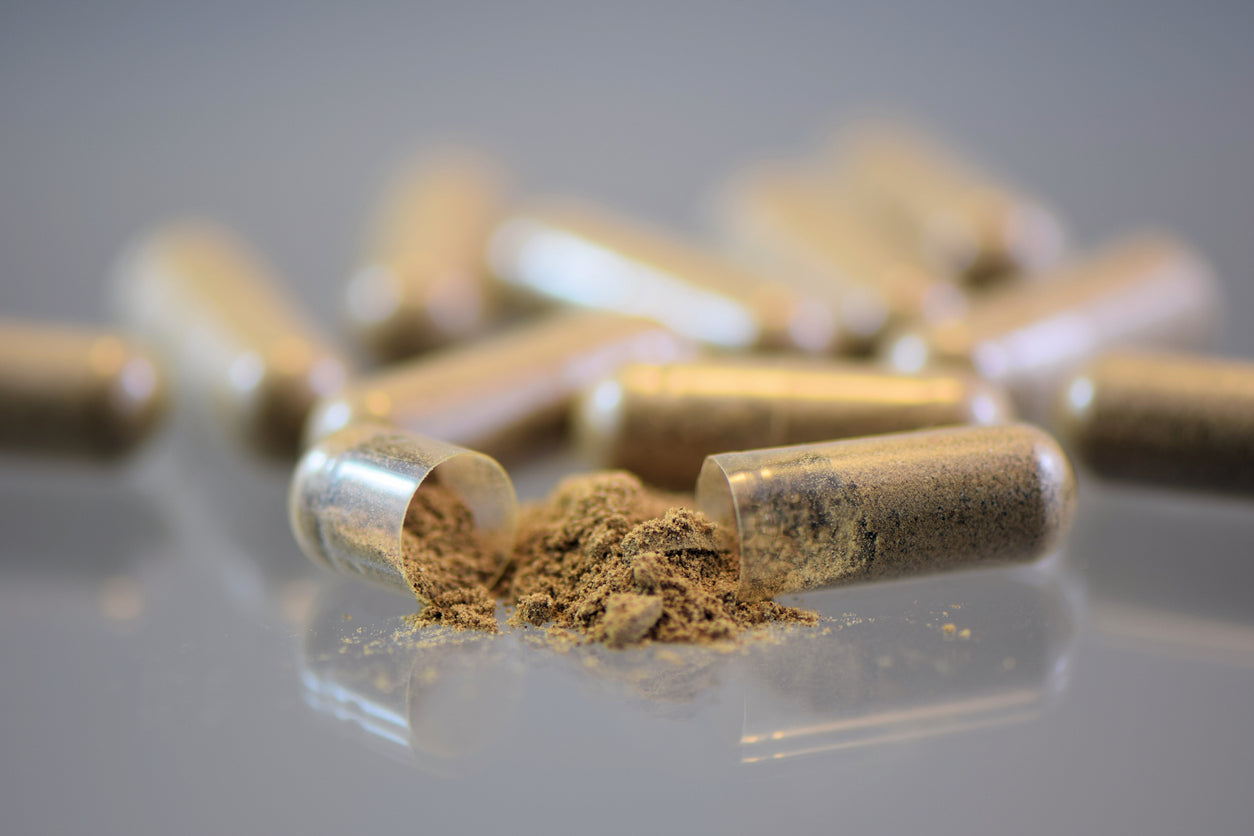
Introduction: Not Every Long Word Is a Villain
Let’s talk about the so-called nasties.
Fillers.
Binders.
Anti-caking agents.
Flow agents.
Excipients.
The ingredients that get treated online as if they are quietly plotting against your organs from inside a capsule shell.
You have seen the labels.
No fillers.
No junk.
No nasties.
No unnecessary chemicals.
No suspicious things with names longer than a Victorian surname.
And, to be fair, the clean-label movement has done some good. Consumers should care what is in their supplements. Brands should not hide behind vague blends, lazy formulas or unnecessary additives. Products should be built with purpose, not padded out like a cheap kebab at 2 o’clock in the morning.
But clean does not mean empty.
And science should always outrank scaremongering.
Because here is the uncomfortable truth: many of these supposedly sinister ingredients are not there to poison you, confuse your mitochondria or launch a coup against your liver.
They are there to help the supplement actually work as a product.
They help powders flow through machinery.
They help capsules fill accurately.
They help tablets hold together.
They help prevent clumping.
They help improve stability.
They help make sure one serving looks, behaves and doses like the next.
How appalling.
This article explains what fillers, binders, anti-caking agents and other excipients actually do, when they are useful, when they are unnecessary, and why blanket “no nasties” marketing often tells you more about brand positioning than formulation quality.
For the companion piece on hidden dilution and raw material quality, see fillers vs cutting agents.
Quick Answer: Are Fillers, Binders and Anti-Caking Agents Bad?
No, fillers, binders and anti-caking agents are not automatically bad.
Many are functional excipients used in tiny amounts to improve manufacturing, consistency, stability, capsule fill, tablet strength or powder flow.
The issue is not whether a supplement contains an excipient.
The real questions are:
-
Is it necessary?
-
Is it declared?
-
Is it used at a sensible level?
-
Does it serve the formula?
-
Does it improve consistency or stability?
-
Is it replacing meaningful active ingredients?
-
Is it being used to hide weak dosing?
A well-formulated supplement may use excipients responsibly.
A poor supplement may use them lazily.
That distinction matters.
The villain is not magnesium stearate minding its business at 0.3%.
The villain is bad formulation pretending to be purity.
What Are Excipients?
Excipients are inactive ingredients used to help manufacture, stabilise, protect or deliver a supplement.
They are not usually included for nutritional benefit.
They are included because powders, capsules and tablets need to behave predictably during production, storage and use.
Excipients may act as:
-
Fillers
-
Binders
-
Flow agents
-
Lubricants
-
Anti-caking agents
-
Disintegrants
-
Coatings
-
Capsule shell materials
-
Carriers
-
Stabilising agents
That might sound unglamorous.
It is.
So is plumbing.
But you notice very quickly when it stops working.
A supplement formula is not just a list of active ingredients. It is a physical product that has to be mixed, filled, compressed, packaged, stored, transported and taken consistently.
Excipients help make that possible.
Why the “No Fillers” Trend Got So Loud
The “no fillers” trend has become a major marketing tool.
And on the surface, it makes sense.
No unnecessary extras.
No padding.
No junk.
Just the good stuff.
Lovely.
But the phrase often gets used without context.
Some brands use “no fillers” responsibly because the product genuinely does not need any excipients. A simple single-ingredient capsule may not require much support.
Other brands use “no fillers” as a fear-based slogan, implying that any product containing an excipient is inferior, dirty or dangerous.
That is where the wheels come off.
Because in complex formulas, excipients can be the difference between:
-
Accurate dosing and nutrient roulette
-
A stable tablet and a crumbling mess
-
A free-flowing powder and a clumpy brick
-
A consistent capsule and one full of air and regret
-
A functional formula and clean-label theatre
Clean is good.
Clean and dysfunctional is not.
A supplement does not become better simply because a brand removed every supporting ingredient and then hoped physics would be polite.
Fillers: Not Always Padding
A filler is an inactive ingredient used to add volume or help distribute small doses evenly.
This can be important when an active ingredient is used in a very low amount.
For example, if a formula contains 5 mg of a nutrient or botanical marker, that tiny amount needs to be distributed evenly across thousands of capsules or tablets.
Without a suitable filler or carrier, dose uniformity can become difficult.
That matters because you do not want one capsule to contain a meaningful dose and the next to contain the supplement equivalent of a polite suggestion.
Common fillers may include:
-
Microcrystalline cellulose
-
Rice flour
-
Calcium carbonate
-
Dicalcium phosphate
-
Cellulose
-
Starches
Are fillers sometimes overused?
Yes.
Can fillers be used lazily to bulk out weak formulas?
Absolutely.
But a filler used correctly is not automatically bad.
The question is whether it serves dose accuracy, stability or manufacturing consistency, or whether it is simply taking up space where better formulation should be.
That is the difference between function and padding.
Binders: Why Tablets Do Not Fall Apart in the Bottle
Binders help tablets hold together.
That is their job.
Very offensive, apparently.
Without binders, tablets may crack, crumble, chip or fall apart during manufacturing, packaging, transport or use.
A tablet needs enough structural integrity to survive the real world.
That includes:
-
Compression
-
Bottling
-
Shipping
-
Handling
-
Storage
-
Consumer use
A tablet that disintegrates at the right time in the digestive system is useful.
A tablet that disintegrates in the bottle is just a small, dusty disappointment.
Binders can include ingredients such as microcrystalline cellulose, HPMC and certain starches.
Again, context matters.
A binder is not there to trick you.
It is there because tablets are physical objects, not abstract wellness intentions.
Flow Agents: The Tiny Helpers Behind Accurate Filling
Flow agents help powders move smoothly through manufacturing equipment.
This matters because many supplement powders are awkward.
Some are fluffy.
Some are sticky.
Some are oily.
Some clump.
Some cling to machinery.
Some behave like they resent being manufactured at all.
If a powder does not flow properly, capsule filling and tablet production can become inconsistent.
That can affect:
-
Fill weight
-
Dose uniformity
-
Production efficiency
-
Capsule accuracy
-
Tablet consistency
-
Finished product reliability
Flow agents help reduce friction and improve movement through machinery.
Magnesium stearate is one of the best-known examples.
It is also one of the most unfairly demonised.
More on that shortly, because apparently this poor ingredient needs legal representation.
Anti-Caking Agents: Because Nobody Wants a Supplement Brick
Anti-caking agents help prevent powders from clumping.
This is especially useful for ingredients that absorb moisture from the air.
In the UK, where the climate often feels like a damp towel with opinions, moisture control matters.
Without anti-caking agents, some powders can become:
-
Clumpy
-
Sticky
-
Uneven
-
Hard to dose
-
Difficult to manufacture
-
Less stable
-
unpleasant to use
Silicon dioxide is a common anti-caking agent.
It is used in tiny amounts to improve powder flow and reduce moisture-related clumping.
Despite what internet panic may suggest, it is not “glass” in the way people imagine.
It is not lurking in your capsules like a microscopic window.
It is a purified form of silica, and silica compounds are found naturally in foods and water.
The dose makes the context.
And the context here is usually very small.
Disintegrants: Helping Tablets Break Down Properly
Disintegrants help tablets or capsules break apart after swallowing.
This is important because the product needs to release its contents at the right time.
If a tablet is too hard or poorly designed, it may not break down properly.
If it breaks apart too early or becomes unstable in storage, that is also a problem.
Disintegrants help balance the structure.
Croscarmellose sodium is a common example.
It helps tablets swell and break apart in fluid, supporting release of the active ingredients.
It is not there for decoration.
It is there so your tablet does not behave like a vitamin-packed pebble.
Which, ideally, is not the goal.
Coatings and Glazing Agents: More Than Shiny Marketing
Coatings and glazing agents can help protect tablets from moisture, oxygen, light and handling damage.
They may also make tablets easier to swallow or help mask unpleasant taste.
Some coatings are purely cosmetic.
Others are functional.
Examples may include:
-
HPMC coatings
-
Pharmaceutical glaze
-
Riboflavin-based colouring
-
Moisture-protective coatings
A good coating can act like a waterproof jacket for the tablet.
Not because the tablet is vain.
Because sensitive compounds can degrade when exposed to moisture or oxygen.
Again, not glamorous.
Useful.
No, Magnesium Stearate Is Not a Tool of the Illuminati
Magnesium stearate has become one of the great villains of supplement marketing.
It has been accused of blocking absorption, weakening immunity, forming “biofilms,” ruining supplements and generally behaving like a tiny white powder with sinister intentions.
The reality is less exciting.
Magnesium stearate is the magnesium salt of stearic acid, a fatty acid found naturally in foods such as cocoa, meat, eggs, coconut oil and other dietary fats.
In supplements, it is usually used in very small amounts as a lubricant or flow agent.
Its purpose is to help powders move through machinery and prevent sticking during production.
That supports accurate filling and manufacturing consistency.
Can it be overused?
Yes.
Should it be dumped into every formula without thought?
No.
Is a tiny amount in a capsule proof that a brand is trying to ruin your health?
Also no.
Unless your quality-control strategy is based on being frightened by chemistry words, magnesium stearate is not the crisis it is often made out to be.
Silicon Dioxide: Not Glass, Not a Plot
Silicon dioxide is another ingredient that gets dragged into the supplement fear machine.
It is commonly used as an anti-caking agent to help powders stay free-flowing.
You may also encounter silica compounds naturally in foods such as oats, bananas, leafy greens, cereals and mineral water.
In supplements, silicon dioxide is typically used in tiny amounts.
Its job is practical:
-
Reduce clumping
-
Improve powder flow
-
Support manufacturing consistency
-
Help maintain product usability
The internet sometimes calls it “glass.”
This is technically dramatic and practically misleading.
Chemical names can sound alarming when stripped of context.
Sodium chloride sounds like something you would avoid until you realise it is table salt.
Dihydrogen monoxide sounds sinister until you realise it is water.
Context remains undefeated.
Microcrystalline Cellulose: Refined Plant Fibre, Not a Floorboard
Microcrystalline cellulose is a refined plant-derived fibre used as a filler, binder or texturising agent.
It is chemically inert, poorly digested and generally passes through the body without much drama.
Critics sometimes call it “wood pulp.”
Technically, cellulose can come from plant material, including wood.
But calling microcrystalline cellulose “wood pulp” is a bit like calling a cotton T-shirt “field shrub.”
There is a processing step or two involved.
In supplements, microcrystalline cellulose can help:
-
Improve capsule fill
-
Support tablet structure
-
Improve dose uniformity
-
Stabilise formulas
-
Reduce manufacturing inconsistency
Again, it can be overused.
But when used properly, it is a functional excipient.
Not a nutritional scandal.
Stearic Acid: Fatty Acid, Not a Horror Story
Stearic acid is a saturated fatty acid found naturally in various foods.
In supplements, vegetable stearic acid may be used as a flow aid, lubricant or tablet-support ingredient.
It helps powders behave during manufacturing.
It is inert, widely used and generally included in very small quantities.
As with magnesium stearate, the fear tends to come from the name rather than the actual exposure.
A tiny amount of stearic acid in a supplement is not the same as redesigning your diet around industrial fat.
Dose matters.
Function matters.
Context matters.
Marketing panic often does not.
Rice Flour: The Clean-Label Favourite
Rice flour is often used as a clean-label filler or flow agent.
It sounds friendly.
It feels natural.
It does not frighten people in the same way that magnesium stearate does, despite sometimes serving a similar purpose.
This is one of the funny contradictions in supplement marketing.
An ingredient with a kitchen-friendly name is treated as wholesome.
An ingredient with a technical name is treated as suspicious.
But the body does not evaluate ingredients based on whether they sound good in a rustic product description.
Rice flour can be perfectly fine.
It can also be unnecessary.
The same rule applies:
What is it doing there?
Is it needed?
Is it declared?
Is it used sensibly?
The name alone does not decide the quality.
Maltodextrin: Context Is Everything
Maltodextrin gets a lot of criticism.
Some of it is fair in certain contexts.
Maltodextrin is a refined carbohydrate. In larger amounts, it can affect blood glucose and may not suit everyone, especially those managing blood sugar closely.
But in supplements, maltodextrin may sometimes be used in very small amounts as a carrier for extracts, flavours or spray-dried ingredients.
That is a different context from consuming large quantities of it in processed foods or sports drinks.
The issue is transparency.
If maltodextrin is used as a carrier, it should be declared where appropriate and factored into the formula.
If it is used to secretly dilute a raw material and inflate weight, that is a different problem.
That is not an excipient issue.
That is a cutting-agent issue.
For that distinction, see fillers vs cutting agents.
Croscarmellose Sodium: The Tablet Break-Up Artist
Croscarmellose sodium is a disintegrant.
Its job is to help tablets break apart when they come into contact with fluid.
That helps release the active ingredients.
Despite the name sounding like it was assembled from spare pharmaceutical syllables, it is derived from cellulose and used widely in tablets and capsules.
It is functional.
It is not there to bulk out the formula.
It is there to help the product behave properly after swallowing.
A tablet that never breaks down properly is not a premium supplement.
It is a very expensive pebble with branding.
HPMC: The Vegetarian Capsule Hero
HPMC stands for hydroxypropyl methylcellulose.
Catchy, obviously.
It is commonly used to make vegetarian and vegan capsule shells.
It can also be used in coatings and as a binder in some formulas.
HPMC is derived from cellulose and is widely used in food, supplements and pharmaceuticals.
For people avoiding gelatin, HPMC capsules are a useful alternative.
Gelatin capsules also have their place, but HPMC has become popular for plant-based products and clean-label formulations.
The name looks technical.
The function is simple.
It helps make capsules possible without animal-derived gelatin.
Not exactly villain behaviour.
Calcium Carbonate: Filler or Calcium Source?
Calcium carbonate can be used as a calcium source or as a filler, depending on the formula.
It is found naturally in limestone, shells and other mineral sources.
It is also widely used in foods and supplements.
Context matters.
If used as a calcium source, the dose and purpose should be clear.
If used as a filler, it should be appropriate and not used excessively.
In high amounts, calcium carbonate may not suit everyone and can contribute to digestive discomfort or constipation in some people.
But in modest amounts as part of a properly designed formula, it is not automatically a concern.
Again: dose, purpose, transparency.
The holy trinity of not losing your mind over labels.
Organic Silica Concentrate: Clean-Label Flow Support
Some brands use organic silica concentrate as a cleaner-label alternative to silicon dioxide.
It may help improve flow and reduce clumping while sounding more acceptable to customers who prefer naturally positioned ingredients.
That can be useful.
But it is still serving an excipient function.
This is worth saying because “natural” excipients are often given a free pass while technical-sounding excipients are treated like suspicious strangers.
The important question is still the same:
Does it serve the product?
A natural flow agent can be useful.
A synthetic-sounding flow agent can be useful.
A useless ingredient with a nice name is still useless.
Glazing Agents: The Waterproof Jacket of Tablets
Glazing agents can help protect tablets from moisture, improve swallowability and create a consistent appearance.
Sometimes they are used for cosmetic reasons.
Sometimes they are used for functional reasons.
A protective coating can help preserve tablet quality through shelf life, especially where moisture-sensitive ingredients are involved.
This matters for minerals, vitamins, botanical extracts and complex formulas that need to survive storage, shipping and daily use.
If a coating is there purely to make a tablet look shiny, it is fair to ask why.
If it helps protect the product and maintain stability, that is different.
A shiny tablet is not automatically suspicious.
Unless it also starts making miracle claims.
Then we can all raise an eyebrow together.
Do Excipients Block Nutrient Absorption?
This is one of the biggest claims made against ingredients like magnesium stearate.
The idea is that these substances coat nutrients, block digestion or prevent absorption.
The evidence for this claim, at normal supplement-use levels, is not convincing.
In real-world formulas, excipients are typically used in very small amounts and are chosen to support manufacturing, stability or release.
In some cases, excipients may actually help a supplement perform better by improving dose uniformity, flow, disintegration or stability.
A nutrient cannot be absorbed properly if the tablet never breaks down.
A capsule cannot dose consistently if the powder will not fill correctly.
A formula cannot remain stable if it clumps, cracks or degrades.
So while excipients usually do not directly boost absorption, they can support the conditions that allow a product to deliver its actives reliably.
That matters.
When Excipients Are Actually Helpful
Excipients can help supplement quality in several ways.
They may:
-
Improve dose consistency
-
Help distribute actives evenly
-
Prevent clumping
-
Improve powder flow
-
Support tablet compression
-
Keep capsules filled accurately
-
Help tablets break down properly
-
Protect sensitive ingredients
-
Improve shelf stability
-
Improve user experience
-
Reduce manufacturing waste
-
Improve batch consistency
That is not glamorous.
But neither is wearing a seatbelt.
Functional support rarely gets applause until it is missing.
When Excipients Become a Problem
This is where balance matters.
Excipients are not automatically bad, but they can be misused.
They become a problem when they are used to:
-
Bulk out underdosed formulas
-
Replace meaningful active ingredients
-
Hide weak formulation
-
Improve margins at the expense of quality
-
Create the illusion of a larger serving
-
Disguise poor raw material quality
-
Make poor manufacturing easier without good reason
-
Support vague proprietary blends with little substance
In other words, the issue is not the existence of excipients.
The issue is lazy, dishonest or excessive use.
A tiny amount of magnesium stearate helping a capsule fill correctly is not the same as a formula padded with cheap bulking agents and sold as premium.
One is formulation.
The other is nonsense with a label.
“Clean” Does Not Always Mean Better
Clean-label marketing can be useful when it encourages brands to remove unnecessary ingredients.
But it becomes a problem when it turns into fear-based absolutism.
A clean formula should be:
-
Purposeful
-
Transparent
-
Sensibly dosed
-
Stable
-
Tested where appropriate
-
Free from unnecessary additives
-
Built around quality ingredients
-
Manufactured consistently
A clean formula should not be:
-
Unstable
-
Inconsistent
-
Poorly dosed
-
Difficult to manufacture
-
Clumpy
-
Crumbly
-
Weak
-
Built around slogans
-
Terrified of functional ingredients
“Clean” should mean intelligent and restrained.
Not technically dysfunctional but aesthetically pleasing.
That is not health.
That is branding.
How This Connects to Powdered Supplements
Powders often need excipients too.
Flow agents, anti-caking agents, carriers, flavour systems and stabilisers may all be used in powdered supplements.
Sometimes this is necessary.
Sometimes it is overdone.
The same rule applies: purpose matters.
A powder may need an anti-caking agent to prevent clumping.
A flavour system may need a carrier.
A hydration formula may need acids, sweeteners or flow support.
A pre-workout may need careful blending because the active ingredients vary in density and particle size.
The problem is not the existence of supporting ingredients.
The problem is when they are used to disguise weak dosing, poor ingredient quality or unnecessary flavour theatre.
For more on this, see powdered supplements vs capsules.
How This Connects to Supplier Trust
Some additives are included deliberately by the brand or manufacturer.
Others may be present in raw materials before the brand ever receives them.
This distinction matters.
A declared excipient in a finished formula is very different from an undisclosed carrier or cutting agent in a raw material.
For example, a spray-dried botanical extract may include a carrier to make it stable and usable.
That can be legitimate if declared and accounted for.
But if a supplier dilutes an extract with maltodextrin, starch or another material while still presenting it as a high-potency extract, that is a quality problem.
This is why raw material testing, assay reports and supplier relationships matter.
The finished label is only part of the story.
For more on this, see trustworthy supplement suppliers.
What Consumers Should Actually Look For
Consumers do not need to panic every time they see an excipient.
They should ask better questions.
Look for brands that explain:
-
Why ingredients are included
-
Whether excipients are used
-
Whether excipients serve a purpose
-
Whether active doses are meaningful
-
Whether ingredient forms are disclosed
-
Whether the formula is transparent
-
Whether raw materials are properly sourced
-
Whether the product is tested where appropriate
Be cautious with brands that rely on:
-
Fear-based “no nasties” claims
-
Vague purity marketing
-
Long proprietary blends with no clarity
-
Massive serving sizes with weak actives
-
No explanation of dose or form
-
Demonising ingredients without context
-
Pretending chemistry is scary because the words are long
A good label should inform.
Not frighten.
And definitely not require the customer to believe every excipient is a tiny assassin.
One Life Foods: Our Position on Excipients
At One Life Foods, our position is simple.
If we can leave an excipient out, we will.
If it genuinely improves the formula, we will use it with purpose.
That means no unnecessary padding.
No cosmetic nonsense.
No gimmicks.
No fear-based formulation.
No pretending a product is better simply because the label is shorter.
Some products, especially simple single-ingredient formulas, may not need fillers, binders or flow agents.
Others, especially more complex stacks, may need a small amount of the right excipient to support dose consistency, flow, tablet integrity or shelf stability.
That is not compromise.
That is responsible formulation.
The goal is not to build products that look virtuous on a label but behave badly in the real world.
The goal is to build supplements that are precise, stable, practical and honest.
Final Thoughts: Don’t Panic, Read the Label Properly
Fillers, binders, flow agents and anti-caking agents have been painted as villains of modern supplementation.
In reality, many of them are practical tools.
Used properly, they help supplements stay consistent, stable, manufacturable and reliable.
Used badly, they can become padding, cost-cutting or lazy formulation.
That is the real distinction.
Not all excipients are bad.
Not all “no fillers” products are better.
Not all long ingredient names are dangerous.
And not every clean-label claim deserves applause.
At One Life Foods, we formulate based on purpose, not fear.
If an ingredient does not need to be there, it should not be there.
If it does need to be there, it should have a clear job.
That is the difference between honest formulation and marketing theatre.
So the next time you see magnesium stearate, silicon dioxide or microcrystalline cellulose on a label, do not immediately panic.
Ask what it is doing there.
Because odds are, it is not trying to kill you.
It is probably just helping your supplement actually do its job.
References:
Hobbs CA, Saigo K, Koyanagi M, et al. Magnesium stearate, a widely-used food additive, exhibits a lack of in vitro and in vivo genotoxic potential. Toxicology Reports. 2017;4:554-559.
EFSA Panel on Food Additives and Nutrient Sources Added to Food. Re-evaluation of sodium, potassium and calcium salts of fatty acids, E470a, and magnesium salts of fatty acids, E470b, as food additives. EFSA Journal. 2018;16(3):5180.
EFSA Panel on Food Additives and Nutrient Sources Added to Food. Re-evaluation of silicon dioxide, E551, as a food additive. EFSA Journal. 2018.
EFSA. Re-evaluation of silicon dioxide, E551, as a food additive in foods for infants below 16 weeks of age. EFSA Journal. 2024.
Food Standards Agency. Food Additives Guidance.
Food Standards Agency. Approved Additives and E Numbers.
EFSA. Titanium dioxide, E171, no longer considered safe when used as a food additive. 2021.
U.S. Food and Drug Administration. Inactive Ingredient Database.
Written By
Written by Chris Simon, Founder of One Life Foods.
Chris has worked in the supplement industry since 2009 and is known for seeking out exceptional ingredients, products, and formulations. Read more about Chris and the story behind One Life Foods.
Disclaimer
This article is for informational purposes only and is intended for general education around supplement excipients, formulation and quality control. It is not medical advice and is not intended to diagnose, treat, cure or prevent any disease. Food supplements should not be used as a substitute for a varied diet and healthy lifestyle.


Share:
The Shilajit Deception: Why High Fulvic Acid Is a Red Flag — Sometimes
The Missing Half: Why Humic Acid Matters — The Overlooked Key to Full-Spectrum Shilajit