


(And why a little sediment is actually a good thing)
When it comes to Shilajit, many brands proudly claim that the ultimate test of quality is how cleanly the resin dissolves in water.
There’s certainly some truth to this — but the real story behind Shilajit quality is much deeper (and far more interesting) than just solubility. Misunderstandings around solubility are actually part of a broader set of common Shilajit myth.
Authentic Shilajit is a complex natural material, and its quality is tied to the rich world of humic substances, not just how crystal-clear your drink looks.
What's really inside quality Shilajit?
Humic substances make up about 60–80% of the organic matter in a high-quality Shilajit resin.
These are not simple compounds — they're intricate, dynamic assemblies of organic molecules including carbohydrates, amino acids, and fatty acids.
In terms of chemical makeup, humic substances (HS) contain:
-
Carbon
-
Hydrogen
-
Oxygen
-
Nitrogen
-
Plus small amounts of sulfur and phosphorus
These elements are consistently present in humic substances, regardless of the Shilajit's geographical origin — whether it's from The Altai, Karakoram, or elsewhere.
The three key fractions of Humic Substances
Humic substances can be further divided into three distinct fractions:
-
Humic acid – partially soluble in water (soluble at higher pH levels)
-
Fulvic acid – fully soluble in water at all pH levels
-
Humin – completely insoluble in water
Interestingly, humins are the largest portion of the humic substances.
However, when it comes to traditional Shilajit resin (as opposed to highly processed extracts and other forms of Shilajit), the humic and fulvic acids are the most active and bioavailable components.
Why a little sediment is completely normal (and beneficial)
Here’s the important part:
Because humic acids have both hydrophilic (water-loving) and hydrophobic (water-repelling) properties, it’s perfectly natural for a small amount of sediment to form when you dissolve genuine Shilajit resin in water. This is also why preparation method matters when taking Shilajit.
The higher the humic acid content, the more hydrophobic fractions you'll find — and the more visible sediment you might notice settling at the bottom of your glass.
But don't be alarmed — this sediment is not impurities or a marker of poor quality.
It’s beneficial, natural humic material that your body can still make use of.
To put it another way:
Claiming Shilajit with sediment is inferior would be like claiming that fresh orange juice with pulp is worse than filtered, pulp-free juice. (We all know fresh pulp is where the goodness is!)
A closer look at our Mongolian Shilajit
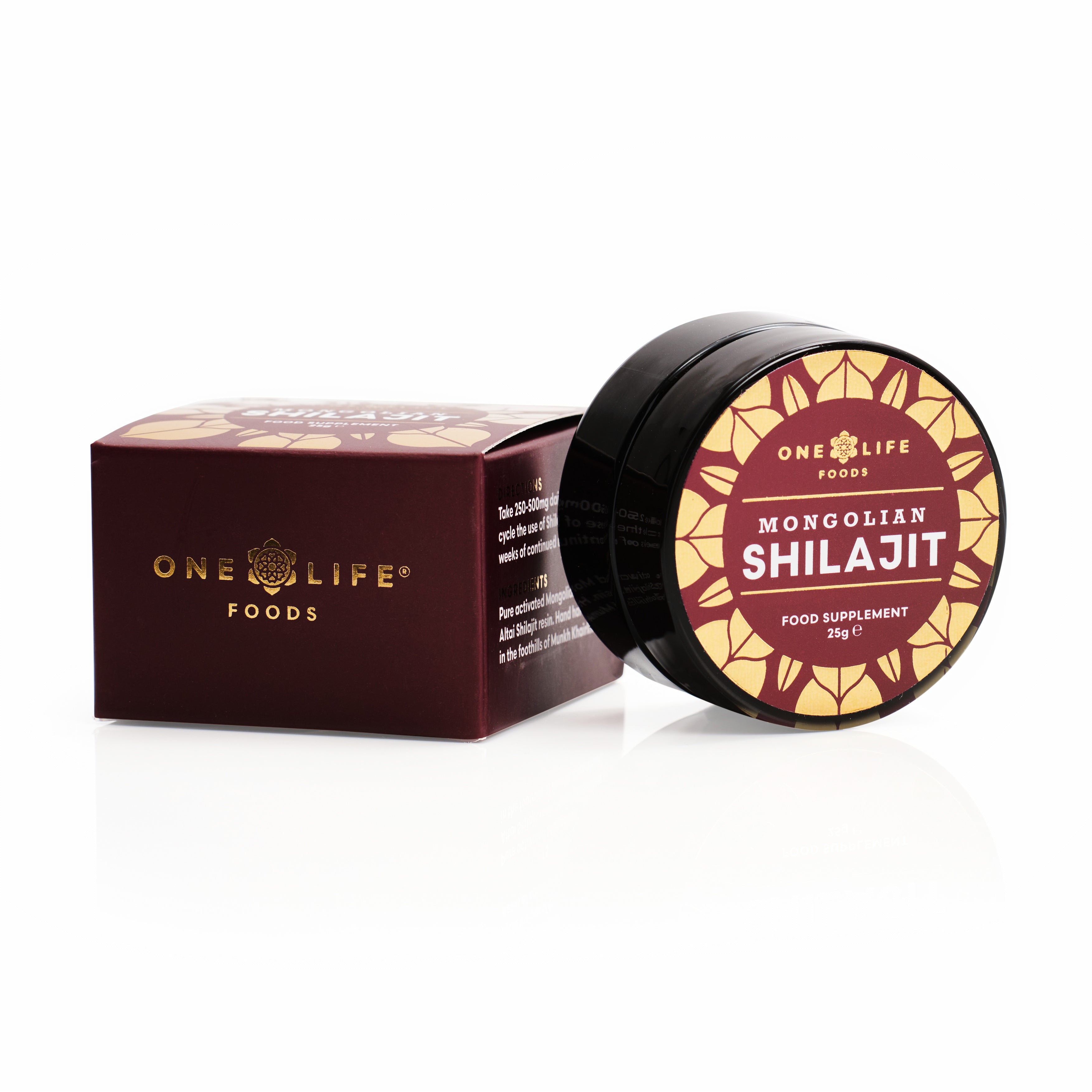
At One Life Foods, our Mongolian Shilajit resin boasts higher levels of both fulvic and humic acids than even our premium Altai Shilajit (independently verified by third-party laboratory analysis).
Thanks to its higher humic acid content, you might notice a little more natural sediment at the bottom of your drink — that’s a good thing!
Our advice?
Drink it up — that sediment is packed with some of the most potent bioactive compounds nature has to offer.
Explore our full Shilajit range
Interested in discovering more?
Browse our full collection of Shilajit products
Explore the Full Shilajit Guide
And if you have any questions or want help choosing the right product for you, we’re always happy to help — just drop us a line at info@onelifefoods.co.uk.


Share:
Shilajit and Ashwagandha: Understanding the Science Behind the Stack
Why are cold process soaps better than conventional soaps?